Cloud Computing Presentation: A Tool of Entrepreneurial Culture
Last Friday (3 October 2013), I spent time with a group of entrepreneurs talking about why Cloud Computing is part of today's entrepreneurial culture. My thanks to Claudia Chez, Augusto Romano and Yessely López for inviting me to share these reflections at the Evento Blog República Dominicana (#EBEDominicana). … Cloud Computing Presentation: A Tool of the…
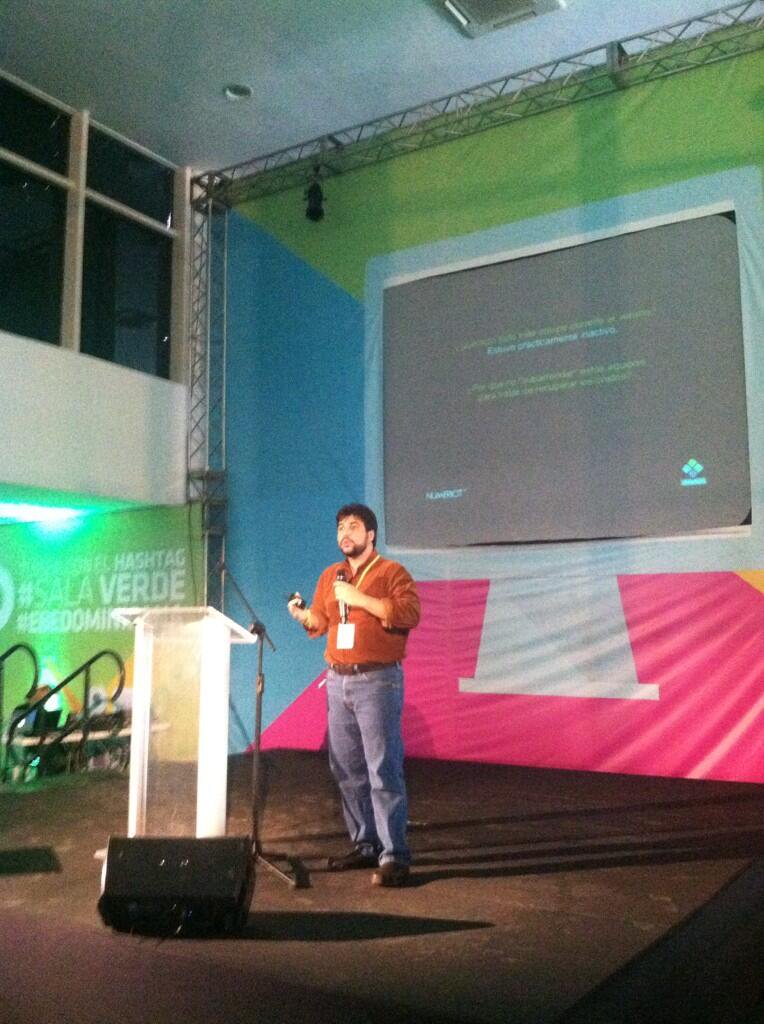
Last Friday (3 of October 2013), I spent some time with a group of entrepreneurs talking about why Cloud Computing is part of today's entrepreneurial culture. I thank Claudia Chez, Augusto Romano and Yessely López for inviting me to share these reflections at the Evento Blog República Dominicana (#EBEDominicana).
@EBEDominicana: «The cloud is an outsourcing of services» @alopezvalerio at the #SalaVerde pic.twitter.com/aADVWLMcf5
— EBEDominicana (@EBEDominicana) October 4, 2013
The presentation is a «storytelling» account of the events that laid the foundation of Cloud Computing, explaining what happened after the collapse of the «dot-com» bubble in 2000. We reflected on how the Internet —thanks to entrepreneurial culture and innovation, evolved into different types of clouds and how these apply to different business models, covering aspects such as sovereignty and data protection.
The following presentation is a copy of the material shown at #EBEDominicana:
[slideshare id=26870068&style=border: 1px solid #CCC; border-width: 1px 1px 0; margin-bottom: 5px;&sc=no]
National Cloud
After sharing it on Slideshare, I was asked: How can we have a national cloud geared toward e-government and toward the content needed for the END? (Thanks to Amparo Arango for the question).
A ‘National Cloud’ requires a ‘National WAN’. That is, we need to start routing our services through the national network instead of sending our data abroad. The main barrier is the decay of the power service, which makes it more expensive to set up a DataCenter.
These facilities are too expensive (because of all the instability variables that exist locally) and are out of reach for entrepreneurs and SMEs. The Caribbean NAP was the solution, but if someone decides to do ‘local hosting’ they would face the same problem as retail companies in our country: hosting ‘abroad’ will always be cheaper.
In conclusion, only the State, given its commitment to data sovereignty, can build a ‘National Cloud’, but it would be a ‘Private Cloud’ and would not be available to the public.
—
I hope the debate continues, because it did not come up at #EBEDominicana, and it is something I noticed: #local digital culture is looking outward, but it is not creating the local conditions to overcome the barriers of our #digital environment.