The confusing term "digital"
A reflection for marketers on the focus of digital marketing. As a marketer, you may have sat in a meeting where the term digital refers to something modern that nobody can explain: what it is or how it works. Very rarely does the concept, in the meeting room, refer to Digital Marketing. … The confusing…
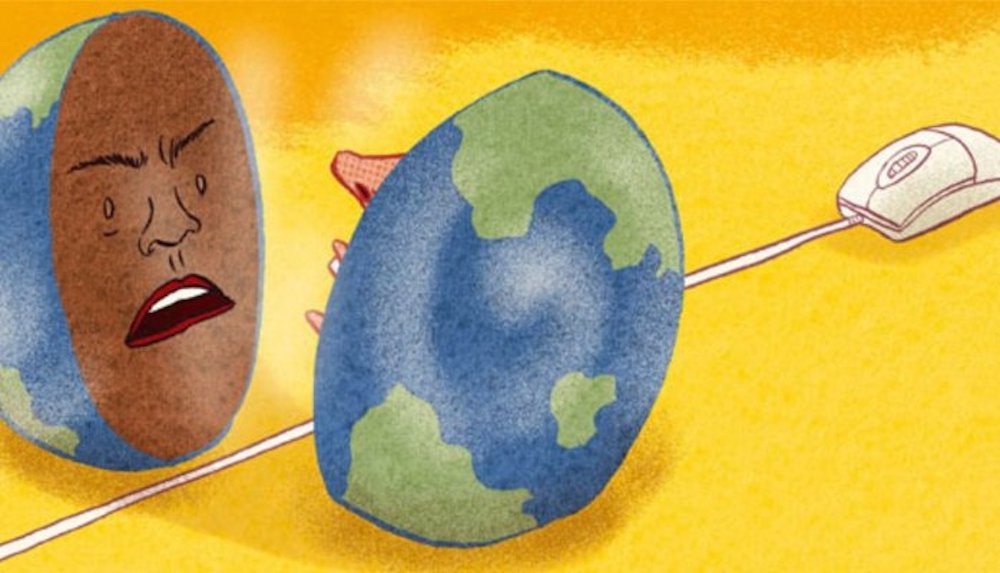
A reflection for marketers on the focus of digital marketing. As a marketer, you may have attended a meeting where the term digital refers to something modern that nobody can explain: what it is and how it works. Very rarely does the concept, in the meeting room, refer to Digital Marketing.
When digital is part of an idea, it takes its most striking form — since paper — will put up with anything, can do anything and more, and is attainable on a relatively low budget. These same properties attach to the professionals who work in the digital, because Digital Marketing as a concept has limits, whereas digital is much broader and more compelling.
By its origin, digital refers to electronic technology that generates, stores and processes data in two states: true and false (binary numbers). A digital computer is a computer that processes information represented in discrete numbers; a digital storage is a device that safeguards digital data.
Before digital technology, electronic transmission was limited to analog technology, which transmitted data as electronic signals of varying frequency or amplitude added to carrier waves of a given frequency.
The digital technology is used mainly with new physical communication media, such as satellite and fiber-optic transmission. At first, a modem was used to convert the digital information on the computer into analog signals so they could be transmitted over a telephone line and converted back into digital information on another device.
Today, digital television and digital radio — for example, mean that these media no longer use electronic signals but rather the digital signal. The same happened to Marketing, now Digital Marketing — according to the Digital Marketing Institute, is the use of digital channels to promote or market products and services to consumers and businesses.
digital channels can function thanks to information and communication technologies (ICT), which are tools that currently influence the human development of both individuals and communities in general. Where there is economic and social inequality across categories of people in a given population in their access to, use of, or knowledge of information and communication technologies (ICT), it is defined as the Digital Divide.
From use to capacity building
Digital Marketing focuses on using channels, and both brands and companies mistakenly try to build those channels. That is not bad in itself; what matters is knowing how to discern the objective behind building them.
15 years ago, websites resided in each company's IT department. It was the technology director's duty to have the() website() that represented() the company on the Internet. Online advertising or online marketing was limited to buying banners or online sponsorships and managing email lists.
When the web 2.0 arrives, the context of communication changes. It used to be one-way; now it is two-way. Although the website is maintained by IT, the marketing director is responsible for keeping it constantly updated.
At the dawn of social networks, many websites were outsourced — the web is not part of the company's technology planning process, but a marketing tool.
Organizations with online service responsibilities — banks, insurers, and telecommunications companies — kept their websites in-house. Outsourcing drove growth in web development firms, design studios, advertising agencies and freelancers.
When social networks became popular, the outsourcing market was quite broad, and these companies began to manage the social networks. At the same time, the mobile revolution began and pushed social networks to grow further.
The transversality of technology
An island with a teledensity of 100% receives the smartphone era — as part of the mobile revolution — together with the cloud (the cloud), changing every paradigm of storage. From that moment on, data is ubiquitous and digital technology begins to be transversal, and this obviously has its implications:
- The reach of digital channels (includes social networks) is greater than ever before in human history. Connected users use at least one channel daily (mobile, computer, etc.).
- Transversality implies integration: Social networks can connect to your computer and phone and keep your information synchronized. This is a challenge for platforms within businesses.
- Usefulness of the content: Users can now compare, which means your value proposition is being measured against your competitor's anywhere in the world. Ignoring this reality is lethal for any business.
- Usefulness of the tools: Our digital channels host a variety of applications that compete for attention against any tool we share with our customers. If these do not improve their lifestyle or produce something of value, they are removed immediately. It does not matter how much you have spent developing or promoting your tool.
- Outsourcing is not enough: If you develop all your elements outside the business, you will surely forget the tasks that must be handled internally. The surprise with digital projects is that there is generally no planning for the business infrastructure that should go hand in hand with the marketing plan. Marketers tend to perceive that technology departments “block” their game, but the reality is that digital marketing plans have to be built.
Can a marketing department manage what is commonly called digital?
Given the whole picture above, we can stress that the term digital is broad and has many facets. What matters today is knowing that a digital strategy is much broader than what is said in the market; it is not a campaign, a mobile development or an ad placement.
There is a very fine line — conceptually — between a digital strategist and a digital marketing strategist. The terms get confused; the latter is not focused on the impact produced by the investments in using digital channels to promote your business. In plain words: it leaves the customer at the door.
It is an arduous task — that usually delays any campaign — when a digital strategy is established within a business. This involves how the IT department will be able to turn the actions of digital marketing into data the business can process and consume. On many occasions, outsourcing raises the challenge of multiple providers for different digital channels, and all the information ends up in the marketing assistant's email inbox (according to Gartner, 85% of businesses' intellectual property stays trapped in email).
The solution is to set up a Digital Governance within the organization, to coherently manage all the digital channels or digital assets of the business, so that the necessary processes and policies can be established to maximize digital investments.
Now more than ever it is time to build step by step within the organization. In digital marketing terms, whatever you don't build today will be the opportunities you lose tomorrow.
Published in Linkedin Pulse.