Pillars of Digital Marketing at INTEC
Last Thursday, October 29, 2015, I had the opportunity to share some experiences on digital marketing with the staff of the Instituto Tecnológico de Santo Domingo (INTEC), at a conference alongside distinguished colleagues such as Mite Nishio and Yasser Mármol. The invitation came from the Executive Marketing Directorate.
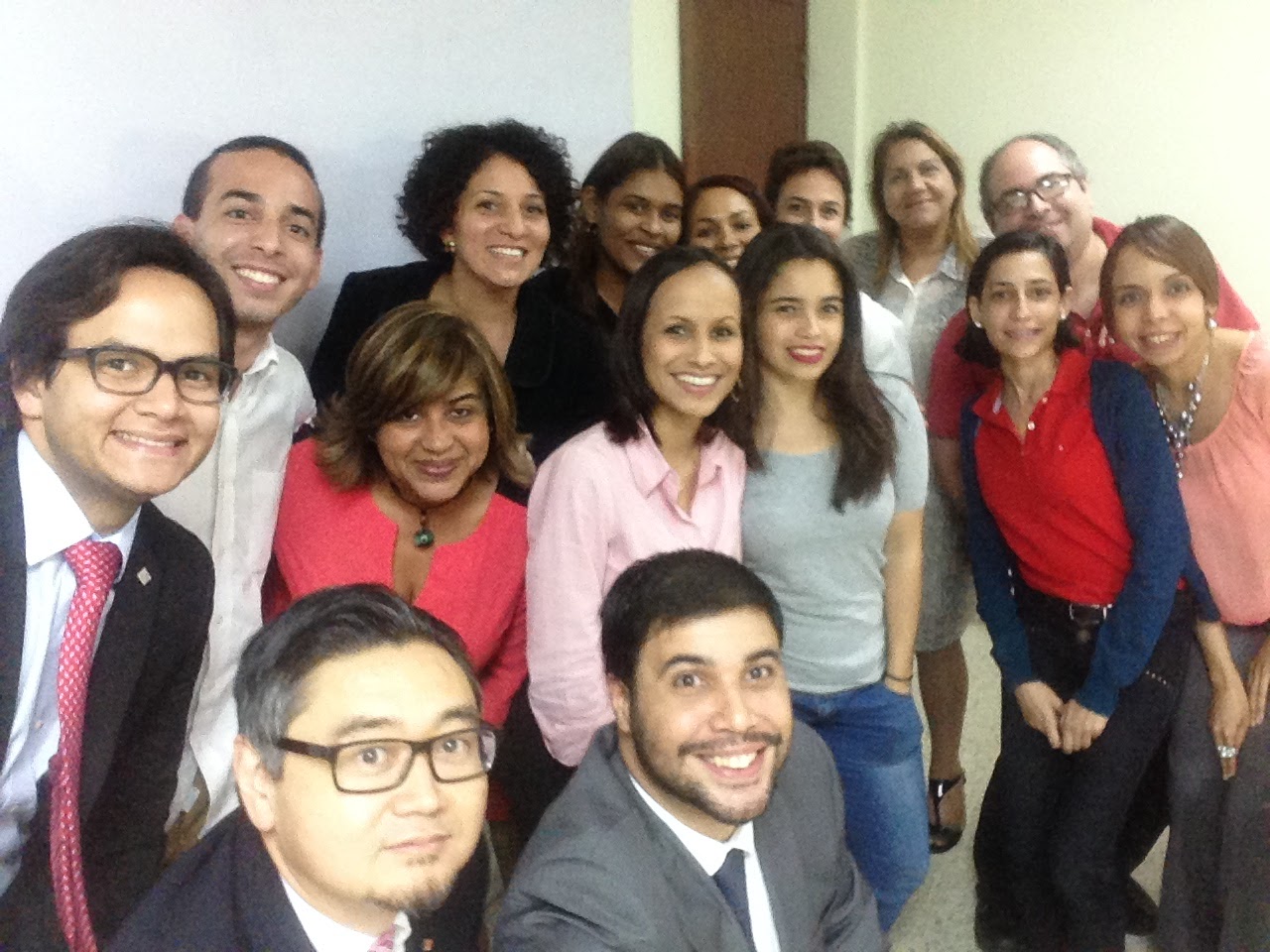
On Thursday, October 29, 2015, I had the opportunity to share some experiences on digital marketing with the staff of Instituto Tecnológico de Santo Domingo (INTEC), at a conference alongside renowned colleagues such as Mite Nishio and Yasser Mármol. The invitation was extended by the Executive Marketing Directorate.

What was presented at the conference?
It began with the most recent compilation of statistics on telecommunications, the Internet and social media in the Dominican Republic, presented by Mite Nishio. The data in the presentation —provided below— are current as of October 2015.
Yasser Mármol then continued, speaking about how the marketing context has changed and showing the before and after in terms of technological evolution. It is worth noting that Yasser's experience is strongly focused on Digital and Mobile Banking, where his work has been key to the marketing communication of the products popularenlínea.com and App Popular, of Banco Popular Dominicano.
My part focused on the Pillars of Digital Marketing. Whenever I get the chance, I try to explain to each audience the origin of Digital Marketing and its evolution. Why? We generally overlook the immutable rules of each activity when something new appears; the most damaging case is when the novelty is just one more channel rather than a new holistic way of thinking.
In that regard, the industry is starting to wake up; an example came last week, when the PepsiCo executive, Brad Jakeman, referred precisely to the «confusion that exists when naming Digital Marketing«, during his talk at the «Masters of Marketing» event of the «Association of National Advertising». Jakeman harshly attacked the current model, which he defined as obsolete. His statement about no longer calling digital marketing rests on the premise of preventing old practices from continuing to be disguised under a new name.
Pillars of Digital Marketing and the Internet
For this reason, it is important to know where trends come from and, at the same time, to be aware of what is truly immutable.
- Google
The world changed thanks to an avalanche of centralized information, available through a query to millions of human beings. This changed the way marketing is done, producing an immediate source of traffic that eclipsed digital media; everyone had to buy from Google, and this is where was bornSEO (Search Engine Optimization) and, for those who did not want to build a position, emergedSEM (Search Engine Marketing). - Web 2.0
The Internet as we know it is Bidirectional, that is, it fulfills the purpose of communication. This was not possible before. With the rise of online collaboration and of 2.0 platforms (users who feed sites in real time), a new form of interaction opened up. This represented a challenge for traditional media —strongly positioned in the first pillar, since little by little users learned to consume content from other users (this is how were bornprosumer,consumers and producers of content). - Social Media
Web 2.0 set the stage for social media, mainly forFacebook, this company now owns the most important apps on the planet: Facebook, WhatsApp and Instagram. Now it is the concentration of users that provides power in the third pillar, making it stronger than its predecessors. Note that social networks should not be seen as web pages, but as applications, given the concentration of users who visit them via mobile devices. - Mobile Phones
Mobile devices, since the integration of mobile data in 1996 and the launch of the iPhone in 2007, have grown at an incredible rate. We currently have a total of 4.5 million smartphones in our country, a clear sign of how far this technology has come. This completely changes the landscape of contact and interaction with users. It changes marketing in the Dominican Republic for good.Now the vast majority of the pillars are accessed through the last one, which is a challenge for marketers in every organization.
Remember that the pillars do not disappear. They are part of the Marketing plan —as Yasser explained to those present at the conference. It is the marketer's job to know which pieces to include in their mix.
The disruption of the new, has simply become a convenient noisefor those who want to sell the last soda in the desert. For this reason I agree with Brad Jakeman on the concept of a single, indivisible Marketing.
What is the next pillar?
Data.
Think about it carefully: each pillar has built the next one over the years and, at the same time, —like a centrifuge, the previous pillar adds its characteristics to the latter. From the founding of Google to the consolidation and growth of the mobile device as the center of interaction, data has been a cross-cutting component all the way.
What remains now is to build applications, collect data and start makingdecisions based on it. A task in which our country is 20 years behind. We have enjoyed the benefits of each pillar in its time, but we have never captured —as a country, relevant data. Both Google and Facebookknow our country better than its own professionals do.
This is the challenge and the great problem of marketing in the Dominican future.
I hope this serves as a starting point on your path in the world of digital marketing. You can read other articles on my blog.
You can listen to my commentary on digital marketing and technology every Tuesday starting at 9:20am on Matutino de Teo Veras (on 91.3fm) and every Thursday starting at 1:30pm on Esto No tiene Nombre (on 95.7fm).