Digital banking and why it matters in the Caribbean
Disruption, a powerful force, is reshaping digital banking in the Caribbean. Customer expectations, technological capabilities, regulatory requirements, demographics and the economy are converging in the imperative mood, driving an immediate evolution.
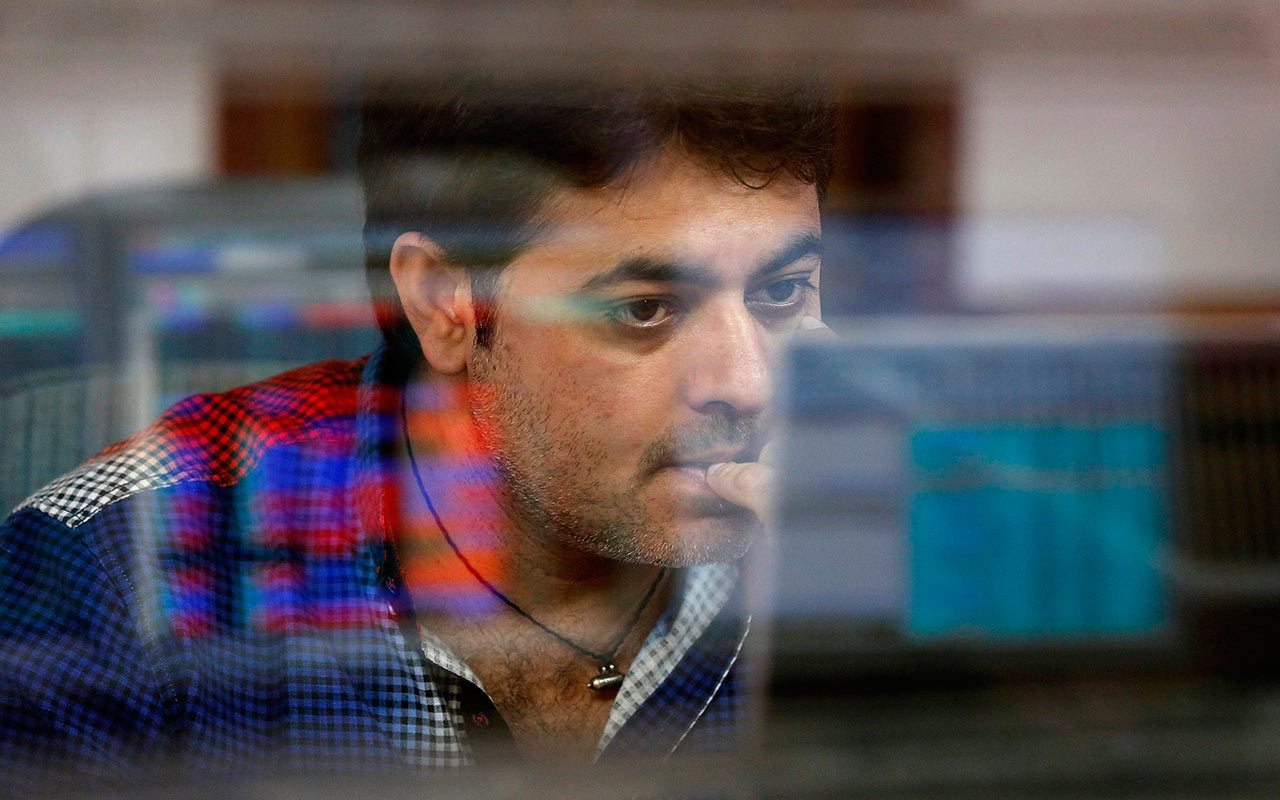
Disruption, a powerful force, is reshaping digital banking in the Caribbean. Customer expectations, technological capabilities, regulatory requirements, demographics and the economy are all being conjugated in the imperative mood, catalyzing immediate evolution.
Disruption and innovation reach banking
According to PricewaterhouseCoopers (PwC) in its report Retail Banking 2020 —which gathers the opinions of 560 banking executives in more than 17 markets—, technological trends are changing the landscape completely, becoming a powerful enabler of service and, at the same time, an agent of cost reduction. Innovation, the study says, is imperative.
But what stands out is that fewer than 20% of respondents said they feel fully prepared for the future. Disruption is another way of naming change; it is the term coined by Deloitte in its report Banking Disrupted. The report shows how traditional banking in Europe is being threatened by the emergence of competitors better prepared technologically.
The clearest example of these new competitors is in electronic payments, which has become a key tool for delivering value to customers. Innovation in payments has come from players that are not banks, such as PayPal. At the same time, cash-rich companies such as Google and Apple have arrived, having shown interest in this segment.
Google Wallet invites customers to “Shop. Save. Pay. With your phone”. Apple's Passbook, in turn, lets users use electronic boarding passes, coupons and vouchers directly on the phone. Its next evolution, Apple Pay, has become a payment network that enables 12 million users, according to measurements by Phoenix Marketing International.
The entry of new, fully digital players, which are not subject to the same regulatory straitjacket that financial institutions face, has created a reaction that has pushed global banking to explore digital alternatives. This is where digital banking comes from.
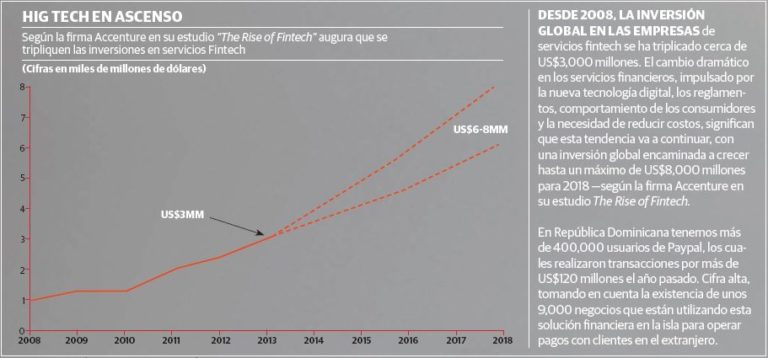
Differences between electronic and digital banking
The electronic is tied to present-day technologies (internet, mobile, etcetera) that speed up processes that would be inconceivable by hand. One example is ATMs: a card and the machine's interface save the user time in getting physical cash. Technology shortens the time this process takes.
The digital, in contrast, involves a connection or relationship with entirely intangible goods. Music streaming is a good example: we pay for a license or permission to listen to a song or album. It is in the cloud; it is not ours, we can listen to it through a digital channel and, on many occasions, only through the provider that offers it.
Digital banking in the Dominican Republic and elsewhere
In recent years we have been hearing about the digitalization of banking. For Yasser Mármol Lara, manager of the Youth Segment and Digital Marketing division at Banco Popular Dominicano, “this arises from the exponential growth of users with internet access, social networks, mobile applications, among others; but, above all, from the time they spend every day browsing, sharing and making purchases through the many platforms available in cyberspace”.
Mármol states that banks have realized how important it is to design digital strategies that allow them to connect with their current and potential customers from anywhere (inside or outside the country), at any time of day or on any access device (desktop computer, tablet or smartphone).
Institutions that begin their journey toward digital banking, whether banks or not, are called financial technology companies, or fintechs. These companies are gaining prominence by stepping into the different stages of the typical value chain of a financial institution, where social networks are an important component.
For Accenture, in its study Banking 2016-Next-Generation Banking, it stresses the importance of creating social communities, with the aim of listening to the customer across the different social media platforms so that new initiatives can emerge from their own feedback, or existing ones can be improved. Gathering information from users can provide an advantage.
Audience, the axis of digital banking
Banco Popular Dominicano has a broad digital base: more than 2.5 million monthly visits to its website popularelinea.com make it the most visited Dominican site. To this impressive figure we can add more than 200,000 users of its mobile app, making it the first bank in the country to offer a downloadable app to its customers; more than 400,000 users of the tPago service; and more than 345,000 followers across all its social networks. An example of organic digital reach.
Audience building is a worldwide trend. Recently the Innovation Center of BBVA bank released a study called Social Media Banking: Retaining and Attracting Customers on Social Networks, which collects success stories of digital interaction. The report finds that “Spain lags behind the United States, for example, in the use of private channels and corporate social platforms”.
The Dominican Republic remains at the forefront in this respect. Mármol explains that “about five years ago we understood that the nature of social media is based on two-way communication, and we acted accordingly: offering institutional and commercial information, answering questions about products and services, and channeling and following up on cases of customers who run into a service problem”.
Management's current challenge is to embrace innovation in order to make use of the information circulating on the web and social networks; at the same time, to move its technologies toward cloud computing to gain more flexibility and apply business strategies based on big data. In plain words: big data is storing continuously.
Outlook
Outsourcing is no longer an option; it poses the challenge of multiple providers for different digital channels, and all the information ends up in email. According to the research and consulting firm Gartner, 85% of businesses' intellectual property gets trapped in email.
Banking has to move forward, overcome its challenges and redesign itself to win in the next era. It must not only execute on today's urgencies, but also innovate and transform itself into a fintech to face the radical future that lies ahead.
Published in the online version of Forbes México Magazine, June 2016.