Mobile ecosystems in the hands of a few
A decade after the world first met the touchscreen smartphone, we can see how mobile ecosystems have evolved in consumer preference, producing two well-defined camps: Android and iOS.
A decade after the world first met the touchscreen smartphone, we can see how mobile ecosystems have evolved in consumer taste, producing two well-defined camps: Android and iOS.
For those who bet on a world dominated by Apple, snatched up by Amazon, or run by RIM, it is clear that the folks at Google managed to make their path by walking it.
From the new digital devices that reached the market to the growing interest in virtual reality thanks to new applications, 2016 was a great year for digital mobile devices.
Leading mobile ecosystems in the United States
Last December, Nielsen analyzed some of the main trends in the digital space, including the top smartphone apps and operating systems in the United States.
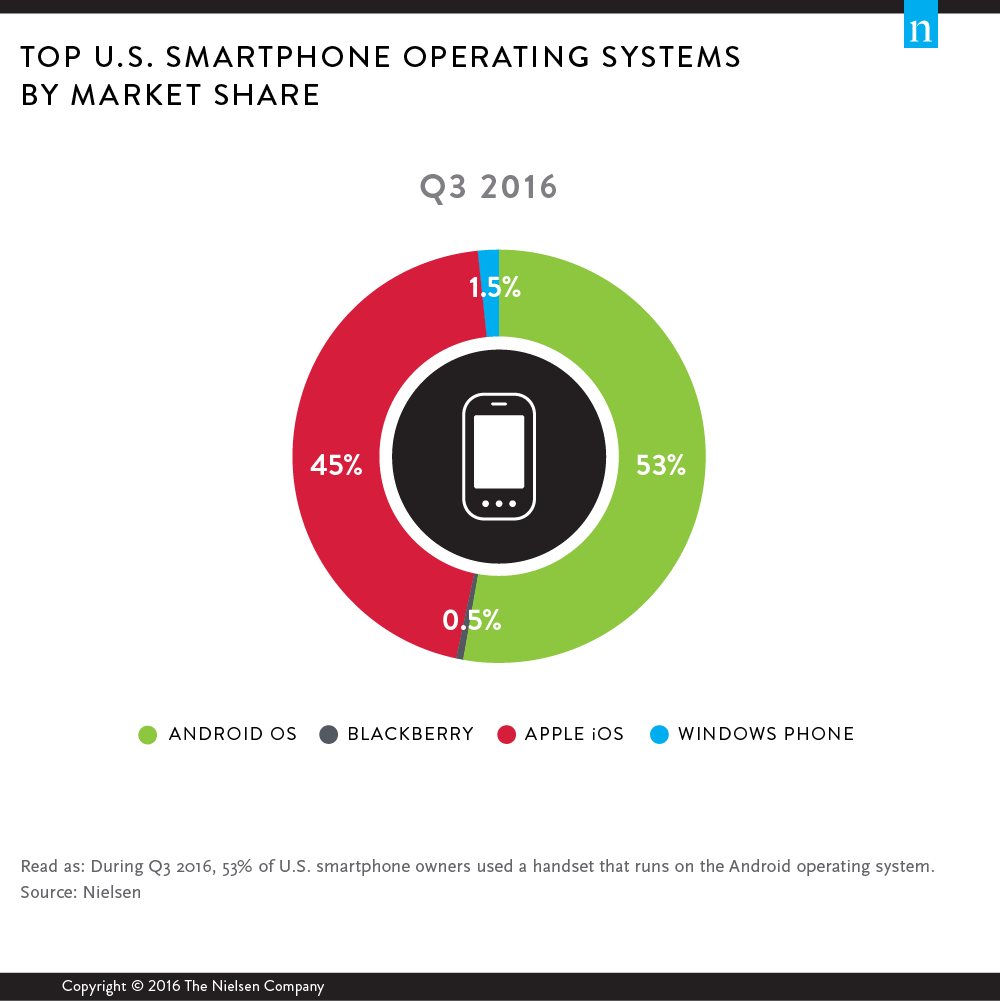
Android clearly holds a lead built on an open model that aimed its guns at the segment of the public most sensitive to, and most interested in, access to technology: the base of the pyramid.
Apple, by contrast, with its aspirational model, has managed to hold on to its market share. Last December, the strategy of entering the phablet category paid off, making it the leader in a category that accounts for 37% of total sales in the United States.
According to Nielsen's chart, Blackberry and Windows Phone have already left the market, with shares below 2%.
Facebook is a threat, but the big winner is Google
The distribution of market share among mobile ecosystems shows a state of consolidation and maturity, according to the well-known blogger Enrique Dans. He argues that this market revolves around a few companies such as Google, Apple and Facebook.
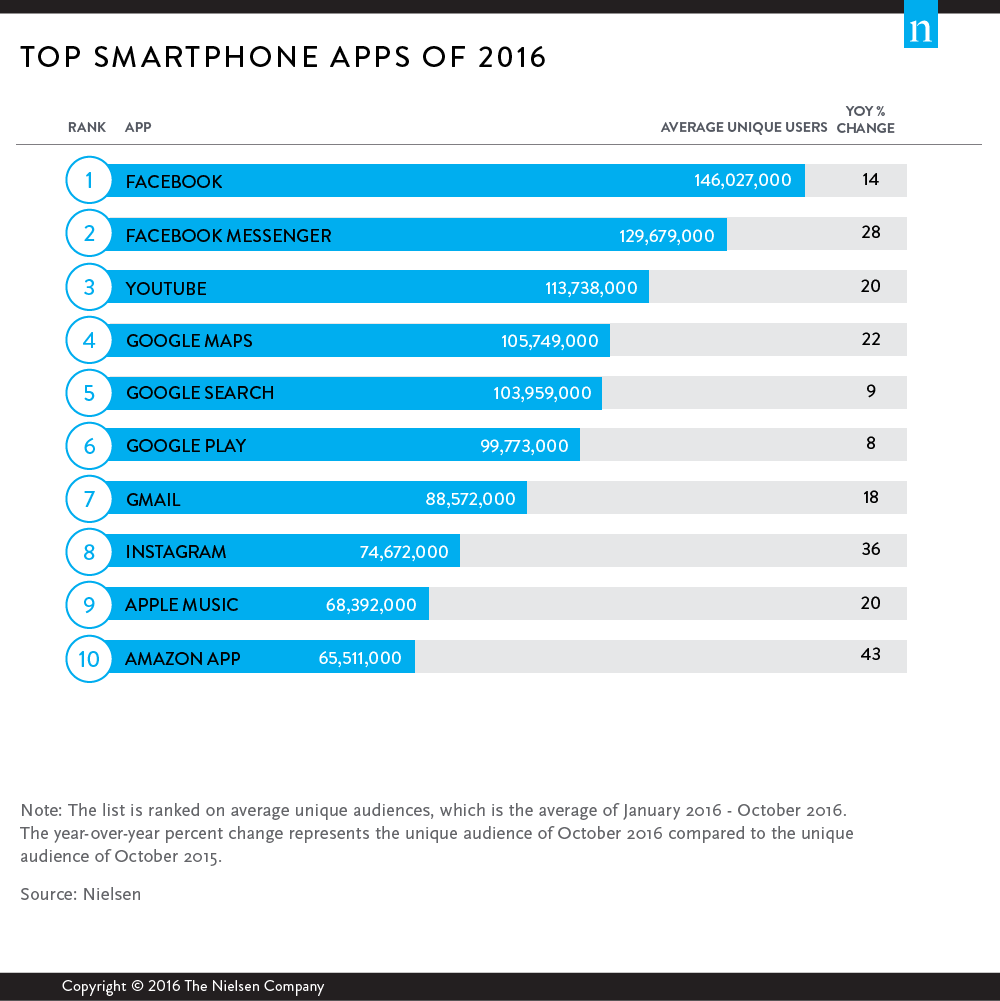
Facebook once again took the lead as the top smartphone app in 2016. The social media app had more than 146 million average unique users each month, a 14% increase over the previous year.
Facebook Messenger came in second with more than 129 million average unique users each month, followed by YouTube with more than 113 million average unique users each month.
From third to seventh place, Google dominates the list with apps such as YouTube, Maps, Search, Play and the legendary Gmail. Apple Music appears in ninth place.
Among the top 10 smartphone apps, the ones with the biggest year-over-year change were the Amazon App and Instagram, with user growth of 43% and 36% since 2015, respectively.
This means that Google holds control of the operating system market and, quantitatively, of the app market as well. Apple, although it has one of the best operating systems, manages only a small share, which weakens its position.
Google's best decision was to bet on an ecosystem model for its mobile devices years ago. It was seen as a futile competition, but that strategy has consolidated the position it currently holds in the global market.
We see Facebook as the silent threat, one that depends on both Apple and Google. Its attempts with Internet.org and its actions for Feature Phones with the social network preinstalled, are strategies to take over the ecosystem, moving from app to operating system.