The Return of the LP, a Century-Old Format
Sales of vinyl albums (LP) in the United States grew by 1,200 percent over the last ten years. That is a fact.
Sales of vinyl (LP) albums in the United States grew by 1,200 percent over the last ten years. That is a fact.
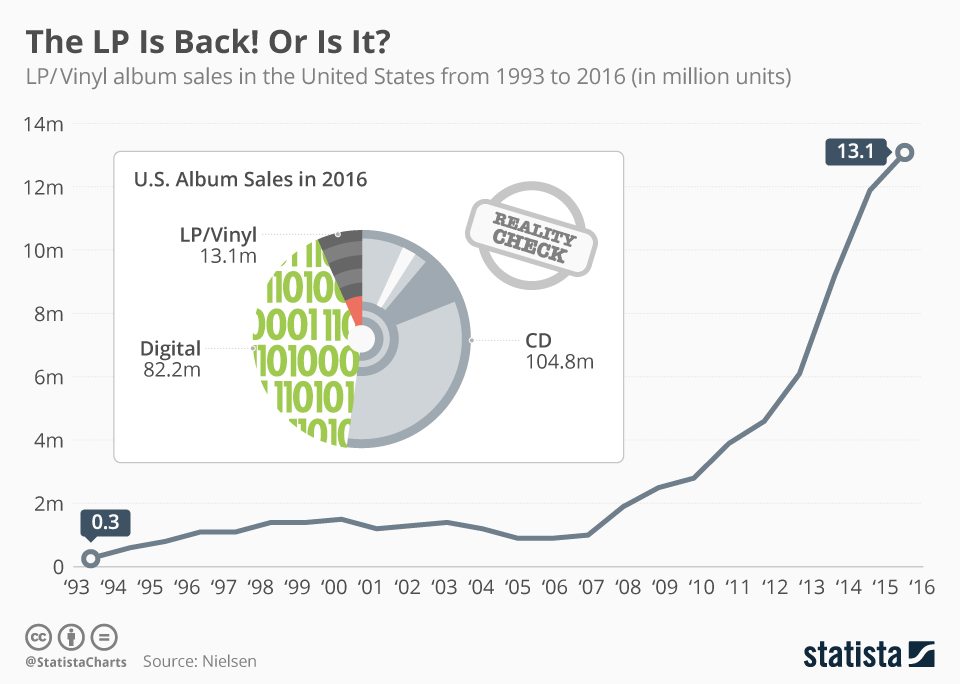
Many reports celebrate the return of the LP as a counterpart to the ‘frivolous’ digital music that is often consumed these days.
But how big is the LP's comeback, really?
Moreover, should we throw out all our old turntables to get ready for the future of music?
Not really. According to the year-end music report published by Nielsen, LPs accounted for more than 6,5 percent of album sales in the United States.
When streaming and downloads of individual songs are counted, that number falls to 2,3 percent of total music consumption.
However small the impact of rising LP sales on the bottom line of the music industry, it is still interesting to watch a century-old technology resurface.
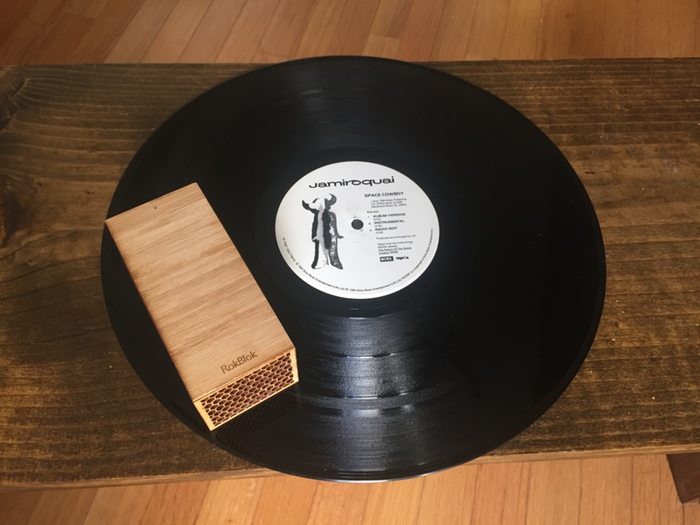
We see projects on Kickstarter such as the first wireless, portable, cordless turntable, called RokBlock, which confirms the return of the LP.
Nielsen's report on the music industry in 2016
The year 2016 had barely begun when we were already saying goodbye to musical heroes gone too soon.
David Bowie, Paul Kantner, Glenn Frey, Leon Russell, Maurice White, Prince, Juan Gabriel, George Michael, Sharon Jones … the list kept growing.
Still, although it is sad that 2016 became a meme about dead artists, the industry also had reasons to celebrate.
Music consumption is at an all-time high.
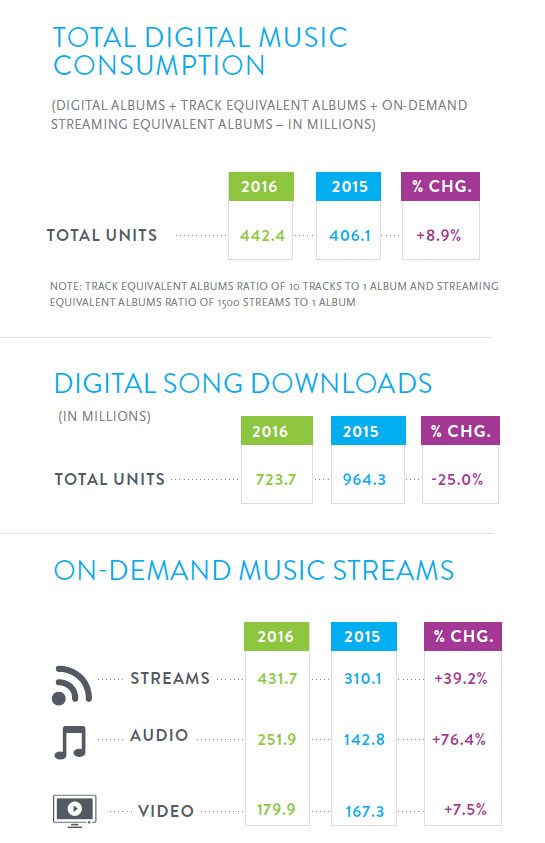
Total sales volume rose 3% compared with 2016, driven by a 76% increase in audio streams, enough to offset the drops in sales and deliver a positive year for the business.
About 650 solo artists, groups and collaborators appeared on the Top 200 Song Consumption chart in 2016, representing more than 1,200 different songs.
Although the LP is captivating collectors again (so they can show off their great collection), the truth is that the Audio Streaming is a reality in the music industry.
Photo courtesy of Kai Oberhäuser, from Cologne, Germany.