Unicorns in Silicon Valley, Ciguapas in the Dominican Republic
The Dominican entrepreneurial ecosystem is expanding steadily. This raises the risk that fantasy companies, or unicorns, will take precedence over putting resources toward solving our social problems.

The Dominican entrepreneurial ecosystem is constantly expanding, which raises the risk that fantasy companies, or unicorns, will take precedence over the use of resources to solve our social problems.
First, we need to understand what a unicorn is; in the United States it is defined as a startup valued at more than one billion dollars.
The term was coined in 2013 by venture capitalist Aileen Lee, who chose the mythical animal to represent the statistical rarity of such successful companies.
Types of unicorns
- Canadian tech unicorns are known as narwhals, or sea unicorns.
- A decacorn is a word used for companies valued above US$10 billion,
- while the hectocorn is the appropriate term for a company valued above US$100 billion.
- A dead unicorn is defined as a unicorpse.
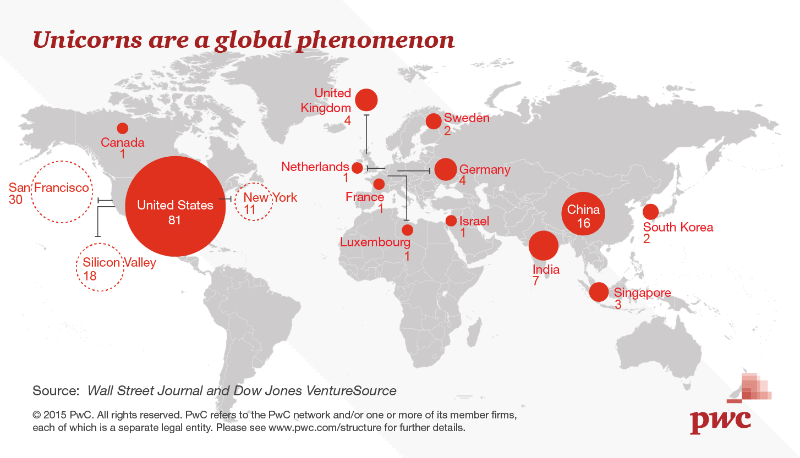
According to TechCrunch, there were 223 unicorns as of March 2017.
The best-known largest unicorns are Uber, Xiaomi, Airbnb, Palantir, Dropbox and Pinterest. Snap, Inc. is the decacorn most recent to go public, on 2 March 2017.
Bill Gurley, a partner at Benchmark, predicted in March 2015 —in the face of the rapid increase in the number of unicorns— what he has called a «risk bubble» that will eventually burst, leaving in its wake what he calls dead unicorns or unicorpses.
The Entrepreneur Myth
According to Janessa Lantz of Thing Growth, the myth of the lone entrepreneur who creates innovation is propped up by the industry because it is an inspiring story.
But it is not a very useful story.
If you are interested in attracting young people with MBA’s from Harvard, Princeton or Babson away from the financial world or toward a tech career outside our country, the myth of the lone entrepreneur is a useful story.
But if a country is interested in building an innovation hub in its city or country, or plans to dethrone Silicon Valley and —while at it— knock the United States off its perch in innovation, it must understand the real story of how innovation works.
«Yes, innovation needs entrepreneurs — says Lantz, it also needs venture capital. But the most weakened and possibly most important factor in innovation is the role of government funding for academic research».
Together, these three ingredients have been responsible for some of the most interesting technological advances of the last 50 years.
The Ciguapa

A Ciguapa is a mythological creature from Dominican folklore. It is commonly described as having the human form of a woman, with brown or dark blue skin.
Its feet face backward and its hands are very long; its hair is straight, so soft that it covers its completely naked body.
It supposedly lives in the high mountains of the Dominican Republic; no creature like it has been found in centuries.
In the same way, we have not seen a Dominican startup valued at a billion dollars.
Why?
Unicorns Are Not Born in the Dominican Republic
If we compare a Ciguapa with a Unicorn, we can see their differences; both are magical creatures, although the Ciguapa is closer to a Mermaid in its charms.
When you find a Unicorn, you have something of great value. Even its droppings can be gold nuggets (big offices, outsized profits; an «entrepreneur's life»).
In contrast, the charm of the Ciguapa —according to legend— can cost anyone their life.
The reality is that we must analyze the opportunities that developed in Silicon Valley over the past 50 years.
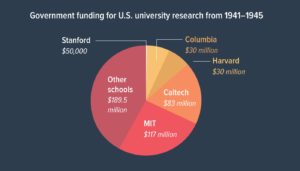
This was thanks to investment by the American military under Cold War pressure, and the different tasks were distributed among multiple research teams.
The money flowed through the universities, where the requirements helped sustain the researchers.
For 10 years, for relatively little money, creations such as the microwave all the way to the microprocessor came out of those efforts.
Teaching entrepreneurship as the child of necessity
Frederick Terman was head of the engineering department at Stanford University —one of the institutions that received the least money at the time.
As a solution, they began teaching researchers how to sell their discoveries.
The three things that create the entrepreneurial «ecosystem» were the following:
- Know-how: This is Terman's legacy. Its goal is to teach scientists, researchers and other entrepreneurs the basics of product-market fit, customer development and growth strategies.
- Knowing it can be done. This creates the «flywheel» we see in technology hubs such as Silicon Valley, Berlin and Tel Aviv. Entrepreneurs inspire the entrepreneurial spirit.
- Finding the space. This is the place where people can interact – business plan competitions, a venture café, an academic institution.
Here are several reasons why today's entrepreneurs meet in cafés and why their best tool is networking.
In the end, those who did not receive a large subsidy or generous government funds had to learn to raise their own capital.
When the investors arrive
Fairchild Semiconductor was the first venture-backed company. And in the mid-1950 Silicon Valley saw its first IPOs: Varian (1956), Hewlett Packard (1957, founded by Terman's students) and Ampex (1958).
Steve Blank, a Stanford professor, has published volumes of research and posts on the secret history of Silicon Valley. He states the following:
«When venture capital started 50-60 years ago, they also funded risky projects. There was no place that returned dividends. Nowadays venture capital funds are used for smart apps and social media, things that return profits. God bless capitalism.»
I don't think there's anything to add.
So, we can understand the Ciguapa
Locally we have entrepreneurs and interesting initiatives for access to venture capital. A community of angel investors waiting for the next Facebook.
But investment in research, or the chance encounter between entrepreneurs and researchers, does not happen.
We will have to wait for scientists to learn to be entrepreneurial the way they did at Stanford 5years ago, outside and very far from our country.
What do I propose?
An organic effort by universities so that interested —entrepreneurs, with capital and drive, can learn about the research being done at those institutions.
Events on innovation and university-industry linkage have recently been held in the region, but the same problem occurs: scientists shut themselves away in the cloister and wait for the white smoke.
Until the three axes come together, we will not have Unicorns in the Dominican Republic, nor have we caught a Ciguapa to find out what it is worth.