Augmented reality from the phone to the car
Much has been written about augmented reality —augmented reality (AR) in English—, a technology that is overtaking virtual reality in terms of feasibility and convenience. The year 2016 showed its potential to stay on our devices thanks to the explosion of Pokemon Go, which reached more than 100 million users…
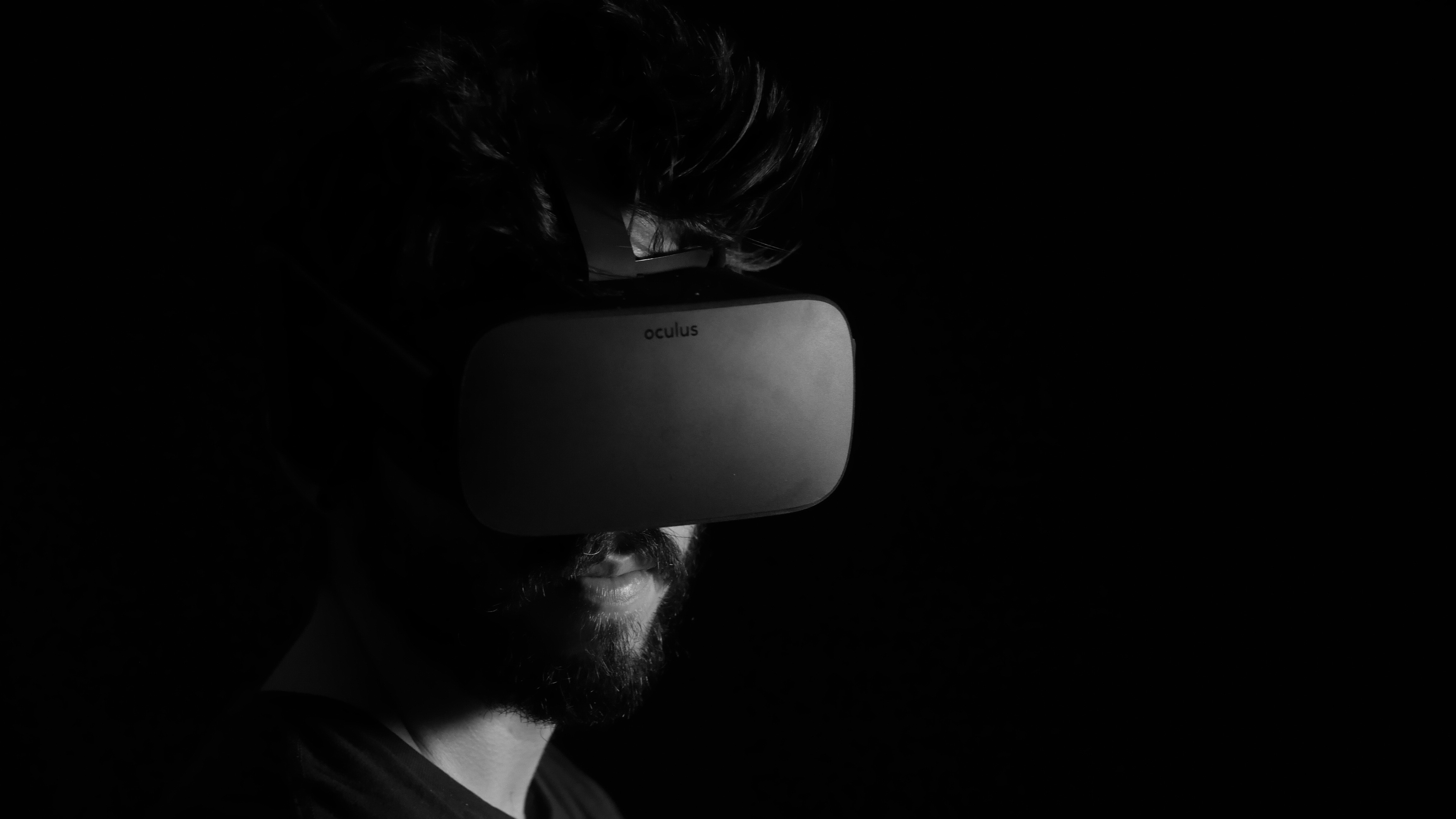
Much has been written about augmented reality —augmented reality (AR) for short—, a technology that is overtaking virtual reality in terms of feasibility and convenience.
The year 2016 showed its potential to stay on our devices thanks to the explosion of Pokemon Go, which reached more than 100 million users in just three days. Virtual reality has not been so lucky.
Augmented reality, for the everyday citizen, consists of overlaying a layer of digital information and interaction on top of
the images and videos we observe in real time, which helps enrich the context from the user's point of view. For many analysts there is a “true augmented reality” that will probably
not go mainstream anywhere else, except in the automotive industry. This concept shows virtual objects fully integrated with the real environment, visible at various depths and perspectives, not just on the surface of a screen.
Despite the explosive growth of AR, software and content are now created mainly for devices with a small screen, such as smartphones and tablets.
“True augmented reality” is still out of users' reach, but cars will get there first.
A hardware issue
For it to reach the mass market, the industry needs an ecosystem rich in applications and content, as well as devices capable of handling it. That hardware is far from ready. Developers rely on the screen of the smartphone as the main environment for deployment.
Wearables are not an option, since it is nearly impossible to pack high performance, experience, convenience and a good-quality wide-angle image into a small format.
Platforms such as Apple's ARKit for iOS only show the lack of advanced hardware for “true augmented reality”.
Which gadget has the greatest potential to deeply integrate virtual objects into the environment?
The answer is automotive: cars already have enough transparent surface to become a hardware platform for “true augmented reality” on the windshield, and the rise of driverless cars will create the demand.
Applications will make the difference…
Thousands of developers are already committed to delivering intensive, immersive AR experiences through Google Play and Apple's App Store. However, many of those applications have no use in real-life situations and serve only for entertainment.
According to Vitaly Ponomarev, CEO of WayRay, a company working on “true augmented reality” in Russia and Switzerland, the company is developing AR navigation and visualizing advanced driver assistance systems. “What if the impact of augmented reality on the automotive industry goes beyond new business models?”, he asks.
In the automotive world
In the automobile industry, the “true augmented reality” can open up unlimited opportunities for location-based content with specific commercial purposes:
- New navigation and geolocation functions that adjust the experience to environmental conditions in real time.
- New types of ads that are relevant and time-aware.
- Gamification of transport and entertainment processes in the car.
- New types of social networks, a niche that Waze is already exploring.
Can it speed us toward driverless vehicles?
At the industry's current pace, carmakers aim to raise the level of self-driving capability by one point every two years.
Recently, Audi introduced the A8, a model with level 3 driverless capabilities, (a level at which drivers are still necessary but are only able to completely hand over the “critical safety functions” under certain traffic or environmental conditions).
Carmakers have committed to reaching that milestone in 2018.
With driverless cars, expected to be available to regular consumers in 2025, AR will play an important social role by helping users adapt to the new reality.
AR is a natural way to visualize the vehicle's decision processes so that the passenger feels safer and more comfortable.
Automotive AR could use a combiner glass with a holographic film, which works as a lens and reflects only certain wavelengths. People will look through the combiner glass in front of the windshield and see the projected video or the interactive interface.
Structural challenges of augmented reality
One challenge has to do with the use of rearview mirrors: changing behavior around the use of a camera will be a paradigm to overcome.
What is interesting is that the model allows the market to adapt according to the availability of devices with over-the-air updates, as Tesla recently demonstrated when it helped customers during Hurricane Irma's passage through the city of Miami.
AR has the potential to support the automotive industry in the transition to driverless transport. This means that in the automotive sector it is a trend that will keep growing and will pave the way for “true augmented reality” in other industries.
Published in Revista Bohío #200, October edition 2017.