Digital assistants: artificial intelligence everywhere
The nature of the technology industry is to always be looking for the next big thing (which in English would be “The Next Big Thing”). Rarely have its members unanimously agreed on that…
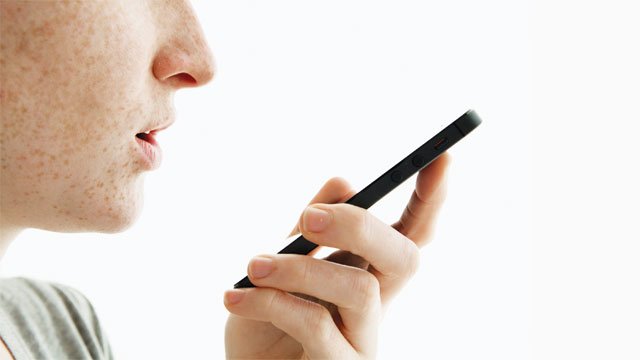
The nature of the technology industry is to always be looking for the next big thing (which in English would be “The Next Big Thing”). Its members have rarely agreed unanimously on that definition. If the predictions prove correct, touch control will soon be seen as retro, while virtual voice digital assistants take control of our lives.
A virtual assistant is a software agent that can perform tasks or services for an individual or user. Being software, it can “inhabit” any device. Popularly known as Artificial Intelligence (AI), these are services that have taken off considerably in recent years and are the key feature of new smartphones and consumer devices for the home.
The best-known assistants so far are Apple's Siri, Google Assistant, Amazon Alexa and Microsoft Cortana. Other players want to join this exclusive list: Samsung, HTC and Essential. If you think Facebook fell behind, consider that “Facebook's M” could be available to hundreds of millions of Facebook Messenger users this year.
Apple and Google have large installed bases of smartphone users, and Microsoft has a similar installed base of Windows-based PCs. After years of promises, voice recognition technology has finally matured. Meanwhile, Amazon is winning. Alexa was the first assistant to gain the ability to place online e-commerce orders, from Amazon.com.
The technology's promises
Among the promises are better search results, personalized answers and contextual information at your fingertips; voice interaction as a faster, more convenient and more human way to ask questions and get informed; access to calendar, email, social media and online shopping accounts, etc.; and management of devices as part of the “Internet of Things”, which makes administering them easier.
Fragmentation as a challenge and a risk
The biggest problem with the virtual assistant ecosystem right now is that it is still too early to define the category; a number of major players are competing for a position in the market. Other companies are still to present their own technologies ahead of time, in short: raw, very raw.
Between Alexa, Bixby, Cortana, Google Assistant, Sense Companion, Siri, Viv and others, it can be hard to remember the exact capabilities of each platform as features keep evolving. Right now they are sales tools for those companies, among which Amazon is the competitor with the clearest advantage —yes, Amazon— with its “vending machine” Amazon Echo (in all its flavors: Echo Dot, Echo, Echo Look and Echo Show).
Where they are used
There are signs that consumers are not equally enthusiastic about the idea of talking to their gadgets. According to a recent Creative Strategies survey, people prefer to use smartphone-based virtual voice assistants in the privacy of their home (39%) or car (51%). Only 6% of those who use the technology said they did so in public, and barely 1% admitted to using “Siri and her friends” at work.
How smart they are
According to research by the digital agency Stone Temple, the Alexa assistant that powers Amazon's popular line of voice-enabled speakers was able to answer only 20,7% of the 5.000 questions posed as part of the experiment. Google Assistant and Microsoft's Cortana showed they knew much more of those same questions, while Apple's Siri performed similarly to Alexa.
| Assistant | Answers | Percentage correct |
| Google Assistant | 68% | 90% |
| Cortana | 56% | 81% |
| Siri | 21% | 62% |
| Alexa | 20% | 87% |
A commercial approach
According to reports compiled at CES, Alexa dominated this year. Although Amazon did not officially attend the conference, its assistant showed up in car infotainment systems, new smartphones, robots, lamps and even laundry machines.
According to the magazine Times, Ford, Whirlpool, Lenovo, GE and Dish are some of the brands announcing plans to add Amazon's voice-activated assistant to their hardware. That will make it possible to interact with those devices and say, for example, “Alexa, how much time is left on my wash cycle?”, instead of running to the washing machine. With Alexa, Amazon is building an invisible operating system to run a wide range of aspects of everyday life.
This technology is promising. In the 190 edition of this magazine we addressed the possibilities of tapping into the natural human interface: the voice. If you find web positioning a challenge, consider from now on that the battle for phrases and verbs will be the norm in the coming months. Voice commands and marketing commands.
Originally published in Bohio News.