Banco Popular, a pioneer in contactless payment cards
Banco Popular Dominicano, the country's leading credit card issuer, announced the launch of its new Popular Credit Cards with NFC (Near Field Communications) technology, becoming the first Dominican financial institution to offer its customers this form of contactless (payment). As part of the Autoferia Popular…
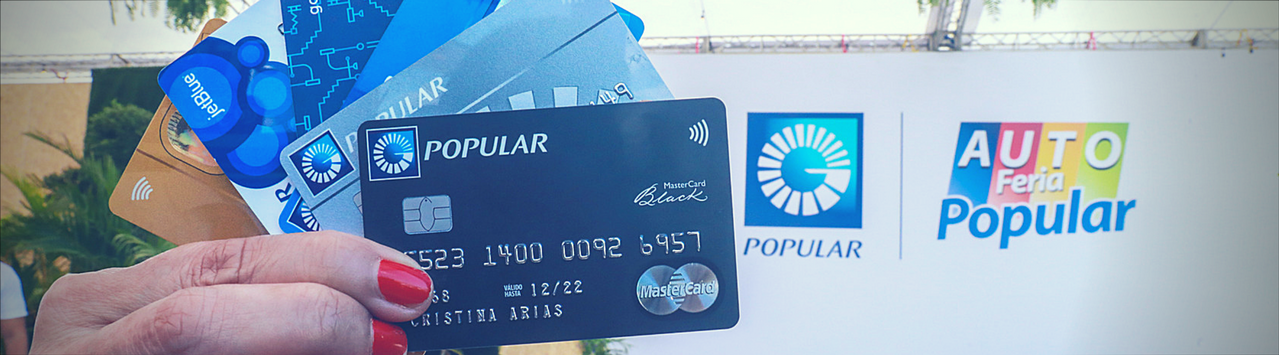
Banco Popular Dominicano, the country's leading credit card issuer, announced the launch of its new Tarjetas de Crédito Popular with NFC (Near Field Communications) technology, thereby becoming the first Dominican financial institution to offer this form of contactless (Contactless) payment to its customers.
At the Autoferia Popular 2017, the financial institution announced that it will roll out these new cards gradually over the rest of 2017 and in 2018.
However, customers who want to receive a contactless payment card before their current card expires can request a free promotional replacement until 31 March, through the offices of Popular, Telebanco Popular, or by filling out the form available at www.popularenlinea.com/tapealo
Credit cards that integrate this technology offer several advantages: transactions are faster and simpler, they are more secure because no third party has to handle the card, and wear and tear on the payment instrument is reduced.
“This technology improves the customer experience by removing barriers at the moment of payment, speeding up the purchase process, and establishing a secure transaction standard. It is ideal for all kinds of payments, especially low-value ones”, said Austria Gómez, Vice President of the Cards Area at Popular, during the launch at the Autoferia Popular.
How do you “tap” a Popular card contactlessly?
The transaction is made by bringing the contactless card close to a payment terminal adapted to NFC technology, an act that Popular calls “tapear” (tapping) the card.
In a typical sale, the attendant must first enter the amount for the customer to approve, and the customer then places the card on the payment terminal. The card's internal antenna receives the transaction frequency from the terminal and sends back a response, validating the operation.
The range of the NFC transmission is short, roughly less than two centimeters or 0.7 inches. The card reader must be practically touching the payment medium and stay that way for more than half a second.
In addition, contactless payment cards use the same encryption as chip cards (EMV technology), so contactless transactions are protected by the same standard. A chip cannot be cloned.
There are already more than 9 million cards contactless in several Latin American countries.
AZUL brought «contactless» (NFC) technology to the country
NFC is a wireless radio-frequency technology, like Bluetooth or Wi-Fi, that lets electronic devices interact with each other simply and securely, allowing consumers to make contactless transactions, access digital content, and connect devices with just a tap.
This technology is currently present in the United States, Canada, and countries in Europe and Asia. It reached the Dominican Republic in April 2016 through AZUL, a brand of Servicios Digitales Popular, which has 100% of its payment terminals adapted to NFC.