Technology to Meet the SDGs and the 2030 Agenda
After a decade of growth, the global smartphone market stalled in 2017. According to the latest estimates from the market research firm IDC, a worldwide total of 1.472 million smartphones were shipped in 2017, practically unchanged from the 1.473 million units shipped in 2016. The market…
After a decade of growth, the global smartphone market stalled in 2017. According to the latest estimates from the market research firm IDC, a worldwide total of 1.472 million smartphones were shipped in 2017, practically unchanged from the 1.473 million units shipped in 2016. The smartphone market has hit its ceiling.
To understand how the market will take on the challenges and generate alternatives this 2018, we accepted the invitation from ALCATEL (TCL) to visit the Mobile World Congress (MWC); the largest gathering in the world for the mobile industry, organized by the GSMA and held at Mobile World Capital, Barcelona, from 26 February to 1 March.
More than 108,000 attendees, more than 2,300 exhibitors, more than 400 operator companies, more than 10,000 operator attendees and 208 countries came together in Barcelona. This year's MWC theme focuses on “creating a better future”, a concept closely aligned with the trends of Industry 4.0 and the United Nations Sustainable Development Goals.
Making the Sustainable Development Goals a reality: Michael O’Hara, CMO of the GSMA, explained that “Creating a better future” is tied to the mobile industry's commitment to the UN Sustainable Development Goals (SDGs) and puts the emphasis on what the mobile ecosystem can do to create better conditions for citizens.
“We firmly believe that mobile devices are the main mechanism for achieving all of these goals”, he said. “We have gone through a period in which ‘mobile is everything’ and ‘mobile is the next best thing’, and now we want to talk about what mobile devices can do”.
What are the SDGs?
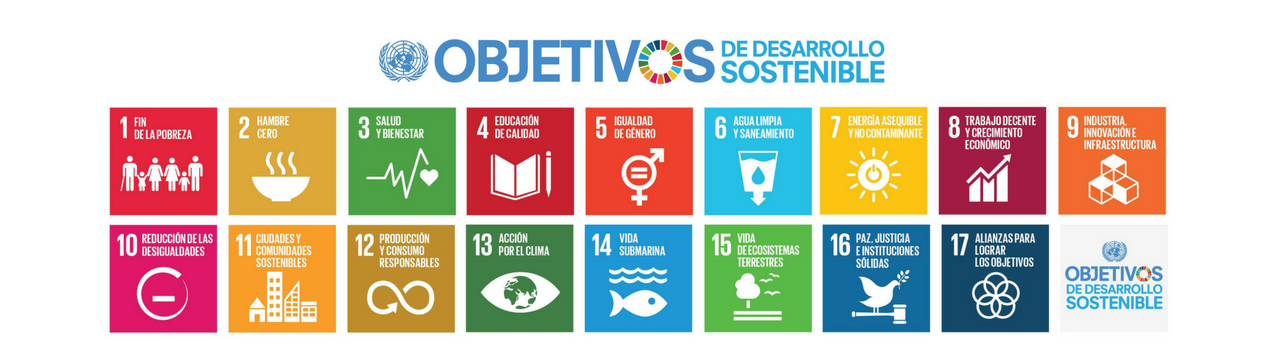
Launched in September 2015, the UN Sustainable Development Goals (SDGs) are a 17-point plan to end poverty, curb climate change and fight injustice and inequality by 2030.
Each goal has specific targets to be reached over the next 13 years. The SDGs have set us on an incredible path to solving the greatest challenges of our time.
The mobile industry is committed to achieving the SDGs. Together with governments, the private sector and civil society, mobile devices are creating a better future. During MWC, the progress of SDG-related activities can be followed through the hashtag #betterfuture.
SDG 1: END POVERTY IN ALL ITS FORMS EVERYWHERE.
SDG1 aims to eradicate extreme poverty worldwide and ensure that everyone has equal access to economic resources, including new technology and financial services. Mobile connectivity can help close the economic gap and create opportunities for progress, thanks to digital banking.
SDG 2: END HUNGER, ACHIEVE FOOD SECURITY AND IMPROVED NUTRITION AND PROMOTE SUSTAINABLE AGRICULTURE
SDG2 aims to end malnutrition, especially among women and children, and to promote sustainable food production and agricultural practices.
Mobile enables smart solutions for small farmers and industrial producers, giving them access to targeted tools for their activities.
SDG 3: ENSURE HEALTHY LIVES AND PROMOTE WELL-BEING FOR ALL AT ALL AGES
SDG3 aims to prevent and treat diseases more quickly, and to strengthen all countries so they are better prepared and can respond faster to national and global health risks.
Mobile connectivity expands access to health care and enables smarter medical solutions. Barriers are already coming down in many countries thanks to telemedicine, which is now cheaper than it was 20 years ago.
SDG 4: ENSURE INCLUSIVE AND EQUITABLE QUALITY EDUCATION FOR ALL AND PROMOTE LEARNING QUALITY EDUCATION
SDG4 aims to ensure free, quality education for all girls and boys and to increase vocational and technical skills among young people and adults.
Mobile devices increase access to education and enrich learning experiences through greater access to information. Academia has begun a process of democratizing content by contributing courses to platforms such as EDX.org and Coursera.
SDG 5: ACHIEVE GENDER EQUALITY AND EMPOWER ALL WOMEN AND GIRLS
SDG5 aims to end all discrimination against women and girls, create equal rights and opportunities, and improve the use of ICT for women's empowerment.
Mobile connectivity empowers women by increasing access to information, services and opportunities. If we look at the most recent demographic figures for social media, women's participation on networks such as Facebook equals or exceeds that of men across Central America and the Caribbean.
SDG 6: ENSURE AVAILABILITY AND SUSTAINABLE MANAGEMENT OF WATER AND SANITATION FOR ALL
SDG6 aims to improve the quality of and access to fresh water for all and to increase water-use efficiency across all sectors. Mobile enables smart water management solutions that reduce industrial water consumption. It makes it easier to take health and sanitation samples for the authorities, closing gaps in field surveys.
SDG 7: ENSURE ACCESS TO AFFORDABLE, RELIABLE, SUSTAINABLE AND MODERN ENERGY FOR ALL
SDG7 aims to double the global rate of improvement in energy efficiency, expand infrastructure and technology for modern and sustainable energy, and improve international cooperation toward more efficient renewable energy.
Mobile connectivity enables smarter, more sustainable networks and the intelligent management of
energy to reduce consumption. The technical architecture consumes less energy and is highly efficient.
SDG 8: PROMOTE SUSTAINED, INCLUSIVE AND SUSTAINABLE ECONOMIC GROWTH, FULL AND PRODUCTIVE EMPLOYMENT AND DECENT WORK FOR ALL
SDG8 aims to improve economic productivity and diversification and to increase resource efficiency toward sustainable consumption and production.
The mobile industry accelerates economic growth and enables innovation to create more job opportunities. Over the last 20 years, new jobs and positions that did not exist decades ago have been created, and they are now among the best paid, such as UX, Data Scientist, Digital Marketer, among others.
SDG 9: BUILD RESILIENT INFRASTRUCTURE, PROMOTE SUSTAINABLE INDUSTRIALIZATION AND FOSTER INNOVATION
SDG9 aims to develop and improve reliable, resilient infrastructure across all industries, strengthen scientific research and technological capabilities, and ensure universal access to the Internet. The mobile industry develops and provides resilient platforms that support vital services and enable innovation across the economy.
SDG 10: REDUCE INEQUALITY WITHIN AND AMONG COUNTRIES
SDG10 aims to empower and promote social, political and economic inclusion for all. Mobile connects individuals and communities to increase social and financial inclusion and create opportunities.
SDG 11: MAKE CITIES INCLUSIVE, SAFE, RESILIENT AND SUSTAINABLE
SDG11 aims to reduce the impact of disasters on societies and economies, with a focus on protecting the most vulnerable populations. Mobile innovation provides mission-critical communications for key services in every community.
SDG 12: ENSURE SUSTAINABLE CONSUMPTION AND PRODUCTION PATTERNS
SDG12 aims to achieve the sustainable management and use of natural resources, encourage companies to adopt more efficient production practices, and raise global awareness of responsible consumption and sustainable lifestyles. Mobile connectivity helps all industries collaborate and innovate to reduce environmental impact.
SDG 13: TAKE URGENT ACTION TO COMBAT CLIMATE CHANGE AND ITS IMPACTS
SDG13 aims to promote education on climate change and its impact, and to improve systems to reduce the risk and impact of climate change on communities and nations at risk. Mobile connectivity can help reduce the environmental footprint and enable remote measurement of climate change.
SDG 14: CONSERVE AND SUSTAINABLY USE THE OCEANS, SEAS AND MARINE RESOURCES
SDG14 aims to conserve at least 10 percent of coastal and marine areas for 2020 and to increase scientific knowledge of marine biodiversity and preservation. Mobile connectivity helps sustain marine life and the environment through M2M monitoring solutions.
SDG 15: SUSTAINABLY MANAGE FORESTS, COMBAT DESERTIFICATION, HALT AND REVERSE LAND DEGRADATION, HALT BIODIVERSITY LOSS
SDG15 seeks to integrate the preservation of ecosystems and biodiversity into local and national planning and development agendas in order to 2020. Mobile solutions have the power to improve the management of electronic waste and reduce negative impacts on the environment.
SDG 16: PROMOTE JUST, PEACEFUL AND INCLUSIVE SOCIETIES
SDG16 aims to reduce corruption, increase transparency across all institutions, strengthen political participation and provide legal identity for all in 2030. Mobile devices make it easier for citizens to connect with their communities and government institutions, including through digital identity solutions.
SDG 17: REVITALIZE THE GLOBAL PARTNERSHIP FOR SUSTAINABLE DEVELOPMENT
SDG17 aims to improve sustainable development practices worldwide through ICT and innovative technologies, and to encourage public, private and civil society partnerships and collaboration toward the Goals. The mobile industry actively embraces partnerships and supports the implementation of the SDGs.
Let's build a better world and look after our budget. In the context of the SDGs, we cannot set aside digital transformation. A Mobile World Live survey of more than 500 industry executives identified financial goals as one of the main motivators for companies to embark on a digital transformation journey: more than 27 percent of respondents cited higher revenue as their main driver of digital transformation, and almost 50 percent seek to reduce operating costs.
However, financial matters are not the only driver of transformation. The GSMA's commitment to the Sustainable Development Goals shows an industry-wide intention to contribute to a better ecosystem, helping to connect brands directly with the environment of a hyperconnected consumer who shortens the replacement cycle of their phone every day.
smart.