6 digital changes impacting traditional media
The Technology entrepreneur Arturo López Valerio recommended, during his participation in SipConnect 2018, focusing more on interaction with users. He called on news companies to offer well-defined products, maintain a good technological level and have well-prepared employees. A couple of years ago, digital media enjoyed high credibility compared…
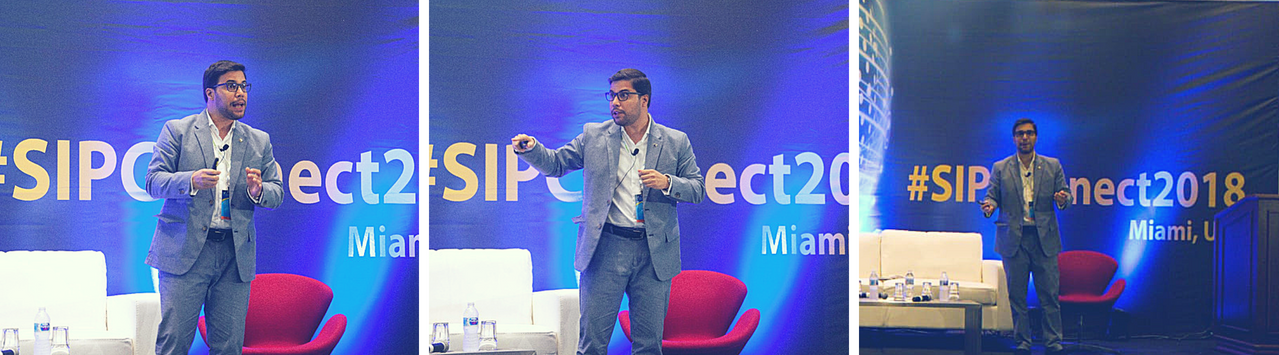
The Technology entrepreneur Arturo López Valerio recommended, during his participation at SipConnect 2018, focusing more on interaction with users. He urged media companies to offer well-defined products, maintain a good technological level and have well-prepared employees.
A couple of years ago, digital media had high credibility compared with traditional media, but the indicators show they are losing value because of fake news. According to recent research by Knight Foundation Trust and Gallup, local newspapers are currently the most trusted sources of information in the United States.
In this landscape, which could be similar in other countries, the Technology entrepreneur, Arturo López Valerio, one of Wednesday's speakers at SIPConnect 2018, listed six changes that are affecting traditional media.
6 digital changes according to Arturo López Valerio
«The first change we are seeing is that mobile is king. The world moves fast and now it moves on mobile, giving more capacity and opportunity to scale products and the consumption of information», said López Valerio.
The second change has to do with how content is consumed and rests on four axes: search, web 2.0, smartphones and social networks; how content is produced, moving from text to photos, videos 360 and now virtual or augmented reality; and the need to avoid relying on a single channel to distribute content.
The third change is mobile download speed, since internet users have a short attention span and avoid a site that takes more than three seconds to load.
A fourth change affecting traditional media is that ads are no longer the only form of monetization.
«Media outlets were experts in subscription models [fifth change] and at the start of the millennium they completely forgot this revenue model. Today, outlets such as the New York Times and the Washington Post have regained digital leadership thanks to subscription or pay-for-content strategies», López Valerio stated.
He also listed the rise of Video and Social TV among the changes [sixth change] for the industry and, finally, the need to rely on applied science over the intuition of journalists, editors or media owners.
Recommendations
«For that reason, we recommend focusing more on interaction with users, with the following as the pillars of digital transformation: 1. well-defined products, 2. dynamic and effective operations, 3. trained employees 4. and taking into account the technological level of customers», said López Valerio.
Published in Listín Diario, on 02 August 2018.
Published in El Caribe, on 31 July 2018.