Business intelligence without losing the human touch
Thanks to business intelligence, physical stores still retain the capacity to generate interaction with users.
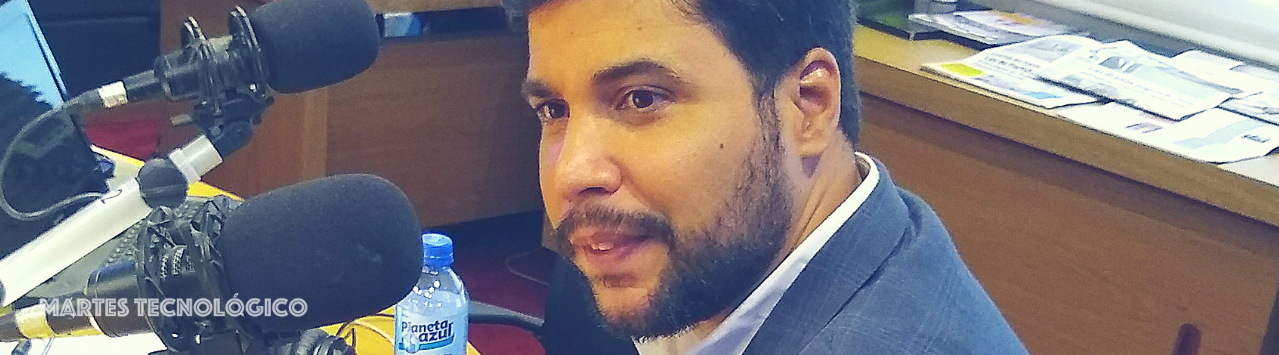
Physical stores still retain the capacity to generate interaction with users.
From strangeness to normality. It is no longer unusual to constantly come across news that a given large retail chain has declared bankruptcy or is about to close. It is a sign of these times or –as the tech entrepreneur Arturo López Valerio— defines it, the “Retail Apocalypse”.
Indeed, the shift in e-commerce trends e-commerce on a global scale are already showing a pattern that, if not properly studied and analyzed, may cause the various retail chains “to lose heart”.
Several factors explain it. One is that people are becoming increasingly selective, saying “give me a reason, tell me why I should spend my gas getting to your store”, especially when a large share of the staff has been removed and, if information is needed, no one is available to provide it.
This work, in one way or another, can be replaced with new technologies.
Amazon's Intelligence on the Attack
Even so, we cannot overlook the fact that companies that have specialized in online retail, such as Amazon, surprised the market and the planet when they announced in 2016 the opening of a physical store in Seattle (Amazon Go) which would operate without cashiers and without gates, with only the help of a mobile app.
The impact of new technologies on society grows over time, mainly in the way human beings interact with one another, but also in other habits and customs such as buying goods, products and services.
However, by 2020 it is estimated that only fifteen percent of global retail transactions will take place via e-commerce, compared with twelve percent at present.
Within that scope, López Valerio highlights the growth of the Internet of Things as essential, a trend that helps different devices interoperate continuously while connected to the internet.
And that is because “when we arrive at a store we will find various sensors that not only collect information on the consumer's steps and patterns inside the establishment, but also communicate from one device to another whether a customer is passing by, whether a product was moved”, among other things.
The Intelligence on the Human Side
After all, he adds, human beings “are individuals who socialize”. So, “even though we are trapped in electronic screens and save time and money through digital relationships, we miss interaction”.
Aware of this, the big retailers, understanding that they could not let their businesses disappear, realized they had the capacity to test multiple technologies and not marry a single method for capturing the consumer's attention.
In that sense, the cross-cutting nature of the smartplace makes it possible not to leave things static at the point of sale, and instead supplies all the information “so that you, as a customer, remain an expert”, with the necessary load of equipment to enhance the experience, give the customer more information and even provide some kind of feedback.
That is how they have helped the user arrive at the smart place, one enabled by the information they have at hand.
What are Smartplaces?
“Smartplaces”, or smart places, are spaces that use a technology called Mobile Location Analytics (MLA) to understand movement patterns within their premises. It is also used in airports and hotels, as well as in retail chains, as has already been mentioned.
Indoor geolocation is applied with a series of beacons and geo-fences, tools that used to be used outside the establishment but are now placed inside, allowing the store to receive information about customer habits that can be turned into an improved shopping experience.
Arturo López Valerio cites the firm RPC, which works with different industry perspectives, noting that “digitalization is not the reason for changing the customer experience; in itself, it is simply a tool”.
In that sense, owners of traditional stores who are looking at technologies to implement within their space must take into account three factors for the transition that allow them to win the attention and interest of the new consumer.
What are these intelligence factors?
Actions, first. A smart place must have logistics on demand, meaning that inventory is adjusted to consumer behavior, studied through the data collected on that behavior.
Second is traffic business intelligence, which is obtained by installing a business intelligence system that must be connected to it. “But you also have to connect the consumer with the establishment”, so that when the consumer walks in, the systems recognize them” and provide information based on their habits and preferences.
Intelligence must have predictive value for business strategies. And in predictive analysis “you have to understand that the most important variable is the consumer's decision”.
However, “stuffing it with technology” is not the definitive solution, since the human touch must not be lost. “No matter how much technology we put into things, training is still necessary, now more than ever”.
In that sense, staff must be trained and a base of resources and human capital built “that is as excellent as the technology it buys”.
In this way, a smartplace and the right infrastructure will be retail's lifeline at any moment.
Published in the newspaper El Caribe, Saturday 22 of September 2018.