Social media: an opportunity for banking
There is no debate about it. Social media have become a mass communication medium, and their usefulness is, depending on the goal, infinite. Banks have taken advantage of their immediacy and reach, and have built strategies to stay in touch with their customers. Social media, customer service platforms These…
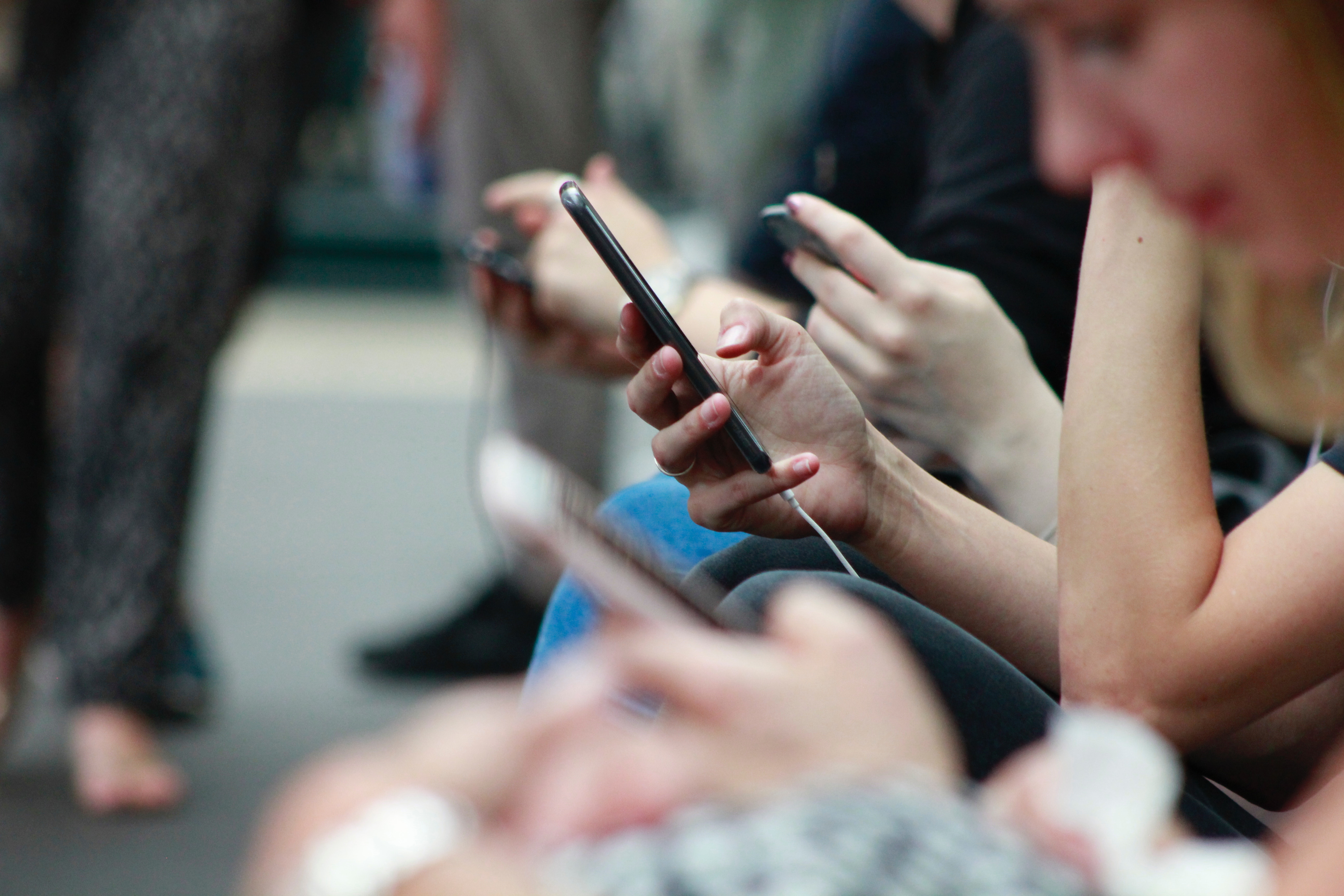
It is not up for debate. Social media has become a mass communication medium, and its usefulness is, depending on the goal, infinite.
Banks have taken advantage of its immediacy and reach, and have built strategies to stay in touch with their customers.
Social media, customer service platforms
These virtual platforms have changed the way customers receive information about their banks.
These channels, whose effectiveness has been proven, are used to announce the latest offers, report changes in interest rates and offer personal finance advice, among other things.
The ease of access they give customers makes it possible to file a complaint about a service or to rate how the financial intermediation institution is run.
Every day people are more aware of the change taking place around electronic banking, and they have adopted part of the process easily, through simple actions.
Among those that have become fashionable are downloading the institution's app, which makes secure browsing easier, as well as following banks' pages and interacting through those channels.
Some figures
According to the National Statistics Office (ONE):
- 88.8% of 31,927 registered households have access to Information and Communication Technologies (ICT) through cell phones, and
- 84% of 9,852 surveyed by the National Multipurpose Household Survey (Enhogar) 2013 use them to browse social media.
According to the International Telecommunication Union (ITU), the United Nations specialized agency for ICT, the need for information of more than 6.64 million Dominicans, equivalent to 61% of the population, has led banks to join the digital ecosystem.
Focus on the conversation with the customer
“Financial institutionshave to cut through the noise and distractions to reach the consumer”, explains Arturo López Valerio, a technology expert.
In his view, financial system institutions seek to maintain the bank-customer connection through the technology-based social interaction channels most used in the country: Facebook, Instagram and Twitter.
Cristal Acevedo, a specialist in digital journalism and effective social media management, says that the use of these platforms will depend on the communication intent of the bank and the audience it is addressing.
She notes that the digital space that allows the best interaction with internet users is Instagram, “although it has some limitations when it comes to sharing content that needs to be linked”.
Acevedo, who also chairs the Observatorio de Medios Digitales, says the most widely used cyber space is Facebook, which “is the social network with the largest number of users, but is also a platform widely used, above all, to pay for advertising when the goal is to spread mass-consumption content”.
She states that Twitter “has become a tool for gaining media positioning on everything related to decision-making in the social, economic and political spheres”.
Behavior analysis
According to an analysis of five posts over the course of one week, four are for offering products and one is for providing information that, in particular, lets users contact financial staff and resolve problems online without disrupting their day-to-day.
Each entity has adopted the digital transformation process on an ongoing basis.
Multiple-service banks track their users and the content they publish, while others, however, lag further behind.
The expert López Valerio understands that “social media are essential for communicating with the active customer and require institutions to test their corporate communication protocols”.
For his part, Acevedo says that “since they do not have all their services and products available online, they use their social media accounts to ease that need their customers have and that they have not been able to meet”.
Online Banking Report
An Online Banking report by the firm Tabuga indicates that banks reach no more than 20% of active users on their platforms.
By contrast, national banking manages to interact with about 5.4 million online users per month on its websites.
Banco Popular Dominicano accounts for about 55% of the sample; the rest is divided among 26 institutions across the country, compiled in the report, says López Valerio.
Both experts agree that financial organizations are trying to understand how consumers relate to their brand and what place products and services occupy in their lives, plans, goals and aspirations.
Offline service
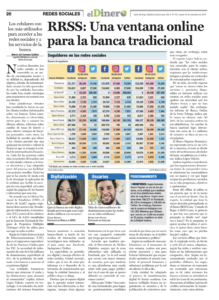
Moving from offline to online is a process that goes hand in hand with customer service. According to the expert, the institution with the best personalized service is Banco BHD León.
“When you walk into BHD León, the first thing is that there is a person who asks you: where are you going? What are you going to do? They don't just ask, they want to help you, they offer you the service and want to tell you how to get things done so you don't waste time”, she explains.
That offline service provided by the employee invites the customer to stay loyal to the bank, adapt, follow its social media and feel confident in the information it shares, she says.
According to a survey conducted by the newspaper elDinero, followers are interested in consuming content they consider valuable, so banks focus their activity on:
- raising loan rates,
- discounts when using credit cards,
- maintenance information,
- among other offers.
According to Acevedo, Banco Popular is one of the pioneers; it is the institution that maintains high follower levels across all three platforms.
According to monitoring, it has 196,527 on Facebook, 86,100 on Instagram and 246,000 on Twitter. However, Banreservas surpasses it on Instagram with 101,000.
Citibank, meanwhile, which has 3,280 branches in 36 countries, maintains a moderate level of activity.
Published by María del Carmen Guillén, in the newspaper El Dinero, 8 November 2018
Photo by ROBIN WORRALL on Unsplash.