A Multigenerational Labor Market
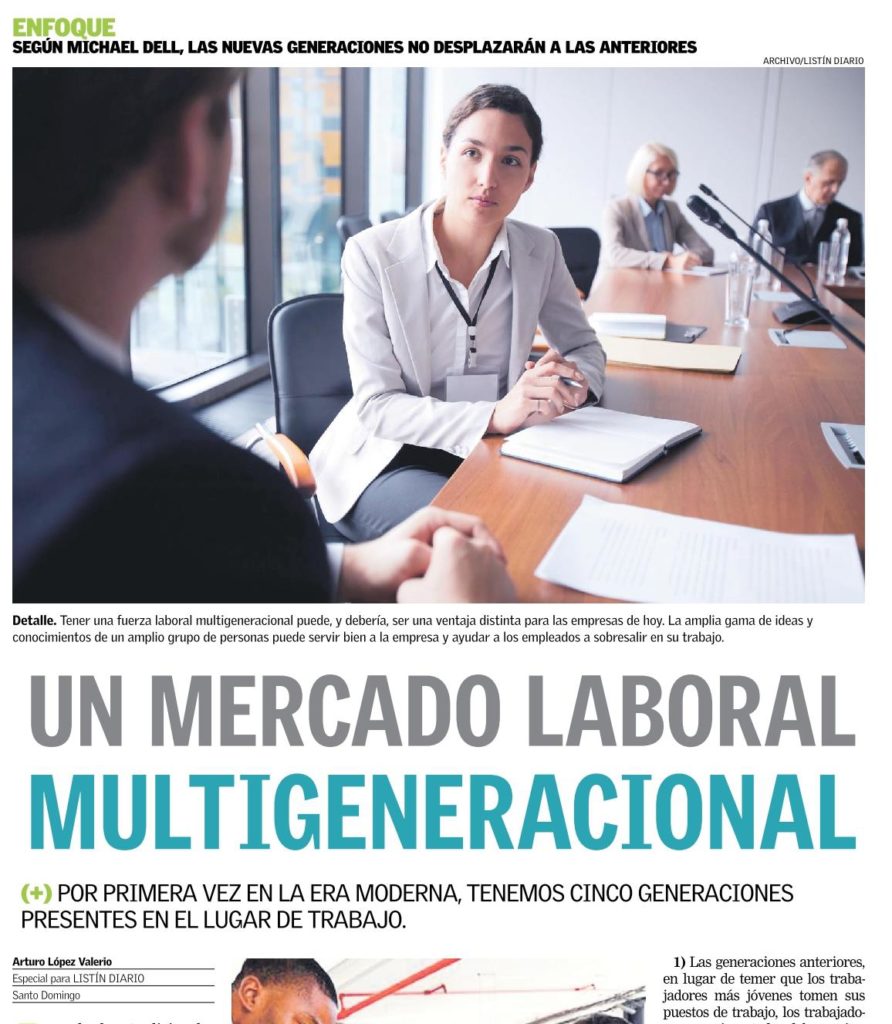
Having a multigenerational workforce can, and should, be a distinct advantage for today's companies. The broad range of ideas and knowledge from a wide group of people can serve the company well and help employees excel at their work. From the traditionalists born before 1945 to Generation…

Having a multigenerational workforce can, and should, be a distinct advantage for today's companies. The wide range of ideas and knowledge from a broad group of people can serve the company well and help employees excel at their work.
From traditionalists born before 1945 to Generation Z —those born in 2001 and beyond— now entering the labor market in significant numbers, the generational diversity present in most companies can create a wide range of challenges.
Much has been said on this topic, specifically about how to talk to each generation at work. Some see this kind of diversity as an obstacle to growth.
Having a multigenerational workforce can, and should, be a distinct advantage for today's companies. The wide range of ideas and knowledge from a broad group of people can serve the company well and help employees excel at their work.
According to Michael Dell, founder of the well-known personal computer brand, the new generations will not displace the earlier generations already in place, based on research commissioned by Dell Technologies, conducted among 12,000 Generation Z respondents.
According to the research findings, young people are confident in their technology skills and will expect cutting-edge technology to be available to them in their future careers.
Generation Z's entry into the workplace will drive a new round of innovation: 68% of respondents said they already know how to code. And they are willing to be technology mentors for others at work.
They can learn from each other
As a counterbalance, the research makes clear that this new generation has less confidence in the non-technical skills they need to be ready for the labor market, and they will look to mature colleagues for guidance and business training:
- 77% are willing to be technology mentors for others at work.
- 52% are more confident that they have the technical skills employers want than the non-technical ones.
- 53% prefer going to an office rather than working from home; 58% want to work in a team rather than independently.
- Instead of hiding behind technology, they are eager for human interaction. They expect to learn on the job from other people, not from the Internet.
This creates a tremendous opportunity that we can reflect on:
- Instead of fearing that younger workers will take their jobs, experienced workers from earlier generations should guide them and develop each other's complementary skills, reaping the rewards.
- Generation Z wants something more than money in exchange for their work and time.
- Many in Generation Z aspire to build their careers in technology to help advance humanity. They are ready to harness technology to help other people and our environment.
- Generation Z wants to work for socially responsible organizations and to know that their work has meaning and purpose.
Everyone must lead
With so many unique dynamics in a multigenerational labor market, success requires every employee to demonstrate leadership in their role. Focusing on leadership is a powerful way to engage millennials. According to a survey shared by the company Favro, 80% of millennials identify as leaders.
Let us train this generation and the next, younger one to lead in key areas such as science, technology and innovation, and bridges will be built across generational gaps.
This is the right moment for five generations in the Dominican Republic to work together, build synergies and make their businesses thrive in this digital era, and in doing so build a true Digital Republic.
Published in the newspaper Listín Diario on January 7, 2019.