Digital growth through smartphones
More than 5 billion people own mobile phones worldwide, and more than half of those connections are through smartphones. The Pew Research Center analyzed smartphone ownership rates in several countries during 2018 and found that they vary considerably, even among advanced economies.…
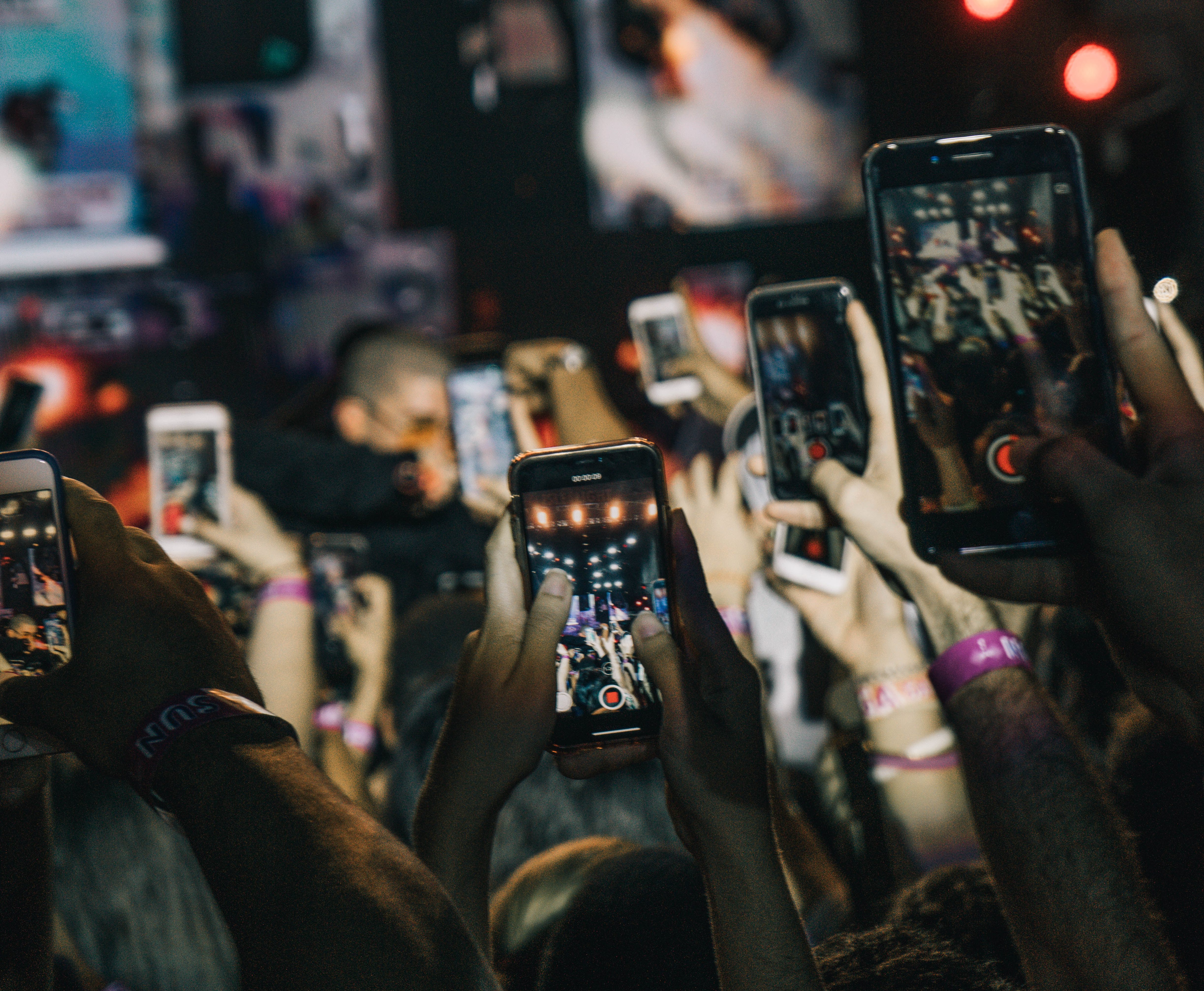
More than 5 billion people own mobile phones worldwide, and more than half of those connections are made through Smartphones.
The Pew Research Center analyzed smartphone ownership rates in several countries during 2018, and found that they vary considerably, even among advanced economies.
For example:
- In the United States, it is hard to find someone who does not have a mobile phone.
- Pew found that 13 percent of U.S. respondents owned a basic mobile phone, while only 6 percent had no phone at 2018.
- Despite its recent technological and economic progress, ownership rates of Smartphones remain low in India.
- Pew found that, in 2018, 75 percent of Indian adults did not have a Smartphone.
- 35 percent had no phone, while 40 percent had a mobile phone, but a basic model.
Smartphones in the Dominican Republic
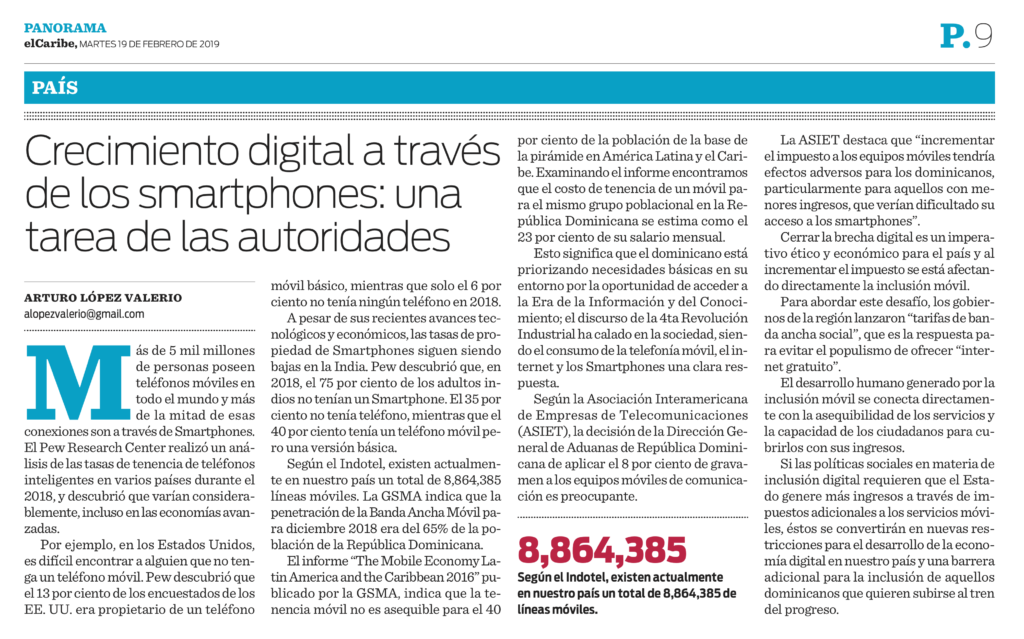
According to INDOTEL, our country currently has a total of 8,864,385 mobile lines.
The GSMA reports that mobile broadband penetration as of December 2018 was 65% of the population of the Dominican Republic.
The report “The Mobile Economy Latin America and the Caribbean 2016″ published by the GSMA, indicates that mobile ownership is unaffordable for 40 percent of the base-of-the-pyramid population in Latin America and the Caribbean.
Examining the report, we find that the cost of owning a mobile phone for the same population group in the Dominican Republic is estimated at 23 percent of their monthly salary.
This means that Dominicans are prioritizing basic needs in their immediate surroundings over the opportunity to access the Information and Knowledge Era.
The discourse of the 4th Industrial Revolution has taken hold in society, with the consumption of mobile telephony, the internet and smartphones as a clear response.
Increase in tariffs on smartphones
According to the Inter-American Association of Telecommunications Companies (ASIET), the decision by the Dominican Republic's General Directorate of Customs to apply a 8 percent levy on mobile communication devices is worrying.
ASIET stresses that “raising the tax on mobile devices would have adverse effects on Dominicans, particularly those with lower incomes, who would find it harder to access smartphones”.
Closing the digital divide is an ethical and economic imperative for the country, and raising the tax directly affects mobile inclusion.
To address this challenge, governments in the region launched “social broadband tariffs”, which is the answer to avoid the populism of offering “free internet”.
The human development generated by mobile inclusion is directly tied to the affordability of services and to citizens' capacity to pay for them out of their income.
If social policies on digital inclusion require the State to generate more revenue through additional taxes on mobile services.
Those taxes will become new restrictions on the development of the digital economy in our country and an additional barrier to the inclusion of those Dominicans who want to hop on the train of progress.
Published in the newspaper El Caribe, 18 February 2019.
Original title: «Digital growth through smartphones: a task for the authorities».
Photo by Gian Cescon