Google Live Transcribe, technology to break down barriers
By the year 2055 the World Health Organization (WHO) estimates there will be 900 million people with hearing loss. Google introduced a new Android app —the world's leading mobile operating system—, designed to help people who are deaf or hard of hearing: Live Transcribe. The app takes the…
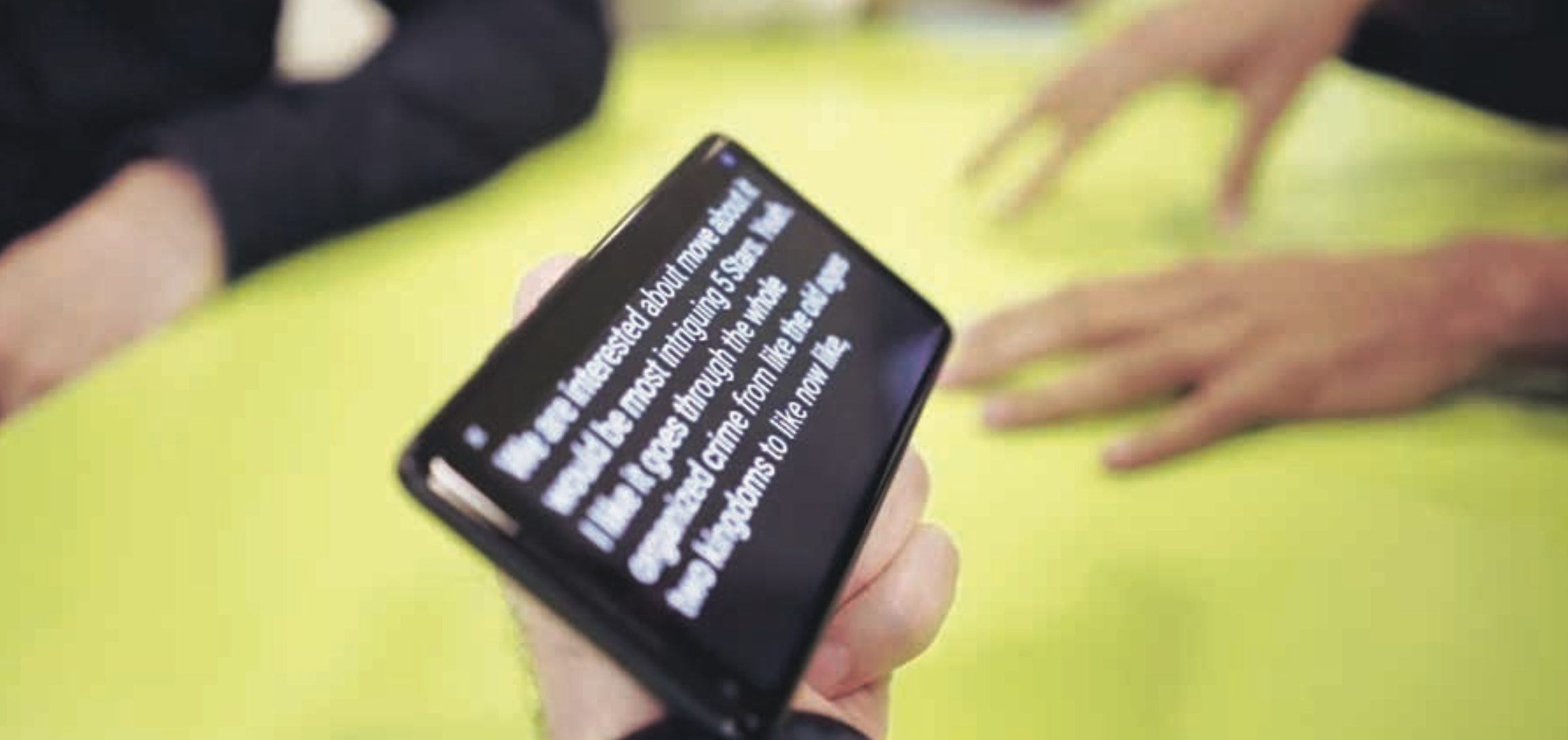
By the year 2055 the World Health Organization (WHO) estimates there will be 900 million people with hearing loss. Google introduced a new app for Android —the leading mobile operating system worldwide—, designed to help people who are deaf or hard of hearing: Live Transcribe.
The app brings captions to everyday conversations. Dimitri Kanevsky, a Google research scientist who has worked on speech recognition and communications technology for the past 30 years, contributed to its development.
Live Transcribe arises from a need
Through his work, Dimitri, who has been deaf since early childhood, has helped shape the accessibility technologies he relies on.
One of them is CART: a service in which a captioner joins a meeting virtually to listen and create a transcript of the spoken dialogue, which is then displayed on a computer screen.
Dimitri's teammate, Chet Gnegy, saw the challenges Dimitri faced using CART: he always carried multiple devices, it was costly, and each meeting required a lot of preparation.
This meant Dimitri could only use CART for business meetings or formal events, and not for everyday conversations.
That inspired Chet to work with the Accessibility team to build a tool that could reduce the effort Dimitri spent preparing for conversations.
A prototype was built, and Google employees in several of its offices, from Mountain View to Taipei, got involved.
The result is Live Transcribe, an app that takes real-world speech and turns it into real-time captions using only the phone's microphone.
Live Transcribe is an app that turns speech into real-time captions through the mobile device's microphone.
Live Transcribe has the potential to give people who are deaf or hard of hearing greater independence in their daily interactions.
It brought Dimitri closer to his loved ones: he can now communicate easily with his six-year-old twin granddaughters without help from other family members.
Live Transcribe, a multilingual tool
Live Transcribe is available in more than 70 languages and dialects. It also allows two-way conversation through a typing keyboard for users who cannot or prefer not to speak, and it connects with external microphones to improve transcription accuracy.
According to Dr. Mohammad Obiedat, a professor at Gallaudet University in Washington, “Live Transcribe gives me a more flexible and efficient way to communicate with hearing people. I love it; it changed how I solve my communication problem”.
To use Live Transcribe, enable it in the accessibility settings, then launch the app from the accessibility button in the navigation bar.
Starting today, Live Transcribe will roll out gradually in a limited beta version to users worldwide through the Play Store, and pre-installed on Pixel devices 3.
Published in Revista Bohío #208, 18 February 2019.