The World Summit Awards Aim to Empower People With Clear Goals for Change in Their Home Countries
Cascais, Portugal.- This town on the Portuguese riviera hosted, from 11 to 13 March, the “World Summit Awards (WSA) Global Congress”, a gathering that brings together actors from around the world to recognize digital innovation with social impact. Among those present is tech entrepreneur Arturo…
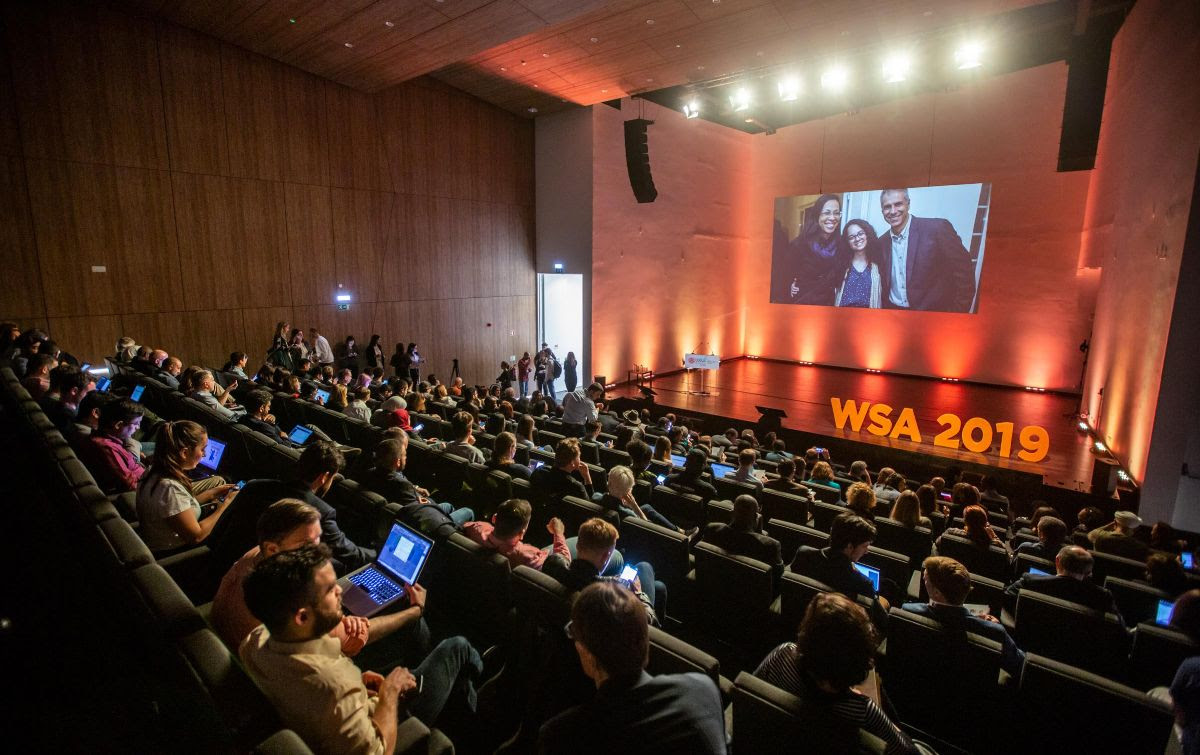
Cascais, Portugal.- This town on the Portuguese riviera hosted, from March 11 to 13 of “, the World Summit Awards (WSA) Global Congress”, a gathering that brings together actors from around the world to recognize digital innovation with social impact.
There we find the technology entrepreneur Arturo López Valerio, who since 2011 has been the WSA's “National Expert for the Dominican Republic”. He explains that the general approach of this type of activity is to empower people “with clear goals for change in their countries so that they can submit initiatives”.
He noted that in this respect the WSA goes hand in hand with the 17 Sustainable Development Goals (SDGs) being pushed by the United Nations, the so-called “Agenda 2030”. “Here we are not seeing ideas but solutions that are already generating a positive impact” in the various countries where they are being implemented, he said.
The WSA give awards in eight categories, which focus on the seventeen SDGs. For this edition, 2019 422 submissions were received from 91 countries, of which 60 came from the Latin America/Caribbean region, and six of these were winners. Another key data point is that 55% of the winners were women.
During his appearance on the “Martes Tecnológico” of the “Matutino de Teo Veras” (La 91 FM), López Valerio argued that while closing the digital divide remains the planet's great challenge, it is not the only one, since where there are disparities there are also other problems, such as gender inequality, water scarcity and energy crises, among others, which affect the human species just as much or worse.
Such problems, Arturo continues, can be addressed through content that raises awareness and creates change. And content, he says, “has one characteristic: it can be distributed more quickly thanks to digital platforms”.
López Valerio has contributed to the organization for eight years as the Dominican Republic's representative, and on this occasion he notes that, for the first time in the process, a Dominican proposal has gone as far as being included on the “shortlist” of finalists. It is “Ecomensajería”, represented by Edison Santos.
Arturo explains that part of his attendance at the Congress has consisted of taking advantage of the networking opportunities it provides, observing success stories from other latitudes and seeing “what we are missing” in the Dominican Republic. In that regard, he believes, “we are not adding technology as part of our business models”.
He cited a study from the Universidad de Sarmiento indicating that the Dominican Republic is “practically null” in technology entrepreneurship. “We need more articulation and fewer scares. Technology will help maximize business models, but it will not become an expense.”
On the other hand, he said that in the Dominican entrepreneurial ecosystem there is a “gap in communicating actions” and actors who, “because they need to win attention, are doing work that is not theirs to do”, because they understand that this brings more visibility.
“Whoever controls the value chain suffocates the ecosystem”, something the actors involved must not allow, he says, adding that there must be collaboration so that other mechanisms exist to encourage and foster entrepreneurship on the island.
Starting from the premise that “When everything is fine, nothing happens”, López Valerio maintained that innovation cannot exist without problems or challenges.
When people think about problems and their possible solutions, innovation will emerge. Not doing so is “denying reality”.
In his view, one case that Dominican society should analyze and implement is the strengthening of digital oversight.
“If we already have a digital republic, civil society and citizens have to start applying technology to create a counterweight” that goes beyond complaining on Twitter and instead builds civic awareness.
For this, he noted, civil society organizations need “more hands” to be able to move forward and monitor this oversight.
“We can take advantage of the cameras and all the power of the mobile devices Dominicans have — according to the GSMA, they reach five million smartphones— to be the eyes and agents of change.”
As an example of digital oversight, he cited the venture “Supercívicos App” by Humberto Contreras and Arturo Hernández Contreras (Mexico), which uses social media to create a platform where users help detect problems.
He also pointed to Citibeats, by Iván Caballero (Spain), which identifies and synthesizes the various opinions about what is happening in different areas of the city, using an artificial intelligence model and “machine learning” analytics to understand what is happening in conversations, while also dynamically creating topics from all the data collected on trending issues.
This, López Valerio mentions, helps digital oversight because “sometimes the issue is not well understood or, worse, citizens tend toward misinformation”.
He warned, however, that one cannot expect to exercise oversight over society if it does not begin at home. For this reason, he says, it is important to start defining problems and separating truth from lies in order to “be able to defend ourselves”.
If at some point one feels that no one in society defends them, one must look for peaceful ways to create some form of protection.
In that sense, he said, “the Internet is the first frontier” where society is obliged to build capacities to ensure that “our families have comprehensive development”.
Published in the Periódico El Caribe, March 18 2019.