CÁMARATIC holds its third #REDTIC meetup
With professionals and enthusiasts from the information and communication technology (ICT) sector in attendance, CámaraTIC held the third edition of its networking space for professionals, called #LaRedTIC. The event was supported by companies in the sector such as Huawei, Solvex and Onemax. The welcome was given by…
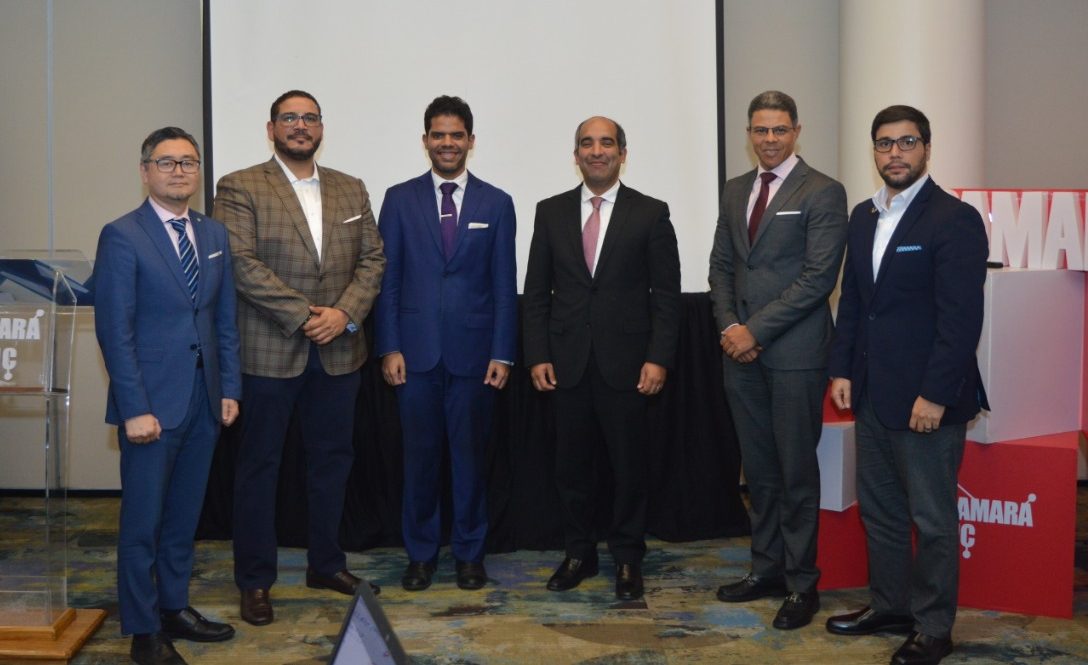
With the presence of professionals and enthusiasts from the information and communication technology sector ((ICT)), the CámaraTIC held the third edition of its meeting space for professionals called #LaRedTIC.
The event was supported by companies in the sector such as Huawei, Solvex and Onemax.
The welcome to the event was given by engineer José Armando Tavarez, president of the Cámara TIC, who was accompanied by members of the board of directors: Mite Nishio, First Vice President, and Arturo López Valerio, Treasurer.
According to Tavarez, the #LaRedTIC events respond to the need to strengthen the national ICT sector, thanks to the joint efforts of institutions and professionals who advocate the same purpose.
Smart Cities
The first conference of the evening, titled, “A glimpse toward the smart city” was presented by Leo Vantroi Mercedes Suero, Enterprise Manager at Huawei Dominicana.

During the presentation, the Huawei executive showed models of cities around the world that are moving toward smart management.
He explained that the company provides fertile ground for the growth of smart cities, presenting a vision of delivering digital connection to every person, home and organization for a fully connected and intelligent world.
For Van Troi, “the Internet of Things is an ecosystem for entrepreneurs seeking solutions to humanity's problems”, he said.
Artificial Intelligence
The second conference, titled “Creating Social Impact with Artificial Intelligence”, was presented by Rainier Mallol, CEO of AIMED.

During the conference, Mallol explained how passionate young professionals seek to solve major global health challenges by leveraging data science and Artificial Intelligence.
After years of intensive research in epidemiology and data science, they developed their flagship platform – AIrbo (AI for arboviral diseases) is capable of predicting disease outbreaks 30 days in advance, with an accuracy of 80% or more, which makes it the first innovative technology in epidemiology and data science.
What began as a pilot project to predict the Zika outbreak during the Olympic Games in Rio, Brazil, in 2016, has now become a full-featured AI platform that helps public health professionals around the world fight multiple mosquito-borne diseases such as dengue and Chikungunya.
Since 2016, AIME has given public health decision-makers around the world knowledge and intelligence through cutting-edge innovations such as Big Data Analytics and artificial intelligence technology.
Mallol explained that his motivation for developing artificial intelligence software was his mother's bout with dengue. “It's one thing to know the country is in bad shape, and another to live it” Mallol said about the problems in the health system.
“Technology professionals are a tool: we know how to apply technical creativity, but we need other professionals to show us the problems”.
Originally published on Martestecnologico.com