Digital flow control as a macrotrend in the 2020
The drivers of change are the all-encompassing superforces that move and shape our world. Four of these superforces shape trends: technology and economy, and social and cultural changes. These four drivers help us filter and understand where trends emerge and what…

Drivers of change are the all-encompassing superforces that move and shape our world.
There are four of these superforces that shape trends: technology and economy, and social and cultural shifts.
These four drivers help us filter and understand where trends emerge and what propels them.
Does technology, for example, enable a new consumer behavior?
Or is it social change that makes some mindsets thrive while others fade away?
Asking these questions and cataloguing global change across these four dimensions helps us detect where trends originate.

AI and the digital flow
According to Kevin Kelly, founding executive editor of Wired magazine, “the greatest benefit of the arrival of artificial intelligence is that AIs will help define humanity. We need AIs to tell us who we are».
The excessive demands of our increasingly fast and complex everyday lives are fostering the evolution of new tools and technologies. These help us overcome stress and improve efficiency in all aspects of our lives.
Driven by globalization and digitalization, our world is turning toward more fragmented and dynamic lifestyles.
The digital revolution promised to save us time, but instead we are busier than ever.
Technology offers speed and endless possibilities at our fingertips: our everyday choices seem endless.
No matter where we sit on the generational spectrum, the feeling of overwhelming pressure has become a demographic unifier.
The fear of falling behind because of a wrong decision or of being cut off (FOMO – fear of missing out and FOBO – fear of being offline) is tremendous.
People around the world feel the pressure to improve and be better in every aspect of their lives.
New tools and technologies, which help us navigate stress and be more efficient, are born from the growing complexity and speed of our everyday lives.
We want to keep pace with the search for personal guidance and focus filters to simplify our everyday lives and have a moment of relief.
80% of adults surveyed by Statista do not have time to do everything they want in a day.
The digital flow generates an Age of Assistance
With predictive analytics tools that digest our data, behavior and preferences to decode our personalities, and with a growing number of intelligent assistants, the market for connected existence in the Age of Assistance is rising to new heights.
Consumers are adopting digital assistants as they increase efficiency, productivity and, of course, fun.
In addition, mobile and wearable devices are making contextual adaptation possible at any moment; it is captured and transmitted instantly to allow a continuous flow of events.
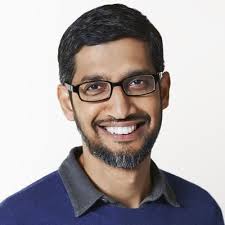
To understand this momentous shift, we must cite Sundar Pichai, CEO of Google, who states that “AI is one of the most important things humanity is working on. It is more profound than electricity or fire».
The global spread of digitalization and virtualization lets us stay networked all the time while always being active. Everything is connected.
This high connectivity contrasts with local settings where the use of technologies is still debated; to give one example: automated voting.
Another example is India: by suspending Internet service for its population, it shows how control of the digital flow can accelerate a nation's development or simply stall the engine of progress.
The challenge is accepting new technologies and the paradigms we must overcome to deploy them, especially when they are improving our daily lives.
Control of the Digital Flow at #Martes Tecnológico
Published in the newspaper El Caribe, Wednesday, 15 January 2020.
Photo by Tobias Carlsson on Unsplash.