The Evolution of Social Networks
We have all experienced the transformation of social media from a destination for cat GIFs, random thoughts and lunchtime conversations into the go-to platform for political stances, revolution-inciting comments and deep discussion. But the impact of that evolution on business strategy is often misunderstood and…

We have all seen social media transform from a place for cat GIFs, random musings and lunchtime chatter into the go-to platform for political stances, revolution-sparking comments and deep discussion.
But the impact of that evolution on business strategy is often misunderstood and underestimated.
Over the past five years at Tabuga, the team has developed more than a dozen data reports on social media and digital marketing trends, examining thousands of statistics that illustrate the changes in how brands use social media.
Most importantly, we have looked closely at the impact of social media on the relationship a brand has with its customers.
From those analyses we learned two things: first, our expectations of brands on social media keep rising, and second, most brands are constantly playing catch-up.
When brands decided they actually wanted a simple dialogue with their social audience, it often took a war room full of sleek computers, corporate counsel and senior executives.
At the end of the day, it was easier and safer for companies to simply use social media as just another advertising mechanism, switching it on when they needed a few more eyes on their content.
What changed?
People's expectations. And so did the impact of those expectations on brands' results.
According to data generated by SproutSocial in 2019, 89% of people's social messages to brands never received a response, and the people surveyed highlighted the enormous revenue implications for brands that don't respond: 30% of us will go to a competitor when we are ignored.
Brands can no longer operate under the pretense that customers don't want a conversation. They are demanding one.
The reward of some conversations is enormous, as some of these interactions become viral international news. It is this authenticity that lies at the heart of successful social interactions.
While emoji exchanges are fun, they are not necessarily scalable.
No one can predict when an opportunity will arise on social media, so brands realized that if they wanted to keep pace with the evolution of consumer behavior on social media, they had to drive conversations, not just wait for them to happen.
Today, people are more interested in transparency and connection than ever. We are less concerned with perfect Instagram feeds and clever ad campaigns, and more interested in understanding where brands stand on political issues and how they run their businesses.
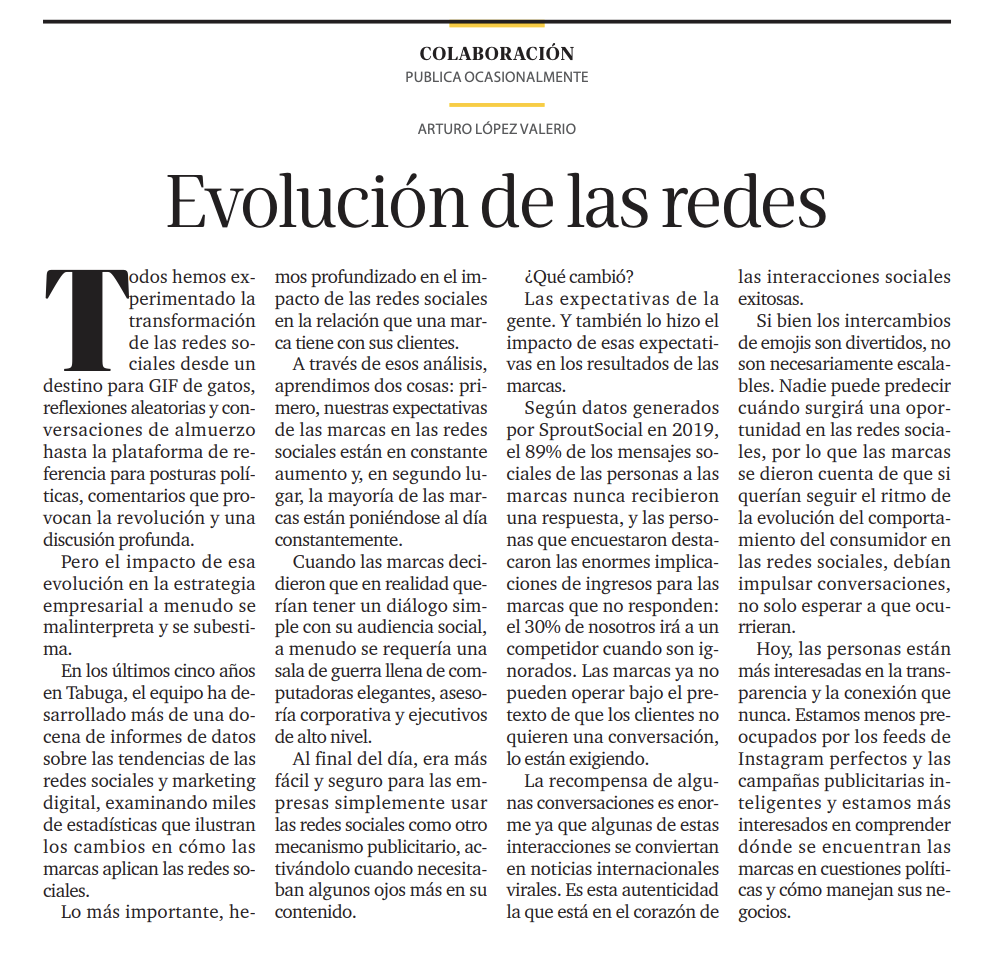
Originally published in Listín Diario, February 29, 2020, page 6
Photo by Prateek Katyal on Unsplash