The gap in online payments between local and international merchants exceeds 42 billion pesos
Local e-commerce needs more development. Pro Consumidor's measures spark controversy. Last Friday, May 15, the Institute for the Protection of Consumer Rights (Pro Consumidor) set off one of the biggest controversies over the development of electronic commerce in the Dominican Republic. The story begins with the announcement…
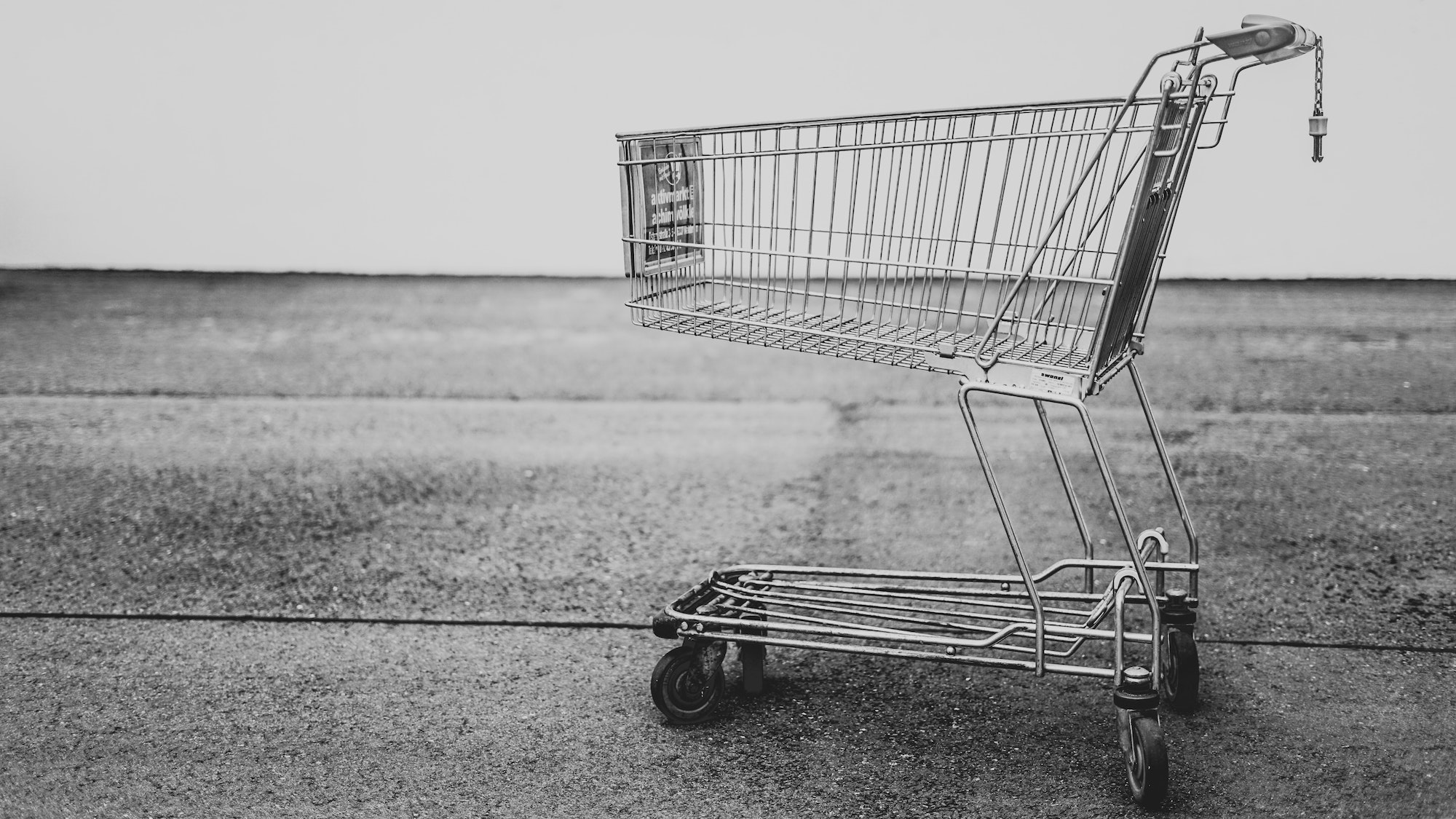
Local online commerce needs more development.
Pro Consumidor's measures spark controversy.
Last Friday, May 15, the Instituto de Protección de los Derechos del Consumidor (Pro Consumidor) set off one of the biggest controversies yet over the development of e-commerce in the Dominican Republic.
It began with Pro Consumidor's announcement that online sales were suspended for two well-known companies because, according to the institution, “these types of businesses are not allowed to sell during the state of emergency decreed by the Dominican Government.”
The measure drew strong criticism from various sectors on social media and in the press, who called it a step backward and a heavy blow to the development of e-commerce in the country.
Viewpoints on online payments
Cristóbal Rodríguez, a constitutional lawyer and university professor, explained that the state of emergency suspended only two rights: freedom of assembly and freedom of movement.
He went on to state, through his official Twitter account, that “freedom of enterprise, industry and commerce, as enshrined in the Constitution, are not rights that can be suspended during the state of emergency.”
Hours later, Pro Consumidor, whose mission is to “protect consumers and users of goods and services through the application of established legal norms”, issued another statement, a very ambiguous one, explaining that the measure is general in nature and that the company names should not have been mentioned. The statement also stressed that the institution's interest is that “all advertising be responsible.”
Then Pro Consumidor's official Twitter account (@proconsumidrord) shifted the conversation to safety measures, stating:
“We reiterate that, in e-commerce, it is key to follow the established protocols to prevent COVID infection-19 among the people who deliver goods and those who receive them at home.”
Opinion of Arturo López Valerio on online payments
The reality is that the capabilities offered by new technologies allow entrepreneurs and companies to run their operations digitally and remotely, and the new reality the world is living in demands distancing and remote work.
According to data from the research firm Gartner, 88 percent of companies started operating remotely or encouraged their employees to do so.
In the Dominican Republic, digital commerce has developed in short steps, but in a way steadily. In fact, the Central Government developed a program called “República Digital” that promotes progress in this segment of the market.
Pro Consumidor's measure runs against all of the above.
“This measure shows that digitalization, not even digital transformation, has reached the foundations of those who make and carry out public policy, and that the state-of-emergency measures were not designed with companies that could sell online in mind”,
said the digital entrepreneur, Arturo López Valerio.
Online payments as part of digital commerce
Another important aspect of digital commerce is its impact on and contribution to the Dominican economy. Data from the Banco Central de la República Dominicana show that in 2019 local online payments for goods and services reached 7,164,448 in transactions, which represented 16,951.1 million pesos; and that in the first three months of 2020 the total volume reached 1,883,775, representing a value of 4,672.1 million pesos*.
As for international payments, they reached a total of 31,531,275 transactions in 2019, equivalent to 59,232.6 million pesos. In the first quarter of 2020, the total was 8,177,481 of the overall volume, representing a sum of 14,721 million pesos*.
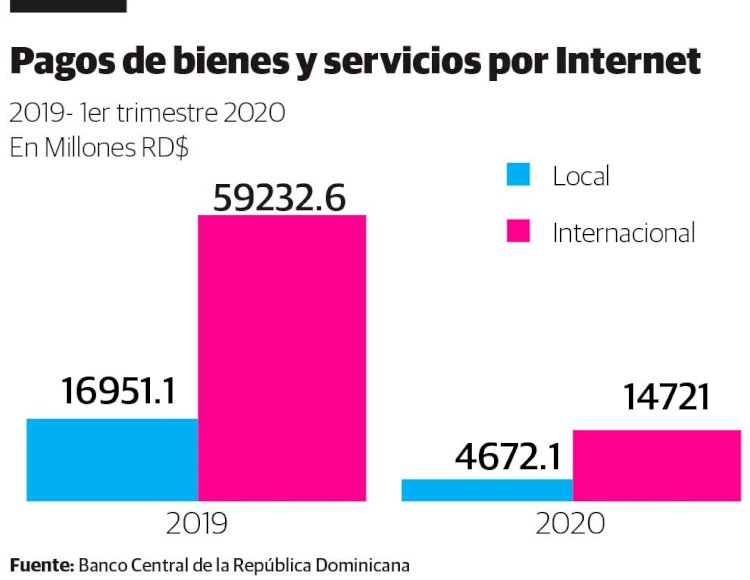
These numbers show the gap between international and local payments, and how much local online commerce needs to be encouraged and developed: creating opportunities and removing obstacles so that local merchants can increase their online sales.
López Valerio stated that, according to the report by the firm Tabuga, the digital economy will generate 850 million dollars, and that this will help the country recover the foreign currency it is losing through remittances and tourism.
Published in the Martes de Tecnología section of Diario Libre, 19 May 2020
Photo by Bruno Kelzer on Unsplash
* Data provided by Mite Nishio.