The Future of Work According to Facebook
More than 15 years ago, I remember that Yahoo! was one of the pioneering companies of the remote work model in the United States. Other organizations such as 37 Signals followed suit, becoming 80% remote companies, even publishing the book “Remote”, written by its founders. In February 2013, the chief executive of…
More than 15 years ago, I remember that Yahoo! was one of the pioneering companies of the remote work model in the United States.
Other organizations such as 37 Signals followed suit, becoming 80% remote companies, even publishing the book “Remote”, written by their founders.
In February 2013, Yahoo! CEO Marissa Mayer banned her employees from working from home.
In a memo to all staff, which later made the rounds around the world, Yahoo! asked everyone with work-from-home arrangements to return to work at their offices.
After this, Yahoo! collapsed. Following that milestone, the business trend moved away from remote work for seven years, for obvious reasons.
Remote work today
Now in 2020, when small tech companies promoted remote work policies in the wake of the crisis caused by COVID-19, we witnessed the start of a trend that had been abandoned.
But when the largest social network on the planet announces radical changes for its 45,000 employees, we see that the trend is once again a reality.
The workplace paradigm may never be the same, as noted by the study “Generación Z: La nueva fuerza laboral” (Generation Z: The New Workforce), conducted in the local market by the firm Tabuga: more than half of these young people prefer to work from home.
Change from Facebook
Last week, the announcement that half of Facebook's employees could work remotely within a decade, as Mark Zuckerberg stated in a live-streamed meeting.
«It's clear that Covid-19 has changed a lot about our lives, and that certainly includes the way most of us work”,
said the head of Facebook.
It is a radical shift from the culture of bringing workers into giant offices and “keeping them shut in from 8 to 6”.
It is unclear whether other tech giants will follow suit, although Google searches for “jobs at Twitter” spiked after Twitter announced a similar measure.
Internal surveys indicated that 40 percent of Facebook employees are interested in remote work.
Within that group, 45 percent said they would probably move to another city if remote work were permanent.
Adjustments to consider
Among the measures worth highlighting are the following:
- Facebook is considering setting up hubs in less expensive cities (such as Atlanta and Dallas) compared to Silicon Valley, for employees in those areas to visit occasionally.
- Pay would be lower for employees in less expensive cities.
- The challenge is access control, to validate and monitor employees' performance within their new workspaces.
- Workers could move to cities with “zero-tax” incentives, creating financial problems for California.
- The Generation Z is willing to make changes of this kind, having grown up and been educated amid a process of digitalization and digital transformation.
More on the study of work and Generation Z
An important aspect to consider regarding changes in the workplace is the next workforce, Generation Z, and what they think.
According to the firm Tabuga the 56% stated that they prefer to work from home, the 57% prefers to communicate with colleagues through digital tools, while the 59% expects to learn on online platforms rather than from coworkers or other people.
The digitalization and global transformations we communicated months ago have accelerated in recent months, showing that the future of work is now its present. A timely moment for building capabilities within organizations.
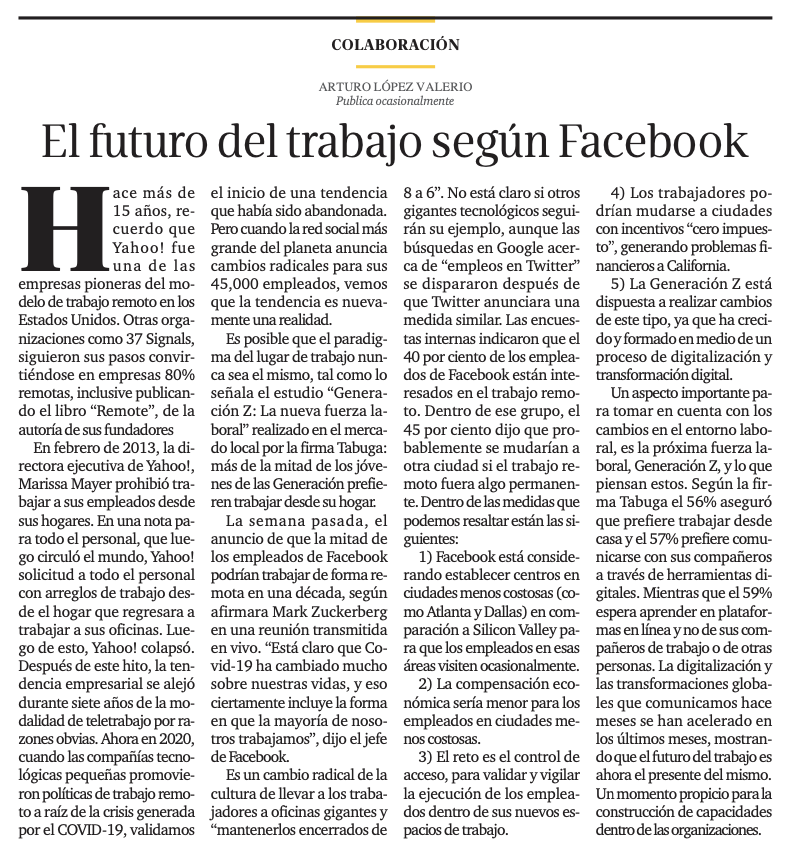
Published in the digital edition of Listín Diario, May 30 2020
Editorial in the print edition of Listín Diario, June 6 2020.
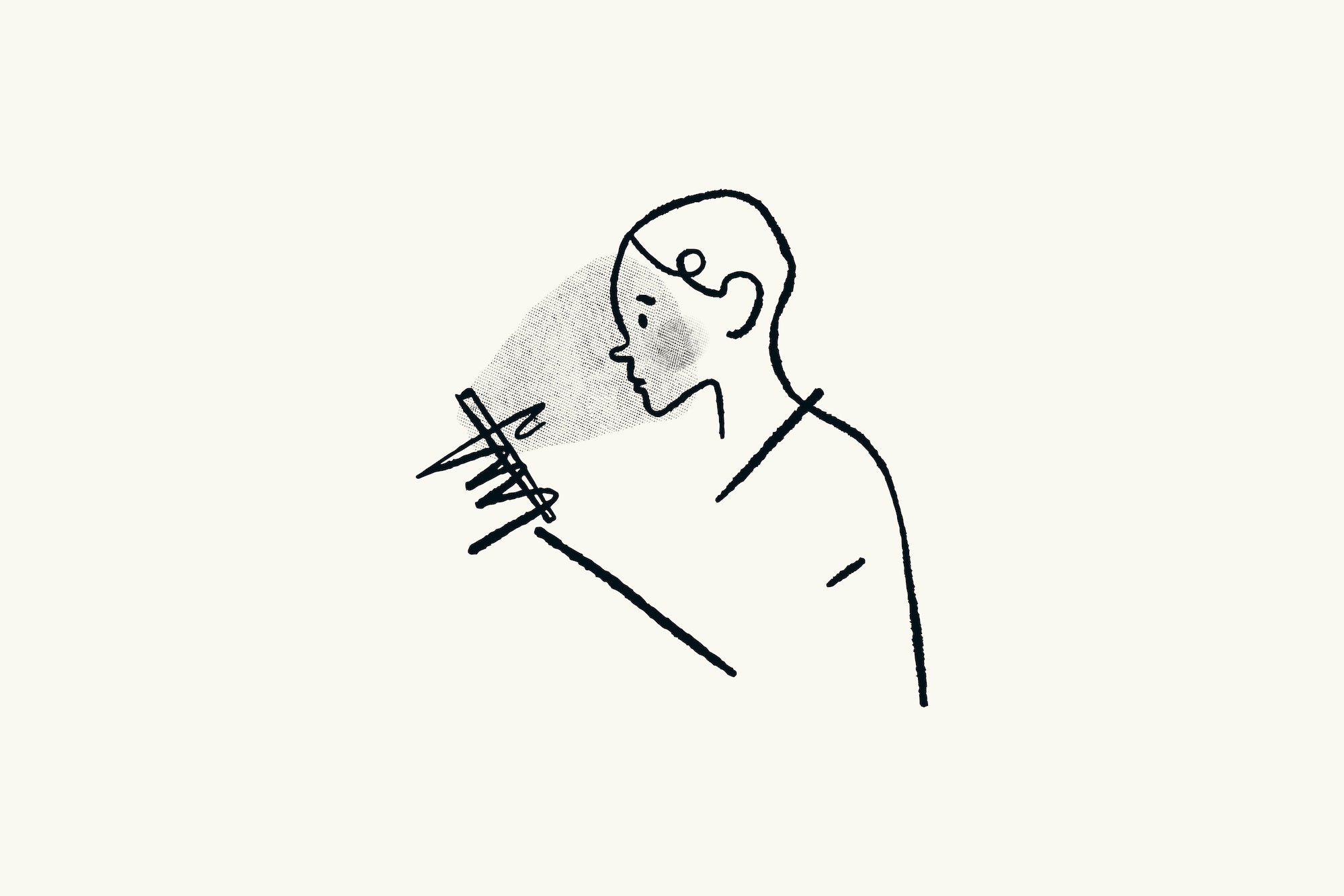
Photo: Misinformation on the web. Illustration by Carlos PX.