The Dominican Republic has missed many opportunities over the past twenty years to achieve digital progress
Arturo López Valerio considers that there is a classification error in the way the digital divide is being measured in the country. Santo Domingo. - The World Summit on the Information Society (WSIS) was recently inaugurated in virtual format, with the Dominican Republic holding the presidency of…
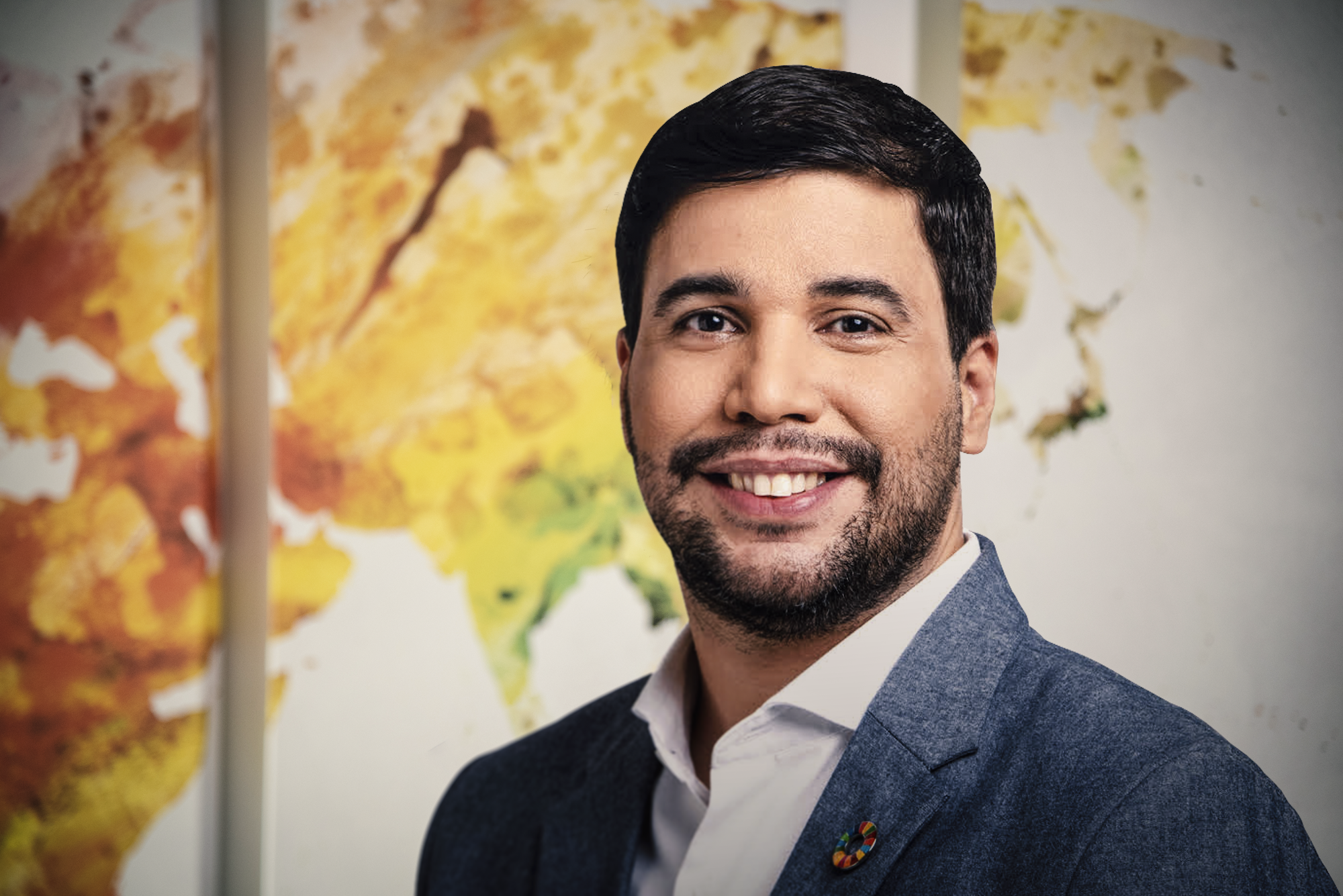
Arturo López Valerio believes there is a classification error in the way the digital divide is being measured in the country.
Santo Domingo. – The virtual opening of the World Summit on the Information Society was recently held, with the Dominican Republic chairing the forum (WSIS) and becoming the first Latin American country2020 to receive this honor.
The technology entrepreneur Arturo López Valerio spoke about this event, in which the Minister of the Presidency, Gustavo Montalvo, took part with a conference highlighting the value of new technologies in helping reduce inequality and poverty, in his segment “Martes Tecnológico” on the Matutino de La 91.3 FM, alongside Carlotti Peralta.
Speech at the Information Society Summit
López Valerio said that, unlike what the official argued in his address, technology in this country has been “mis applied”: instead of serving society and informing it, “it has been turned into tools of control, surveillance and loss of fundamental freedoms such as privacy”.
His reasoning rests on the fact that the country still has no personal data protection law that truly defines and penalizes the use of citizens' data, COVID-19 has become a free-for-all against everyone's privacy.
While, in Minister Montalvo's words, it is true that technologies can help create more equal and inclusive societies, López Valerio argued that free internet access for the population was practically suspended with the arrival of COVID-19.
This was mainly because access centers (such as the CTCs, INDOTEL centers, and so on) had to close because of the quarantine, affecting their target public.
The digital divide, a still-pending issue
Having said that, he asked: “How can someone who has no resources to connect and therefore belongs to the digital divide, connect to a virtual class?”
He recalled that captive portal technologies exist, through which an access center can provide “signal” to the community and continue its purpose even when it is not open.
Unlike what Minister Montalvo argued at the World Summit on the Information Society, that we need better-connected communities that use ICT to improve their productivity, the technology entrepreneur said that with COVID19 “the opposite has happened”.
And the reason, López Valerio continues, is that the Dominican Republic is a country that “has missed many opportunities” in the last two decades to move from the electronic to the digital.
The divide shows in teachers
Examples include teachers who could not connect to virtual classes because their environment does not provide the conditions for remote work, and organizations that still depend on paper, “because local regulations
force business owners and entrepreneurs to depend on a physical inventory, a stamp and a file full of papers.
Although a robust telecommunications ecosystem has been developed in the country in recent times, López Valerio explained that the main problem with the digital divide in the Dominican Republic is how it is classified.
“Will we keep measuring the divide only by access accounts, or will we update that key indicator to include the variables or new divides that closing the divide itself is causing?” he asked.
We must measure adoption
And the thing is, even with high teledensity, adoption is not being measured. “The internet is not affordable and a large share of Dominicans do not earn enough to get connected on their own”, he said.
For this reason, he proposes designing new models of digital inclusion, without setting aside the issue of digital citizenship, “something the authorities have overlooked”.
He regretted that “letting the internet become a battlefield in these days” leading up to the electoral process, even with the authorities themselves “being the catalysts of this disorder”, is “the exact opposite” of what Minister Montalvo said in his address.
In any case, the businessman concluded, his speech should be taken “as an aspiration about what there is still work to do on” and not as “the words of a technocrat”.
Shared by CDN 37, July 1 2020
Published by El Nuevo Diario, 1 July 2020
Published by Roberto Cavada, 1 July 2020