Robots Will Be the New Employees
Service robots are gaining importance in both professional and private settings, offering growing productivity and convenience. The service robot segment is divided into commercial and personal robotics. Commercial service robots are used to perform a service in an industrial environment, while personal service robots are deployed…
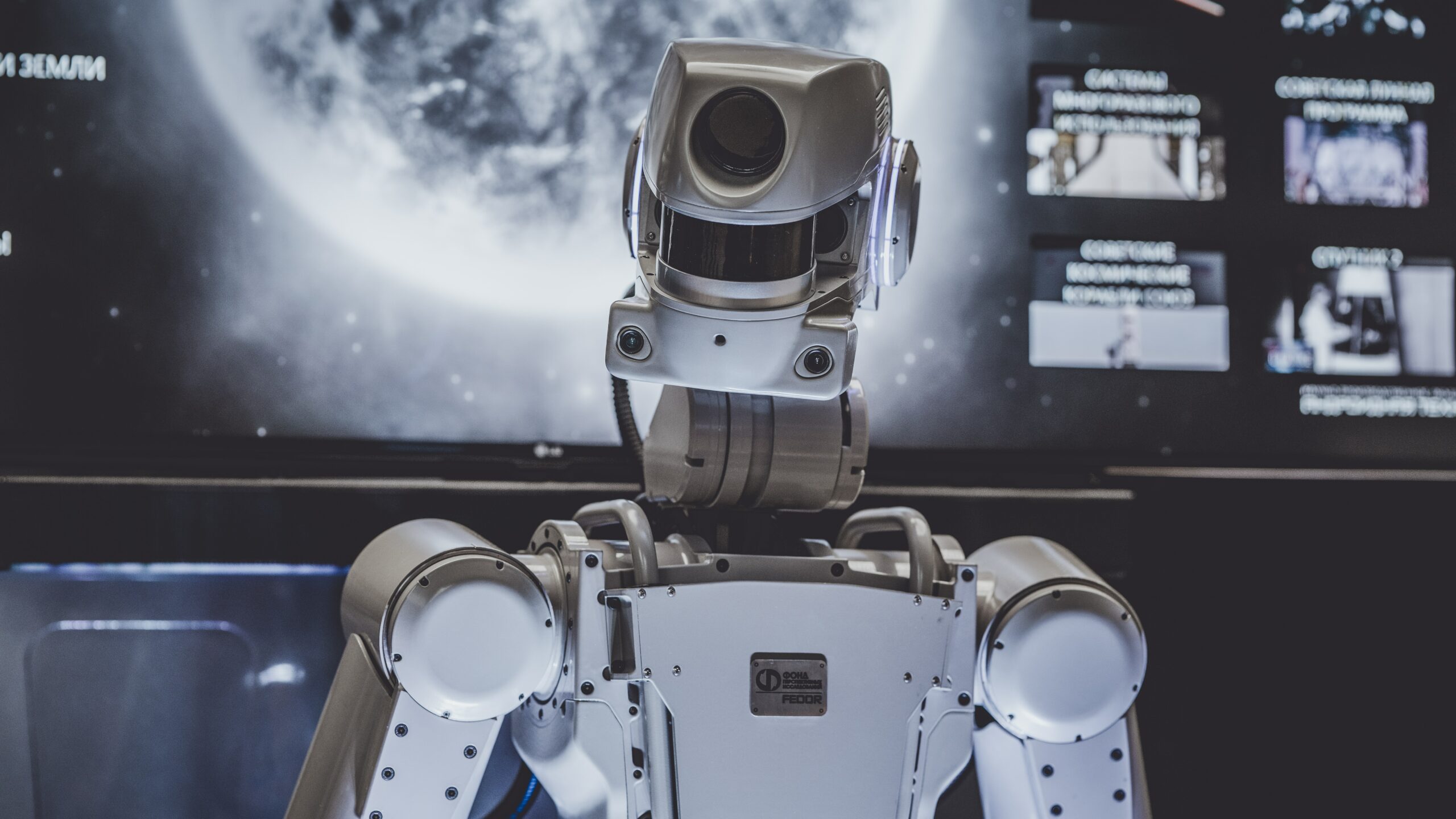
Service robots are gaining importance in both professional and private settings, as they offer growing productivity and convenience.
The service robot segment is divided into commercial and personal robotics.
Commercial service robots are used to perform a service in an industrial setting, while personal service robots are deployed in private homes, for example, robot vacuum cleaners.
Not only factories, but all infrastructure can be smart, in businesses as well as in homes. We have already seen this at events such as the Claro TEC Empresarial held last year.
In particular, according to the firm Tabuga, service robots are expected to grow strongly in the coming years (+140 percent from 2017 to 2021).
We have seen how the industrial robot market is led by Asia, while the service robotics market is led by the United States, with the application areas “logistics” and “household task robots” at the forefront.
Population aging is one of the key drivers of the growing robotics market.
The use of both commercial and personal service robots is an appropriate way to help humans, and especially older people, with their daily tasks at home or at work.
In addition, the logistics segment benefits enormously from structural changes driven by the use of robotics (optimized processes, greater precision, lower costs and less time spent, an essential prerequisite for same-day deliveries, for example), which further drives the growth of this robotics market.
Job automation is set to transform the global economy and the employment prospects of billions of people.
This growing automation and the rise of robotics have a far-reaching impact on the global workforce.
Experts estimate that 14 percent of jobs in advanced economies could become susceptible to automation, while another 32 percent could change substantially.
Nearly half of all workers in Japan and a third of the workforce in Germany and the United States face the need to leave their current occupation in order to 2030.
As robotics becomes more important, many jobs done by humans will change.
A study by Accenture and Frontier Economics estimates that the use of robotics has the potential to increase labor productivity by up to 40 percent by 2035.
Automation and AI could lead to sufficient gains in workplace efficiency to allow workers to perform the same tasks in less time.
Industries with a high share of repetitive, heavy tasks are the most affected by automation.
The workforce of the transport and logistics industry, with its warehouses and delivery workers, is expected to be strongly affected by robotics, for example.
However, most jobs will not disappear, but will see the emergence of the robot as a new kind of colleague and assistant in a new human-machine collaboration.
This requires both government authorities and the business community to prepare to adjust labor paradigms to the global reality that Covid has accelerated-19.
Published in El Caribe, October 27, 2020
Published in CDN 37, October 27 2020