Digital winter is not a social spring
Following last Wednesday's events at the U.S. Capitol, Twitter went a step further than placing warning labels on President Trump's tweets, and the company permanently blocked his account. Trump relied on the platform to bypass traditional media channels, rebut the news…
Following last Wednesday's events at the U.S. Capitol, Twitter went a step beyond placing warning labels on President Trump's tweets, and the company permanently blocked his account.
Trump relied on the platform to bypass traditional media channels, refute fake news and broadcast his unfiltered views to hundreds of millions of people.
Now, with the account permanently suspended, the conversation frames it as a “coordinated attack” by the tech giants, while German Chancellor Angela Merkel considered the removal of U.S. President Donald Trump from Twitter “problematic”, the chancellor's spokesman said on Monday.
His tweets are still freely available to browse on the Trump Twitter Archive, which has monitored his Twitter activity for years.
Countdown
So, with the days of his presidency counting down and his megaphone apparently silenced, he still has the White House press briefing room at his disposal, along with his press team.
It may well be that Trump returns to the technology that made him a star in the first place: television. If the major news organizations follow Twitter's lead and decide not to air the president's grievances, he may continue to struggle to dictate the national conversation on his own terms without access to his favorite social media platforms.
Prominent tech investor and star of the Australian television series “Shark Tank” Steve Baxter has lashed out at U.S. tech giants for going after and suspending the social media app Parler, as well as the accounts of U.S. President Donald Trump.
“This is pretty grim when this platform, –Parler–, is being held accountable (by the tech giants) for the actions of its users”.
To understand the context of the digital giants' suspensions against Trump, we share an updated list of all the sites that have banned him from using their platforms:
On Thursday, 7 January, Facebook became the first major site to ban Trump.
In a blog post, CEO Mark Zuckerberg wrote: «We believe the risks of allowing the president to continue to use our service during this period are simply too great. Therefore, we are extending the block we have placed on his Facebook and Instagram accounts indefinitely and for at least the next two weeks until the peaceful transition of power is complete «.
It is unclear whether the ban will continue after Inauguration Day (20 January).
Although not the first, Twitter suspended Trump's personal account, first temporarily and then permanently, and then removed a number of tweets from the @POTUS and @Whitehouse accounts. Twitter also suspended @TeamTrump, the official account of his reelection campaign, as well as that of Gary Coby, the campaign's digital director.
Before the ban, Twitter had been applying warning labels to Trump's tweets in which he inaccurately questioned the election results.
As of Friday, (9 January), Reddit banned the subreddit group r / DonaldTrump. «This community was banned due to a violation of Reddit's rules against inciting violence», reads a notice on the page. Although not an official Trump page, it had approximately 52,000 members.
Last June, Reddit had banned several other subreddits, including r / The_Donald, for repeatedly posting hate speech.
Twitch
On 7 January, Twitch also disabled Trump's account. «Given the extraordinary current circumstances and the president's inflammatory rhetoric, we believe this is a necessary step to protect our community and prevent Twitch from being used to incite further violence», a Twitch spokesperson said in a statement.
Although older posts are still visible, Trump is barred from posting new content. The company says it will reevaluate Trump's account after he leaves office.
Twitch imposed a two-week ban on Trump's account in June, but reactivated it after the removal of «hateful» content, specifically a rebroadcast of Trump rallies.
YouTube
Although Trump's official YouTube channel still appears to be active, YouTube removed a video in which Trump disputed the election results and told protesters inside the Capitol building that they were «very special» but should go home.
However, YouTube «will allow copies of this video if uploaded with additional context and sufficient educational, documentary, scientific or artistic value (EDSA)», a spokesperson told Business Insider.
YouTube removed the podcasts of Trump's lawyer, Rudy Giuliani, as well as the YouTube account for the War Room podcast, hosted by former Trump adviser Steve Bannon.
In a statement, YouTube said it had «terminated Steve Bannon's ‘War room’ channel and an associated channel for repeatedly violating our Community Guidelines».
Snapchat
Following the violent demonstration that took over the Capitol building, Snapchat locked Trump's accounts on Wednesday, 7 January. Although his account is still active, no new content can be posted. Snapchat did not say how long the ban would last.
Last June, Snapchat stopped promoting Trump in the «Discover» section of its app after Trump tweeted that George Floyd protesters should be «met with the most vicious dogs, and most ominous weapons, I have seen». In a June statement, Snapchat said it would not «amplify voices who incite racial violence and injustice».
TikTok
Considering that he has been trying to ban it since July, it is not surprising that Trump does not have a TikTok account. Even so, the company said on 7 January that it would ban certain videos of Trump addressing the rioters at the U.S. Capitol and would redirect the hashtags used by the rioters.
Discord
On 8 January, the gaming-focused Discord banned The Donald server, according to journalist Casey Newton. This server was linked to pro-Trump message boards, including the now-banned The_Donald on Reddit.
Shopify
The e-commerce platform removed two of Trump's online stores (donaldjtrump.com and Trump Store) on Friday, 8 January. «Shopify does not tolerate actions that incite violence. Based on recent events, we have determined that President Donald J. Trump's actions violate our Acceptable Use Policy, which prohibits promoting or supporting organizations, platforms or people that threaten or condone violence to advance a cause «, the company said in a statement to a Financial Times reporter. «As a result, we have terminated the stores affiliated with President Trump».
Parler
Parler, which was promoted as a conservative-friendly alternative to Twitter, was removed from both Apple's App Store and Google Play for failing to adhere to those companies' terms of service regarding public safety and harmful content.
Amazon also said it would no longer host Parler on Amazon Web Services, likewise citing violations of its web hosting terms of service against violent content. The ban took effect Sunday night (10 January) just before midnight, effectively shutting down its app and website.
In explaining their bans, the three companies cited numerous posts on Parler advocating violence, as well as Parler's inability to monitor and remove such content.
Who should set the rules of digital networks?
Tech companies were within their rights to block President Trump on their sites last week and to stop doing business with an app on which some people urged violence.
In the words of Shira Ovide, technology editor at The New York Times, who says the platforms made the right decision in suspending Trump, But «it should bother us that the decisions of a handful of unelected tech executives have so much influence over public discourse».
In the U.S., the First Amendment limits the government's ability to restrict people's speech, but not that of companies. And it gives companies in the United States the right to set rules about what happens within their walls.
Reasonable people may believe that Facebook and Twitter made the wrong decision in blocking Trump's account for fear that his words could inspire further violence. It is their prerogative to be the gatekeepers of what is appropriate on their sites.
Facebook and Twitter remove or block millions of posts and censor thousands of users for reasons ranging from people selling fake Gucci products to people trying to post images of terrorist attacks or child sexual abuse. Once again, people can object to the companies' policies or how they enforce them, but it is important to have even the most basic rules. «Almost nowhere on the Internet or in the physical world is an absolute free-speech zone», says Ovide.
Should these companies decide?
I agree with the view that technology platforms are not in a position to act as a Supreme Court, deciding for billions of people what constitutes appropriate or legal expression and behavior.
Apple and Google are among the few places where people can download apps for their smartphones. Amazon is one of the few companies –besides Google that provide the cloud services platform for many websites. Facebook, Google and Twitter are essential communication services for billions of people.
We must start a debate on how we can prevent similar situations from being replicated in the country. For this reason, exploring the impact of digital economy platforms should be one of the tasks of the new generation; we must begin taking measures to guarantee a better future and make better use of global digital flows.
Reflecting on our realities and on how to modernize our laws is an indispensable task for protecting fundamental freedoms and for post-pandemic economic acceleration.
Published in El Caribe, 15 January 2021
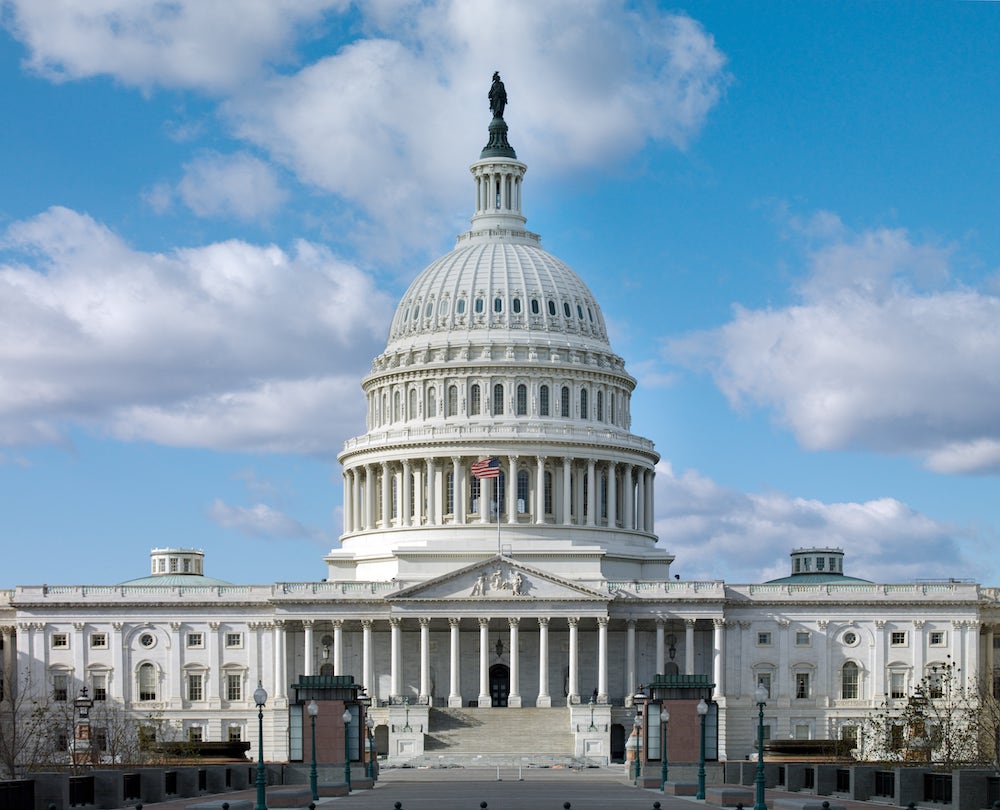
Photo by Carol M. Highsmith.