Digital economy: an engine of change in the Dominican Republic
Measuring the digital economy and its impacts has grown in importance as more and more economic activities become digitized, according to the Digital Economy study by 2019 of the United Nations Conference…
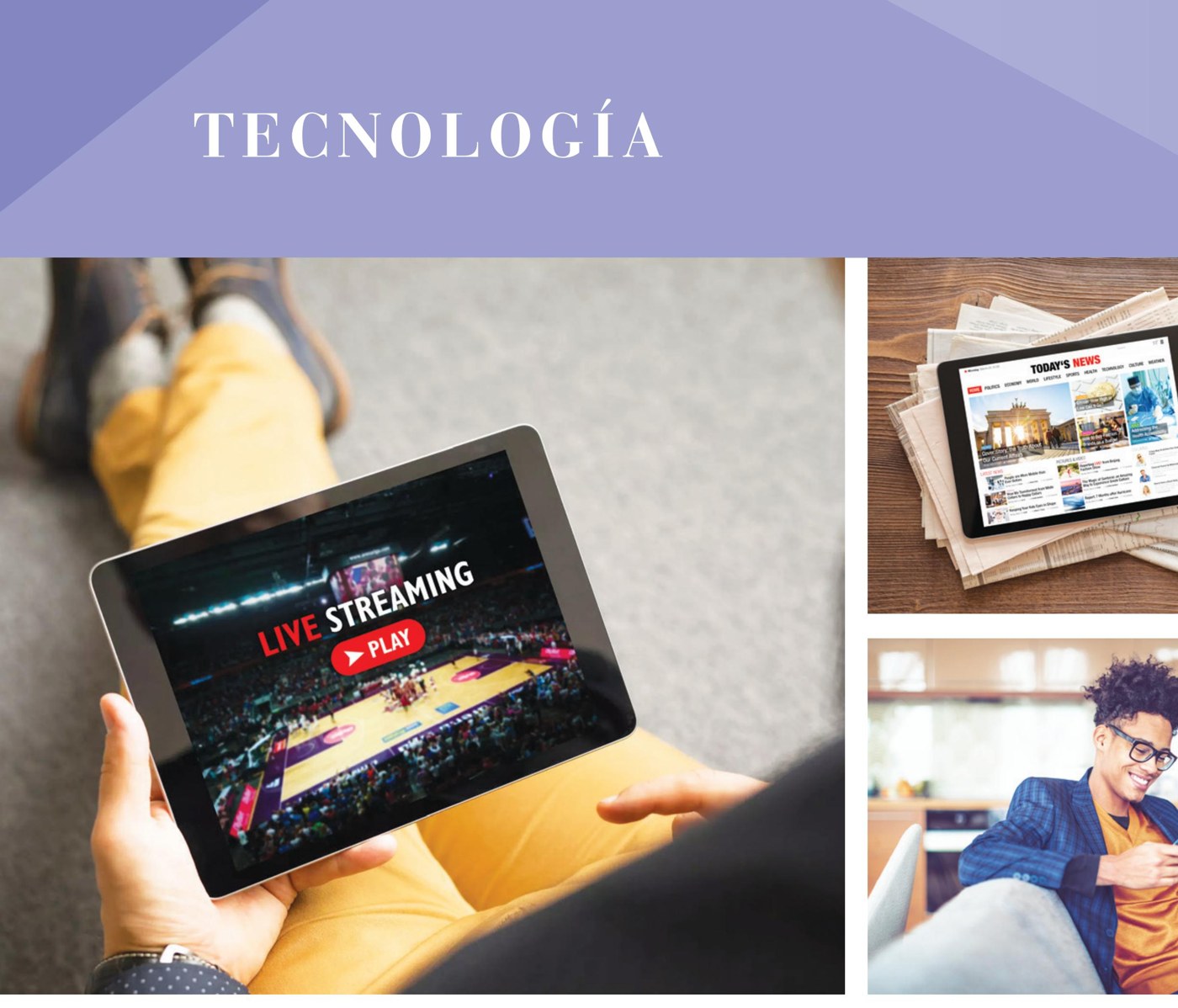
Measuring the digital economy and its impacts has grown in importance as more and more economic activities become digitalized, according to the Digital Economy study by 2019 of the United Nations Conference on Trade and Development (UNCTAD).
The growing demand for better statistics to support policymaking has renewed interest in identifying which digital economy activities can add the most value and how best to measure it.
To understand the impact of the digital economy in the country, we looked at contextualized information, which is the key to gaining a deep understanding of the structure of the digital market.
Within the local digital economy we found five markets that we analyzed and believe are the future for the new generation of Dominicans: electronic services, digital media, FinTech, digital advertising and e-commerce.
The electronic services market is defined by the sale of online services and digital products over the internet. The definition includes tickets for events (sports, music and movie tickets) through platforms such as Eventbrite, fitness apps and wearables, dating services (matchmaking, online dating, casual dating), as well as online food delivery (restaurant-to-consumer and platform-to-consumer), an area dominated by Uber Eats, Glovo and PedidosYa. This market is estimated to have generated revenue of 49 million dollars in 2020.
Digital media are defined as audiovisual media content and applications distributed directly over the internet. They include digital video (films, series and television programs) that we can watch on Netflix, digital music provided as a download or stream through Spotify, as well as digital games for different devices and electronically published content such as eBooks, electronic magazines or ePapers. This market was estimated to generate revenue of 236 million dollars in 2020.
FinTech, short for “financial technology”, is the central concept of structural change and digitalization within the financial services industry. Under the collective name “FinTech” (which still lacks a clear definition even within the industry), financial services are understood within the framework of the digital market and the digital infrastructures that allow new types of arrangements and procedures in the classic areas of banking, such as loans, investment strategies and payments. Revenue in 2020 was estimated at 2.159 million dollars.
Digital advertising uses the internet to deliver marketing messages to users through various formats. This includes advertising in Google searches, on social networks such as Facebook and Instagram, in digital newspaper banners, in YouTube videos and in classified ads such as Supercarros.com. Estimated revenue for this market was 312 million dollars in 2020.
The e-commerce market covers the sale of physical goods through a digital channel to a private end user (B2C). This definition includes purchases made on a desktop (including laptops) on Amazon.com, as well as purchases made through mobile devices such as smartphones and tablets. Revenue of 49 million dollars was estimated for 2020.
More needs to be done to improve the measurement of the digital economy in the country, namely agreed definitions of value and the collection of official digital economy statistics. In this regard, —according to UNCTAD— the digital economy in the United States in 2017 was estimated at between 6,9 and 21,6% of gross domestic product (GDP), while in China the figure reached between 6 and 30% respectively.
What do we know about the size and scope of the digital economy in the Dominican Republic?
Analyzing the variables with the Digital Market Outlook reports from the firm Tabuga, and excluding the telecommunications sector, the figure for 2020 is estimated at 4,31% of national GDP. As a baseline, the global estimate for the digital economy in 2017 was between 4,5 and 15,5%. This shows that as a country we are close to the estimated global average, but with a major commitment to sustain the current acceleration so that it becomes opportunities for every sector of national life.
The report Fiscal Panorama of Latin America and the Caribbean 2019, published by the Economic Commission for Latin America and the Caribbean (ECLAC) and Spanish Cooperation, indicates that in Latin America the weight of the digital economy is also significant, although smaller than in developed countries. A report by the same authors, prepared for Chile, compares the weight of the digital economy in Mexico, Argentina, Brazil and Chile in 2016 and projected to 2021.
According to this study, digital participation in 2016 was 15,9% of GDP in Mexico, 16,2% in Argentina, 21,6% in Brazil and 22,2% in Chile. But it also projected a capacity to grow by between 2 and 3 percentage points by 2021.
It is usually taken for granted that the economic and social impact of the digital economy will be positive in the long term, as some ECLAC studies show, reporting a productivity increase associated with this phenomenon. However, on the road to maturity there are some challenges that are important to address.
According to the World Bank, in 2016 the Dominican Republic was an economy in transition toward a stage of digital transformation. Four years later, with an estimated compound annual growth rate (CAGR 2020-2024) of 12,3% for the digital economy, the main task is to achieve the inclusion of all citizens in order to mitigate the impact of “intangible actions” on analog activities.
From the Dominican Chamber of Information and Communication Technologies (TIC) we are taking part in the dialogue at the Digital Economy table of the Digital Transformation Cabinet, created by President Luis Abinader through decree 71-21. At the same time, we are supporting multiple actors in the business fabric in order to strengthen a cross-cutting vision of technologies.
Now is the time to accelerate the growth the digital economy experienced during 2020, to connect with an effective e-commerce model in which digital tools can facilitate closer collaboration among all parts of the value chain, allow full integration of private and public services, and foster greater citizen involvement in improving their quality of life.
Excerpt from the book “La economía digital es el motor de cambio en República Dominicana”, an Amazon.com best seller in the 30-minute reads category (social sciences).
Originally published in Revista Bohío 220 (Bohío 220), Ediciones Cabrer.