Jorge Villegas builds consensus on Digital Economy bill with sectors and Government
The digital economy, also known as the “Internet Economy” or the “Web Economy”, is one of the cross-cutting axes of the legislative agenda of Orlando Jorge Villegas, deputy for Constituency 1 of the Distrito Nacional. To that end, he brought together leading figures and entrepreneurs in the field, with the aim of continuing to build consensus around the initiative. Jorge…
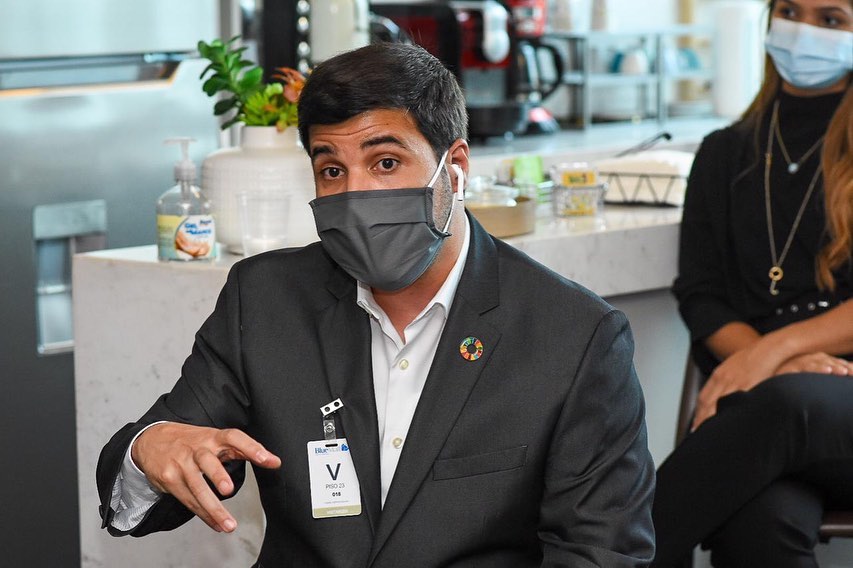
The digital economy, also known as the “Internet Economy” or the “Web Economy”, is one of the cross-cutting pillars of the legislative agenda of Orlando Jorge Villegas, deputy for Constituency 1 of the Distrito Nacional. To advance it, he brought together leading figures and entrepreneurs in the field, with the aim of continuing to build consensus around the initiative.
Jorge Villegas, who for several months has been working on a bill to promote the Dominican digital economy, a sector that now accounts for 4.31 % of the country's Gross Domestic Product (GDP), spoke of the need to build capacities based on Science, Technology, Engineering, Arts and Mathematics (STEAM), in order to raise those figures further and generate wealth.
“STEAM education is the first pillar of the Digital Economy bill. How can we have a legal framework that encourages public education and the universities to take on these capacities as a priority in the Dominican Republic”, the legislator noted.
A saturated labor market
Jorge Villegas held that the Dominican labor market is saturated with professionals from the same careers –linked to the social sciences, namely lawyers, economists, administrators and so on. He said he is not against this, but noted that digital technology would help drive a new labor market, creating synergy between the public and private sectors.
The deputy also heard the views of various representatives of the public and private technology sectors, such as Armando Manzueta, representative of the Presidential Office of Information and Communication Technologies (Optic), who spoke about the government's plans to develop infrastructure as a fundamental basis for building a digital economy.
He pointed out that in the Dominican Republic only 30 % of the population has permanent access to the internet, a basic precondition for building a digital economy.
Digital Economy Bill
The bill is being drafted by Jorge Villegas together with technology experts. Its goal is to promote the technology industry and expand the labor market so that young people have more opportunities to grow and do not think about emigrating to other countries.
For his part, the congressman's adviser on technology and entrepreneurship, Arturo López Valerio, who is also president of the Cámara TIC, explained that the goal is for the country to be able to develop digital processes from conception through to completion.
Darian Vargas, a telematics engineer and data scientist, also said that his main concern about the digital economy is that in the Dominican Republic there is no equality in this field.
He suggested that Deputy Jorge Villegas legislate for greater educational incentives in everything related to the digital economy, since, in his view, countries that do not bet on this area are “chatarras” countries.
Consensus among multiple actors
In earlier conversations, the bill has already received the go-ahead from the Minister of Industry, Commerce and MSMEs, Víctor Bisonó, and from the new rector of the Instituto Tecnológico de Las Américas (ITLA), Omar Méndez.
The list of experts taking part in the roundtable is completed by:
- Laura Taveras, founder of Brands of the Dominican Republic;
- Gilbert Aponte;
- Rafael Núñez, founder of Todo Fresco RD;
- e-commerce entrepreneur Tariq Krusheet;
- Michelle Aybar, director of Girls In Tech RD;
- Adriana Selman, director of Coding Space;
- Alan Muñoz, vice president of Banco FiHogar;
- businessman George Nader;
- Christian Corcino López, CEO of Intellisys D. Corp and creator of the Vacúnate RD platform;
- and technology analyst and journalist Carlos Pérez Tejada.
Published in Diario Libre, 5 April 2021.