Companies in the Dominican Republic must overcome barriers to digital transformation
At a panel on Digital Transformation in Business (Banking 360) organized by Banco Popular Dominicano, the president of the Cámara TIC, Arturo López Valerio, and its vice president Mite Nishio, said that there are many barriers keeping Dominican business owners from moving toward digital transformation. Some of these barriers, as they explain, are the…

In a panel discussion on Digital Transformation in Business (Banking 360) organized by Banco Popular Dominicano, the president of the Cámara TIC, Arturo López Valerio, and its vice president Mite Nishio, said that there are many barriers keeping Dominican businesses from moving toward digital transformation.
Some of these barriers, they explain, include placing sole responsibility for digital transformation projects on the technology department, the lack of properly trained human resources, and the failure to treat these matters as a priority in the development and growth of companies.
‘‘Sometimes the management or the bosses of a company are into digital transformation because it's fashionable, not because they are truly convinced it will help their business and give their customers better service, so they treat it as a futuristic project’’, said Mite Nishio.
A hyperconnected consumer
Both López Valerio and Nishio believe that companies in our country need to optimize their processes to keep up with the consumer and so that their products and services can reach more potential customers through the various digital platforms.
‘‘The consumer in the Dominican Republic is hyper-accelerated: more users are online, users are active on social media all day, but the intermediary, the one who distributes the product in this industry, is not at the consumer's level’’, said López Valerio.
Nishio, for his part, stated that ‘‘The 74.9% of the population has internet access, and we see that almost 60% of those lines are smartphones, so on the consumer's side, digital transformation is already here’’.
According to them, since the pandemic many companies have been developing supply chains and digital linkage, connecting the intermediary with the hyperconnected consumer through mobile apps that let customers order products from the comfort of their homes.
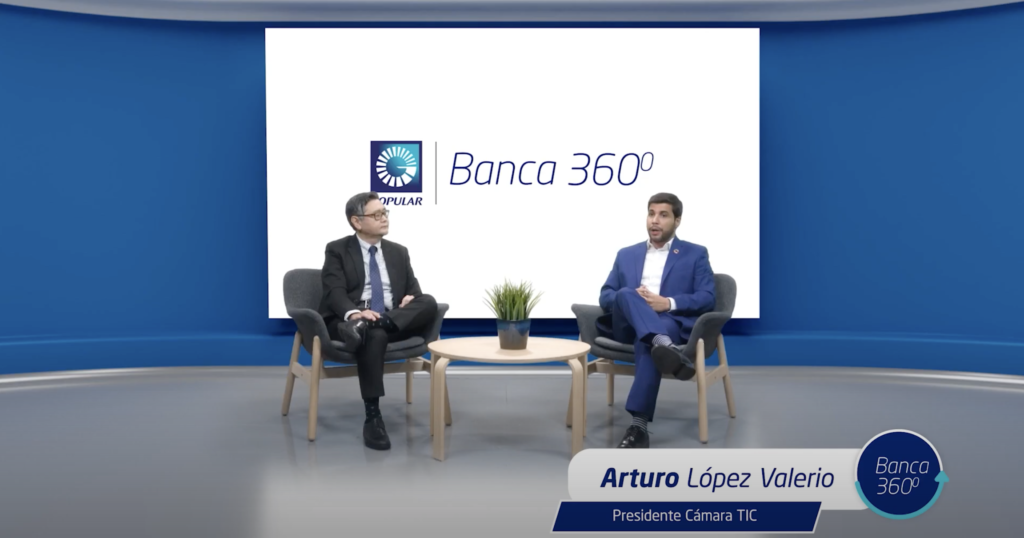
‘‘Many companies saw the cost reduction from remote work as a gain, but at the same time this impact came from process efficiency, since many processes done in person were manual, and when we moved to a fully digital mode, we then had to optimize them to polish them digitally’’.
Arturo López Valerio.
Improving processes
Speaking about the creation of Agile Cells, they emphasized that implementing this method allows companies to involve all departments in the creation of new projects, and to develop them in less time and more effectively.
‘‘In agile cells, what you do is take interdisciplinary groups, which work from different perspectives, different departments or areas of the company, and in short periods of 5 days they develop a portion of the product, it is evaluated, tested, and they immediately go into another cycle’’, López Valerio stressed.
Both technology and telecommunications experts reiterate that digital transformation is a necessity for companies, that it entails new business models, and that it can be adjusted to each company's priorities and objectives. They therefore recommend developing projects that fit the market they serve and help speed up their work.
Originally published in Cámara TIC – 5 July 2021