Digital linkage exposes a skills gap in the Dominican Republic
Under the title ‘‘Digital linkage and the skills gap’’ the ICT chamber held an interesting panel discussion that analyzed several aspects needed for digital growth. The event, led by its president Arturo Lopez Valerio, laid out the gaps in skills development that keep specialized labor from going…
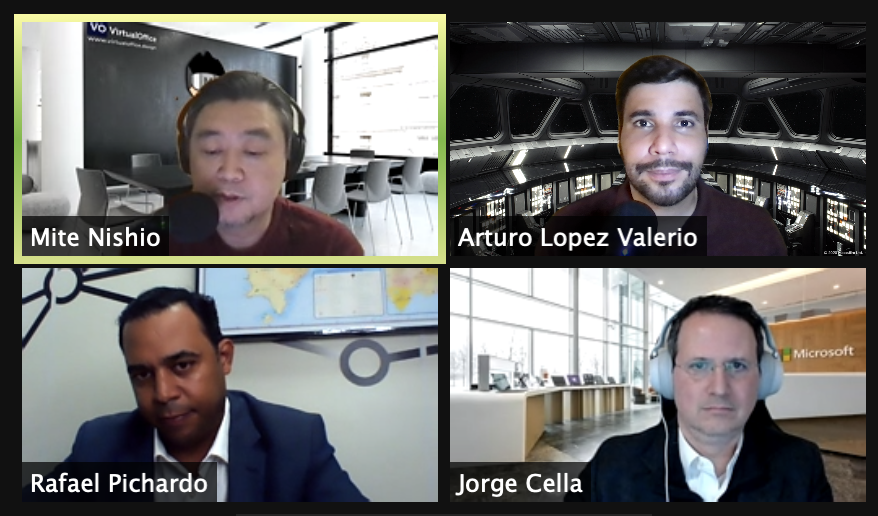
Under the title ‘‘Digital linkage and the skills gap’’ the TIC chamber, held an interesting discussion that analyzed various aspects needed for digital growth.
The event, led by its president Arturo Lopez Valerio, laid out the gaps in skills development that keep the specialized workforce from keeping pace with the advances the technology world is currently undergoing.
The speakers at the discussion were Rafel Pichardo, Deputy CEO of Altice Dominicana, and Jorge Cela, regional director of philanthropy for Microsoft Latin America.
Digital linkage and skills
Opening the dialogue, López Valerio explained that digital linkage is a term covering the process of delivering digital media, whether music or video, through the electronic channels we are already used to using, but which at the same time have a point of origin, running from the content provider to the consumer.
‘‘What we want is to offer a perspective on the skills that must be built to expand this digital linkage, so that we urgently identify the capabilities that need to be built in young Dominicans’’, López Valerio added.
Skills to develop
According to Jorge Cela, who has worked for Microsoft for more than 25 years, the skills that people working in this sector must develop include critical thinking, creativity, problem solving, teamwork, emotional intelligence, negotiation and sales.
Cela also added that, in the effort to develop these skills, the first step is teaching people to work with technologies. This step is the first rung, since, as he explains, if someone doesn't know how to work with technologies, they can't advance in other skills.
‘‘Working with technologies is not the same as using technology; they are totally and absolutely different concepts. Everyone knows how to use technology, but using it is one thing and learning to work with it is another’’, Cela emphasized.
Technology-based skills
Along the same lines, Rafael Pichardo, who has more than 20 years of experience in telecommunications, noted that developing these technological skills is not a need only for professionals in the technology field, but an urgency across all areas of professional practice.
‘‘Technology is the foundation and will be even more so for all careers; no career will be exempt from technological knowledge’’, he asserted.
Pichardo said there is currently a tangible shortage of resources in our country, which makes it hard to find talent to fill positions in the telecommunications sector.
‘‘Resources are not sufficient in developed countries like the United States, and they are starting to recruit foreign talent. They look in the Dominican Republic, and there is a drawing-off of resources that starts with small companies and then moves on to medium and large ones, taking people away with better salaries, until they leave the country for a better life’’, he stated.
Training offerings from the private sector
That is why both Microsoft and Altice are working to offer training programs to professionals in the field, in order to have better-prepared human resources with stronger skills that foster unstoppable development of the sector.
‘‘We launched a scholarship program called Altice Academy, we give scholarships and provide training, all based on academic excellence. That is, if the person who was selected performs well, they keep receiving the partial or full scholarship, depending on their performance. Once the training ends, they can do an internship with us or with a partner, and if they perform well, they go into a database and can become our employee’’, said Rafael Pichardo.
Meanwhile, at Microsoft, as Jorge Cela noted, a plan is under way to train one million people per year across Latin America, so that the low quality of education in Latin American countries does not prevent people from demonstrating the capabilities they have.
‘‘Never in human history has there been so much content, so much learning available free of charge a single click away’’, Cela stressed. He pointed out that among the most in-demand roles in technology are software developer, with approximately 15 million open jobs; sales, with more than 8 million; and project management, with almost 3 million jobs available.
Published by Cámara TIC – 6 July 2021
Published as Cámara de TIC en República Dominicana: “Technology skills must be built to guarantee sources of employment” – Revista Mercados & Tendencias – 8 July 2021
Distributed by CDN 37 – 5 July 2021