López Valerio moderates the panel «Regulation and Digital Agenda 2030» at Semana TIC 2021
At the opening of Semana TIC 2021, Arturo López Valerio, president of the Cámara TIC, moderated the panel «Regulation and Digital Agenda 2030» with José David Montilla, Bartolomé Pujals and Pedro Quezada.
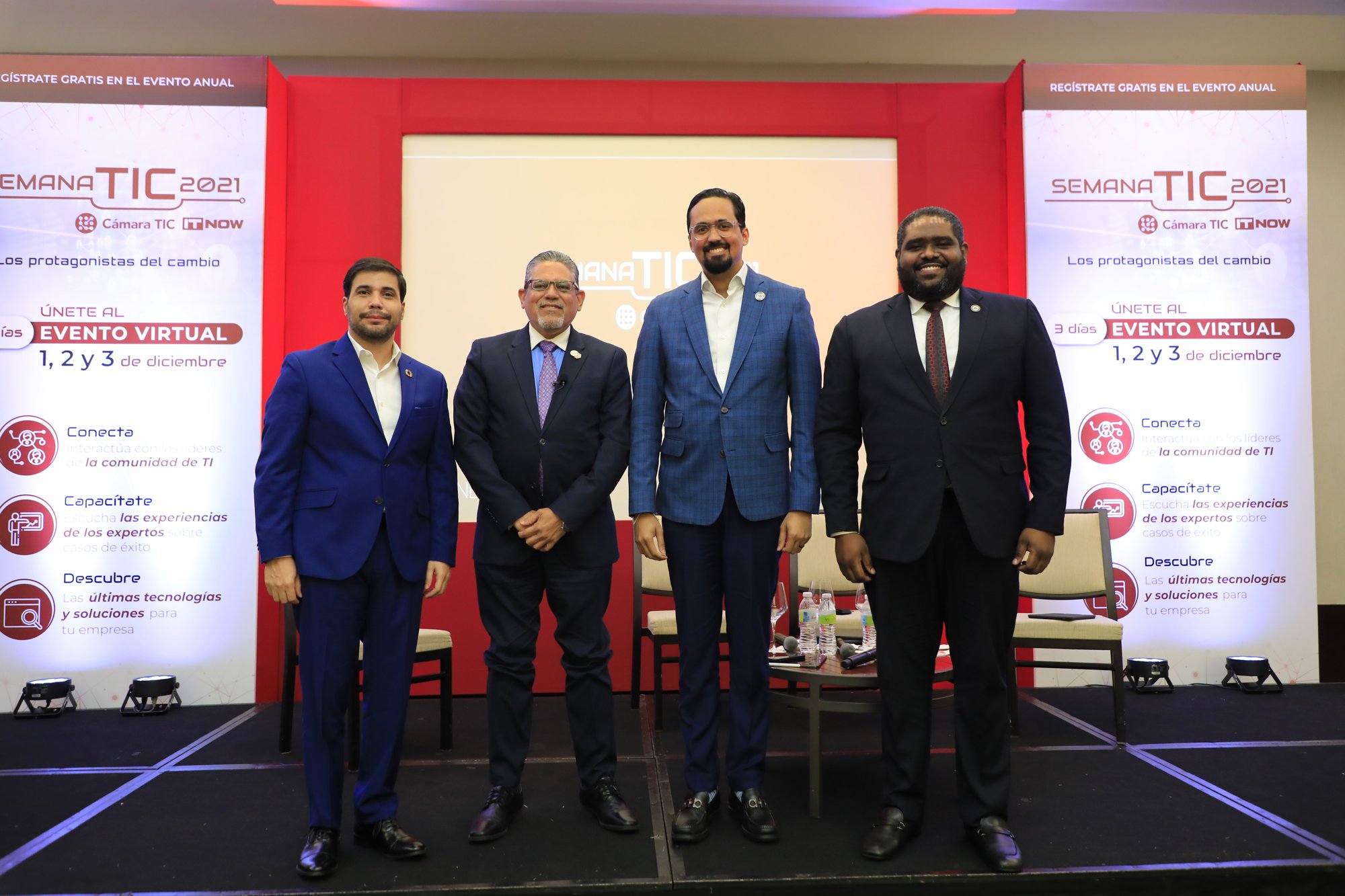
On 30 November 2021, the Dominican Chamber of Information and Communication Technologies (Cámara TIC) opened ICT Week 2021, during which it held a panel titled «Regulation and Digital Agenda 2030», aimed at examining current regulation and how it can be used to promote digital transformation in the Dominican Republic.
The president of Cámara TIC, Arturo López Valerio, moderated the panel, where he addressed the private sector's different views on the new policies that will help drive the digital agenda, the impact on the technology sector, and also how to make use of current regulation to accelerate innovation and, with it, support the growth of the ICT sector in the country.
The panel's guests were José David Montilla, Vice Minister for Digital Agenda; Bartolomé Pujals, executive director of the Innovation Cabinet; and Pedro Quezada, director general of the Government Office of Information and Communication Technologies (OGTIC).

According to Quezada, through its governance axis the OGTIC team hopes to present to the Congress of the Republic a genuine digital law that makes the country a regional benchmark, as exists in other countries, and that helps the Dominican Republic in an essential way to implement everything related to information and communication technology. «Our vision is not for the State to become a brake, but to take advantage of that same speed, to insert ourselves into it so that we can create the norms and regulations needed for citizens and businesses, and the Government itself, obviously, to keep up with this hectic process of innovation, in which a technology comes out today, tomorrow it improves, and it keeps improving», Quezada added.
Montilla, in his remarks, said: «Indeed, the Dominican Republic is right now at its best moment in matters of the technology, information and telecommunications industry, because there is no need to preach to the converted; we had been in this sector convincing the Government and the private sector about digital transformation, digital agendas and all of this».
Montilla also explained that, starting from the need to make Azua a province characterized by the development of digital capabilities in its population, they were struck by the influence of the universities located there, and from that a Digital Agenda was built, which is the digital transformation strategy. «The Digital Agenda says: ok, I have a National Development Strategy 2030, I have Sustainable Development Goals, I have the regional Digital Agenda for Latin America and the Caribbean, I have a Government program with which I must achieve full alignment, taking into account the cross-cutting aspects of human rights, gender equity, environmental sustainability, social participation, territorial cohesion, risk management and environmental management. In other words, we have tried to cover everything. It is an ambitious plan, but we are cutting the pie into small pieces», Montilla added.
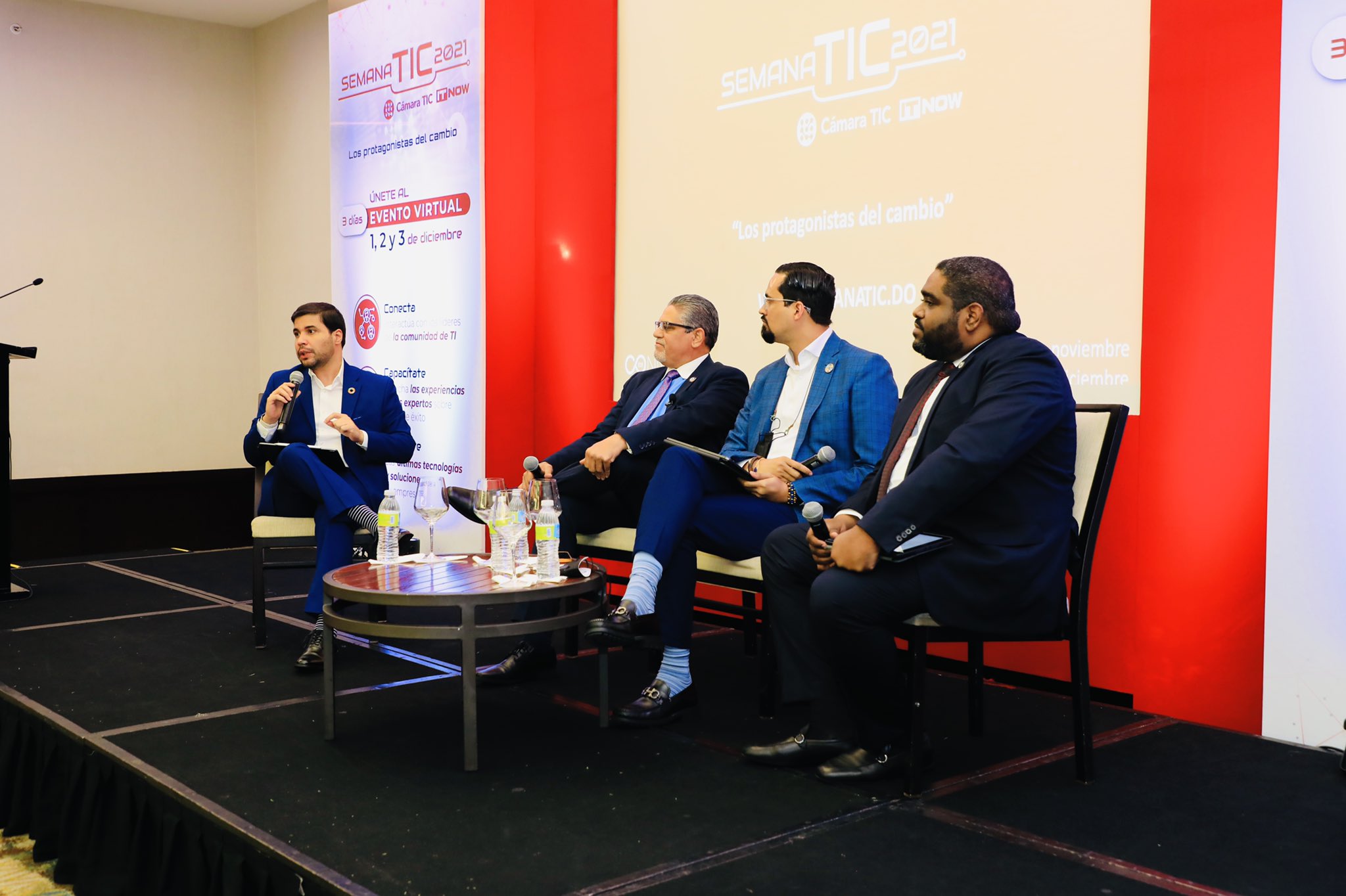
Bartolomé Pujals, for his part, said it is no coincidence that both the Digital Agenda 2030 and the Innovation Cabinet have a governance axis, and that the Innovation Cabinet is responsible for coordinating the Technological Innovation axis, since cabinets serve as a space for unifying the Government's criteria and, above all, for respecting the democratic process. «I listen to society, I deliberate with society, and then I take it into account to shape that policy. The problem is not whether there is regulation or not. It has to do with what it is for and for whom, because technology has no ethics; you give it ethics. You are the one who determines that, and all of this about artificial intelligence and robotics ultimately carries a series of risks that regulations are meant to prevent», Pujals stressed.
«I believe the Dominican Republic is at an auspicious moment, because I think we are at a time to renew our social agreements, social agreements that can be seen in the education law and in the higher education model, where, for example, it was understood 20 years ago that the wheel of innovation was driven by academia, and that is not true; it is driven by the kids who are inventing and iterating in their homes. So I think that with the creation of these regulatory sandboxes we could get up to the speed the times are demanding and use public policy as a source of acceleration for innovation», Pujals concluded.
Press release from Cámara TIC about ICT Week 2021 (December 2021), originally published at camaratic.org.do. Photos: Cámara TIC.