The legacy of our generation
Closing remarks at TIC Week 2022, on December 1 in the Lincoln Room of the Hotel Intercontinental Real, in my capacity as president of the Cámara TIC.
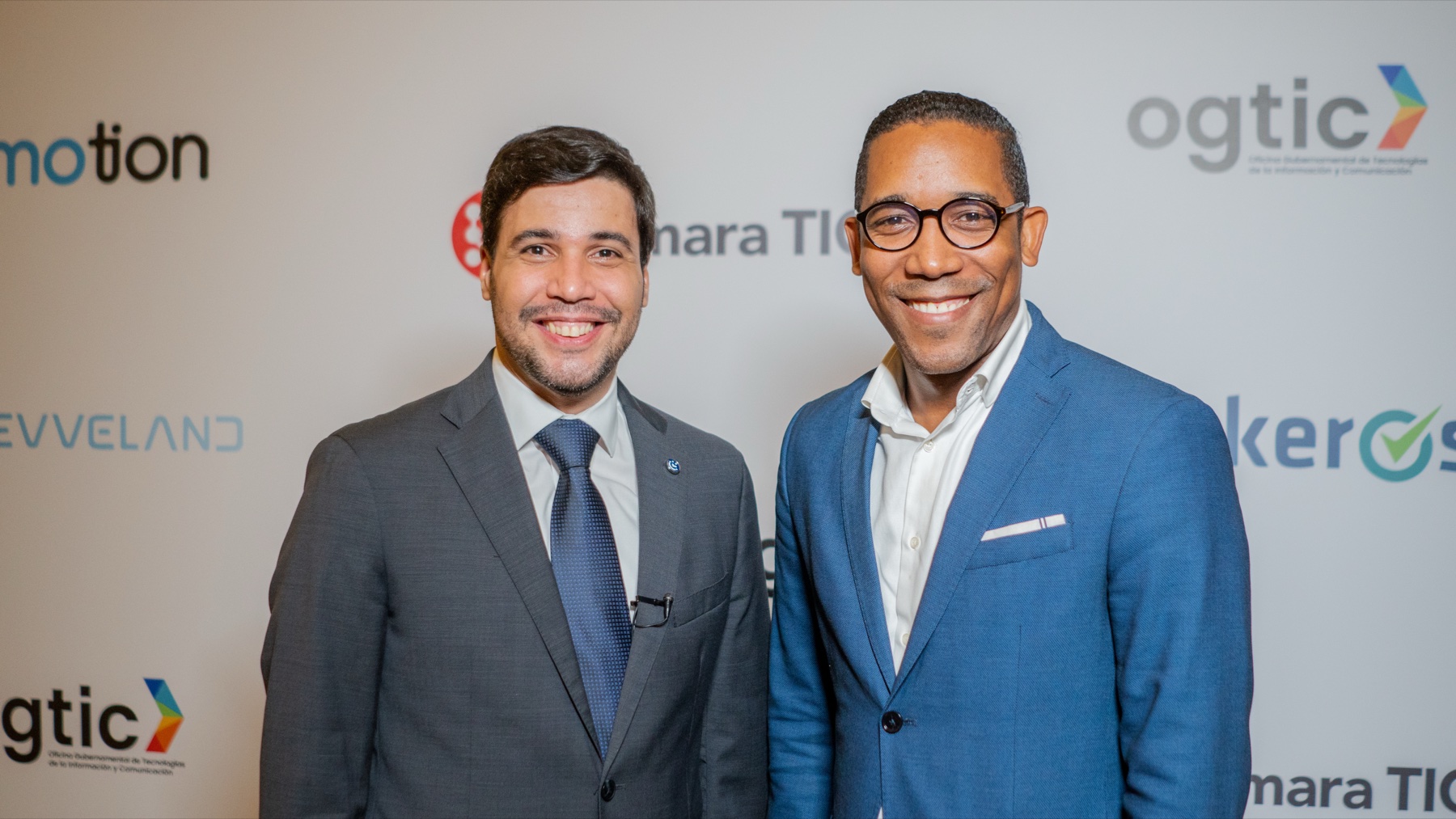
Closing remarks at the ICT Week 2022, on December 1 in the Lincoln Room of the Hotel Intercontinental Real, in my capacity as president of the Cámara TIC.
Good afternoon to the distinguished members of the central government; to the representatives of national and international organizations; to the members of the board of the Cámara TIC, to the national press and to the staff who accompany us. Friends all.
Thank you very much for joining us at ICT Week 2022.
For the second year in a row I stand before you in this tradition we call ICT Week. The Cámara TIC is an entity made up of players from the national and international technology sector; it is, and keeps growing as, a point of consultation for many actors in national life, from the private sector as well as civil society and government.
As many of you know, this is my last appearance before you as president of the Cámara TIC, and I must say that presiding over my trade association alongside friends and professionals I admire and esteem so much is, and has been, one of the greatest honors, one I will share as an anecdote throughout the rest of my professional career.
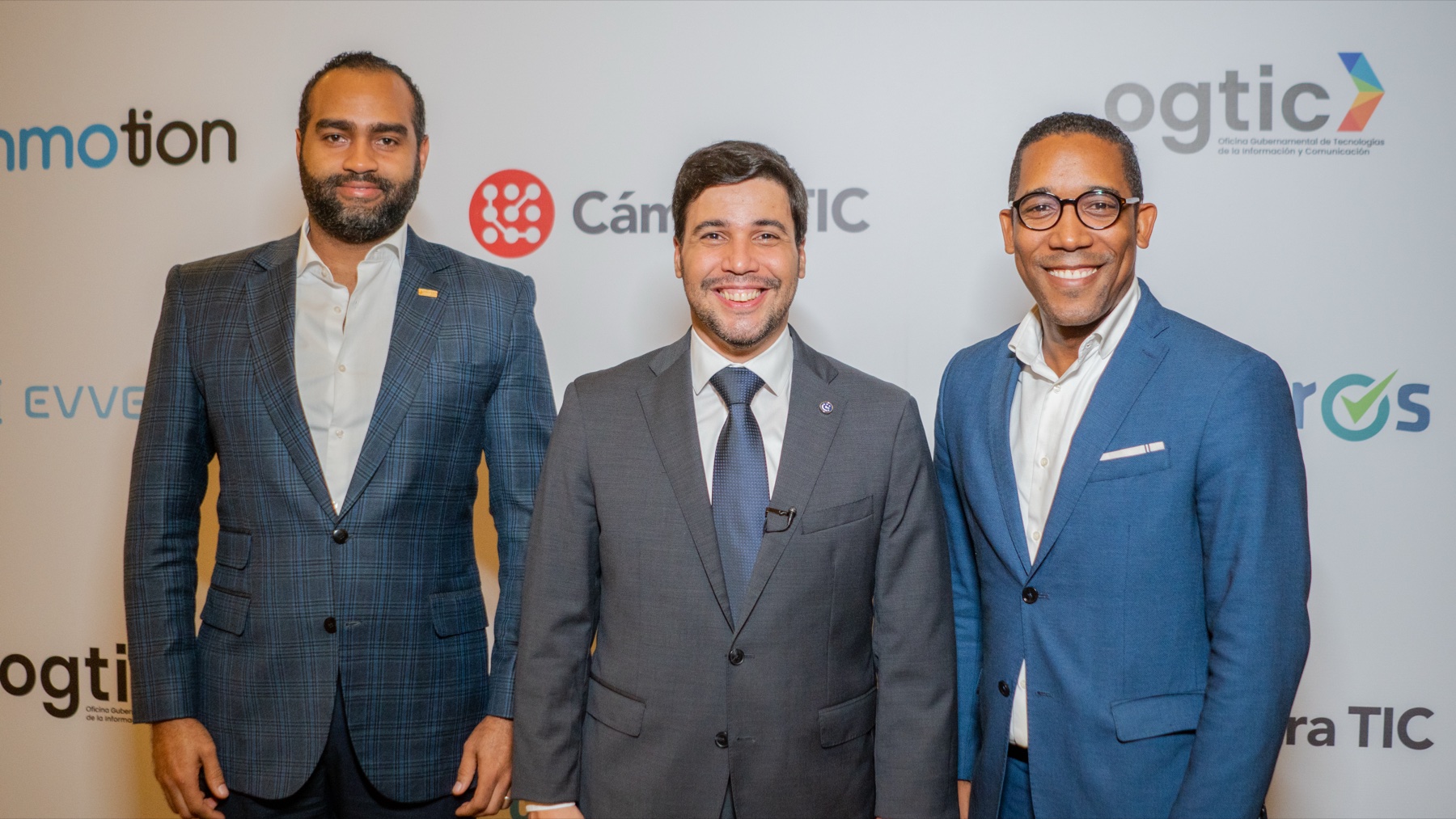
Ladies and gentlemen: when in 2020 we took on the challenge of presiding over the Dominican Chamber of Information and Communication Technologies (Cámara TIC), we set ourselves as our fundamental mission to reposition the institution before industry players, key market actors, the government and international organizations.
To reach that goal we set two fundamental objectives: first, to move toward becoming a consultative actor for the national business community through our axis of cross-cutting technology for business development; and second, the digital economy as an accelerator of the democratization and growth of the ICT sector in the country.
With these two axes we set the tone for drafting the institution's work plan, with which we were going to conduct our presidency. We knew that to produce tangible, short-term results we had to break paradigms and act at the speed and effectiveness the current market demands, so we began to implement a startup culture and digitized as many processes as possible, relying on the use of software.
I will not dwell on what happened afterward, and will limit myself to reading you a quotation from my friend Carlos Pérez Tejada, who recently shared in his column «Martes de Tecnología», published in Diario Libre, a review of the «invisible digitalization» work that has been carried out at the Chamber. I quote:
There are many tools on the market for managing pending tasks, and for connecting and holding conversations on specific topics among the different members of a company. Through the Cámara TIC I came to know Basecamp, a platform that is simple and does not try to complicate the creation of a to-do list. Among the benefits it offers is the ability to connect with other cloud platforms, which allows documents to be shared. In addition, thanks to its simple messaging mechanism, it allows individual conversations on each topic, preventing ideas from mixing across different pending tasks, which gives it an advantage over other platforms.
Currently, 66 actors are connected to the tool, which has made it possible to process 357 of 431 tasks laid out in our work axes, for a completion rate of 82%.
Achievements of the 2020-2022 Board
Within those two axes we defined three cross-cutting work sub-axes:
- Effective communication with stakeholders: the Cámara TIC as a consultative actor for the national business community, with technology as a cross-cutting business axis.
- Institutional strengthening, with two approaches: administrative normalization, with the automation of the Cámara TIC's processes as a digital operation; and growth in membership and in the various collaboration working groups.
- Positioning: harnessing the digital economy as an accelerator of the democratization of business opportunities in the country (5% of GDP).
This approach allowed the Cámara TIC to re-enter the multisector conversation, and the result was incredible. I quote:
- Appointment to the digital economy working group of the Digital Transformation Cabinet, by decree 71-21, actively participating in the working groups of the Digital Agenda 2030.
- Appointment to the innovation investment working group of the Innovation Cabinet, by decree 464-21.
- Participation in the Economic and Social Council (CES) to build consensus for the Digital Agenda 2030, representing the Santo Domingo Economic and Social Development Council (CODESS).
- We took part in the conversations on the future of work and on drafting a telework law suited to the reality of today's labor market, supporting Deputy Orlando Jorge Villegas in that task.
- The conversations on the National Innovation Policy.
- Inclusion in the National Strategy for the Export of Modern Services, thanks to the call by the Dominican Republic Services Coalition, Caribbean Export, and the work of the MICM authorities and their foreign trade team.
- We spoke with Cuban business owners to establish ties through the Cuban Chamber of Commerce, with the aim of making the Dominican Republic a bridge for distributing open-source software and skilled labor across the Antilles.
- We took up the defense of the digital platforms sector against INTRANT's measures opposing the growth of the digital economy.
- The alert to Dominican authorities about the country's decline in the Network Readiness Index (NRI) results, from position 75 to 85 on the global scale.
- We opened channels of conversation with the Government Office of Information and Communication Technologies to keep the government's vision active in the face of the changes brought by digital transformation, which led to its support for the Habilidades.do project to map the local talent working in the State.
- We catalyzed the first meeting of the National ICT Statistics System together with the National Statistics Office (ONE) and Indotel, which led us to understand the realities of ICT sector data from the public sector's perspective.
- We joined the sectoral meetings to structure a draft digital economy bill, in support of the initiative of Deputy Orlando Jorge Villegas.
- We collaborated with ADECC to connect its members' needs with the offerings of our members and strategic allies, in order to strengthen service linkages in the orange economy.
- We took part in conversations led by academia —specifically, PUCMM— to improve press professionals' understanding of the national ICT reality.
- We began a tour to understand the effects of digital transformation in the province of Santiago, together with the Santiago Chamber of Commerce and Production, identifying a 30% of digital adoption among the surveyed companies.
- We brought together the technology, orange economy, fintech, and commerce sectors for a face-to-face conversation with MICM authorities and the domestic trade team.
- As part of the efforts to promote digital transformation, we ratified the agreement with Fedocámaras to take the digital maturity assessment to the 30 chambers of commerce nationwide, a process that will continue in 2023.
- We kept close contact with Indotel on the modernization of the telecommunications law and the promotion of safe internet in the country.
- We received the perspectives of the electronic security sector thanks to the inter-institutional framework signed with ADESE.
- Together with Mite Nishio, we shared the prospects and barriers of digital transformation in the country through the Banca 360 efforts promoted by Banco Popular Dominicano.
- We set up the data working group, beginning an important process of bringing together key actors at both the national and international levels. This resulted in the Chamber joining the National Open Data Commission and in representing the country, on national soil, at the América Abierta, Abrelatam and Condatos event, where we presented and called on the Dominican government to release data for hyperlocal development. When we address open data, it is important to remember the role of the Directorate of Government Ethics (DIGEIG), so that its work within the government can have an impact on citizens' lives.
- We discussed the digital skills gap with members and authorities of the Innovation Cabinet, and we proposed mapping the skills of our young professionals through the Habilidades.do initiative.
- We shared perspectives on technological development in the country's municipalities together with allies such as COMTEC and ASOFER, as well as perspectives on the growth of mobility, apps, and platforms that affect the behavior of our cities.
- We kept a watchful eye on the development of 5G in the country, guided by the knowledge of our ally 5G Americas.
- We set up the digital economy working group, where we worked jointly with members such as Uber, Didi, and inDrive to build the market arguments needed to defend the growth of the digital platforms subsector in the country, in the face of threats from the Tourism Cabinet and INTRANT.
- Together with members and allies, we took a look at the importance of smart cities in the country, where OGTIC shared its proposals and implementation plans on the subject.
- We addressed the metaverse and blockchain thanks to our members Buskeros and Evveland, having a positive impact on the adoption of those platforms in the market. We then followed up by signing the agreement with FDDE to encourage the use of these technologies in esports, a sector growing rapidly in the country. We supported the filing of the esports bill, an initiative of Deputy Orlando Jorge Villegas.
- We extended ties with regional associations during our visit to Mexico, in what we called the Acceleration Route 2022 (which we hope to repeat in 2023), thanks to the courtesy of the Dominican Embassy in Mexico and the preparations of Endeavor, Startups México and Tec de Monterrey. We returned a second time to the south of Mexico to connect with digital entrepreneurs and authorities in the city of Aguascalientes, where we learned about their efforts to generate new digital businesses and engineering-based employment.
- We established institutional ties with the Project Management Institute (PMI) Dominican Republic Chapter to strengthen the role of the PMO in technology organizations and change the paradigm of project delays caused by the lack of professionalization of ICT staff.
- We took part in the selection process for the ADOEXPO award winners in the modern services category, as part of the working framework of the modern services strategy.
- We took the message of digital transformation to universities and centers of knowledge through the digital transformation route, an initiative catalyzed from 2016 that has reached more than 1,000 professionals.
- As a milestone of the board, I am pleased to report the digitalization of membership certificates for our members using Open Badges technology: a process that, as a chamber, enables us to create a single digital registry that provides transparency on identity and on activities —tenders, committee participation, investments, sponsorships—, assigning a unique, verifiable sequence that will generate an ecosystem of trust between the Chamber and its allies. This is the tool that will enable a real digital transformation of the organization.
- Last but not least, we formalized synergies with the American Chamber of Commerce (AMCHAMDR) and its ICT Committee, in order to promote good practices in e-commerce and the digital economy, and to fulfill our mission of being a consultative actor on technology matters for the national business sector.
I think I'm forgetting a few things; I recommend that you read the annual report.
Ladies and gentlemen: all these advances have been possible thanks to the support of the institution's allies, who since December 2020 joined in the effort to strengthen associativity in the technology sector, and who include technology experts and the companies that use those technologies.
Today we have reached 46 business members in total, for a post-pandemic recovery of 125% in the number of active memberships. We currently have 600 professionals registered in the Red TIC, a database that seeks to interconnect the country's ICT professional fabric.
The Chamber's impact can be measured not only in economic terms, but also in the political and social capital built over the last 24 months with the support of the entire national press.
Just to give you an idea, the term «Cámara TIC» appeared in the news during an average of 37 of 52 weeks each year; this is called brand tagging, and it reached 71% each year. The news published by the Cámara TIC was disseminated by 410 digital media outlets, 307 web pages and 170 social accounts, according to the firm Brand24.
Three of our Cámara TIC board members have been selected as Tech Leaders by the magazine Mercado for two consecutive years. In previous editions, this honor of relevance and influence was reserved only for the president or the vice president.
The Cámara TIC has promoted the digital conversation in other sectors of the economy, with our participation standing out in the conversation on health, finance, tourism, the fiscal pact, the environment, productive linkages and the third sector.
In two years we generated a total of US$171,420 in free press, media relations actions that produced significant savings of RD$8,328,100 in liquidity for the institution, thanks to the great support of the digital team of Tabuga and of Martes Tecnológico.
The Chamber's true role: international alliances
Friends, before I conclude I want to talk to you about the true role of the Chamber and its international alliances.
This progress and these results allow us to say that today we have a Cámara TIC that is ready and has the social capital to contribute even more to the Dominican Republic. If you didn't know it yet, the Cámara TIC has a responsibility to the country, and international organizations constantly ask for our validation of the activities carried out by the governments of the last twelve years.
Throughout its history, the institution has reached agreements with three different constitutional governments: from 2010 to 2012, from 2012 to 2020 and the current term.
For this reason we reconnected with regional strategic allies to bring a fresh perspective to the national ICT conversation. We want to thank the Federation of IT Entities of Ibero-America (ALETI), the Latin American Internet Association (ALAI), the Internet Association MX (AIMX) and 5G Américas for their support of the Chamber and for opening the channel so that our ideas, effort and goodwill could promote the spirit of regional associativity.
Two initiatives with regional impact were born from these agreements, both the result of work carried out by the Cámara TIC:
- The Manifesto of the Latin American Digital Economy, a reflection involving more than 18 regional actors, aims to give a common shape to the conversation between business and government on the growth of this sector. This document will become the backbone of the region's initiatives and regulatory frameworks.
- The Like Inteligente program, an AIMX initiative to promote citizen awareness of safe internet use, becomes the first content portal to be replicated, first in the Dominican Republic and then in the rest of the continent. With the support of the OAS, the Cámara TIC is developing a model that sets a standard for spreading good internet-use practices from the private sector.
The growth of the digital economy
Ladies and gentlemen, I would like to close with this reflection on the growth of the digital economy.
Last year we asked ourselves: can we design the future without technology? The answer was no. Twelve months later, given the challenges of digital adoption, the dominance of cash and the delay in formalization, we can see that technology is the challenge key actors need to take on if they are to participate with transparency and balance in a formalized market.
Technology goes where we go; it is a central issue for every business leader. Interfaces will become more personal and language less technical. User interfaces will keep handing power to the consumer: consumers will always choose the best option on the market.
For this reason it is no surprise that the digital economy will reach about 6,408.52 million dollars, 5.70% of the Dominican Republic's GDP this year 2022, according to the digital economy study by Tabuga. If we add up the digital economy, the ICT sector as a whole will represent approximately 10.01% of national GDP by 2022.
We cannot hide this reality, because it is also changing the way organizations work. Work in 2022 does not flow the way it did a decade ago.
Thanks to this digital growth, we have seen that local talent can plug into multiple markets remotely, and that the fourth industrial revolution is accelerating opportunities for professionals in the ICT sector and modern services. The future of our sector is the capacity to build a technology hub not only for the region, but for the world.
For this reason, I recommend that you download our book The digital economy is the engine of change in the Dominican Republic, available on Amazon. It is meant as a reminder that this sector is entirely different from other key industries: tourism, manufacturing, finance, agriculture and energy. Anyone with the skills and an internet connection can stand out in the global digital ecosystem.
To build the future, stakeholders need to listen closely to one another, recognize the progress made by earlier actors and be able to change course when necessary.
For 2022:
- The software sector will produce 208.2 million dollars.
- The IT services sector, 444.7 million.
- The data center sector (on premise), 314.6 million.
- The devices sector, 1,300 million.
- The public cloud services sector, 153.3 million.
- The communications services sector, 2,330 million.
- The cybersecurity sector, 71.24 million.
- The IoT sector, 6.36 million.
- The robotics sector, 10.88 million.
Friends: it is time to iterate on our positions if we want the country to become a technology hub, defining a purpose that, as a sector, helps us win and retain customers and link up with one another to go further.
The country needs to seize the opportunity, focus on people rather than structures, visualize markets, and focus on results rather than change.
Domestic companies need a technology perspective in their boardrooms. Let us build the management, leadership, and governance capabilities to make the Cámara TIC's vision a reality from within organizations and across the national economic chain. It is our responsibility and the legacy of our generation.
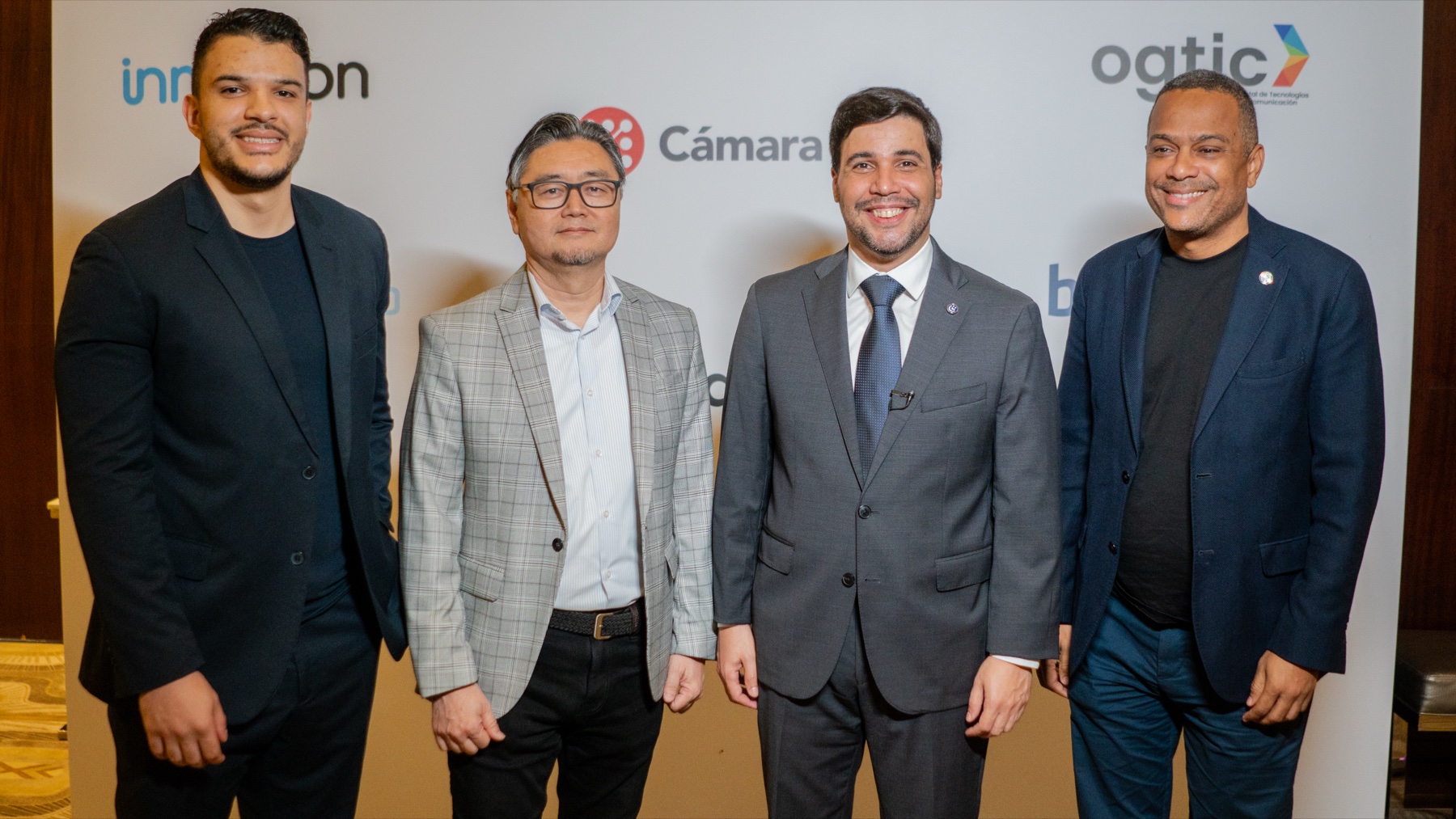
I take my leave honored and grateful to all of you, to the Government, Deputy Orlando Jorge Villegas, the board of directors, Isaac García, my friend and colleague Mite Nishio, and the more than 45 members of the Cámara TIC.
I am grateful for the support of the business associations, such as the Santo Domingo Chamber of Commerce and Production, the American Chamber of Commerce of the Dominican Republic (AMCHAMDR), the Santiago Chamber of Commerce and Production, the Federation of Chambers of Commerce (Fedocámaras), the Economic and Social Development Council of Santo Domingo (CODESS), the Dominican Association of Commercial Communication Companies (ADECC), the Dominican Association of Electronic Security Companies (ADESE), the Association for the Promotion of Renewable Energies (ASOFER), 5G Américas, the Dominican Republic Services Coalition, the Dominican Federation of Electronic Sports (FDDE) and the Conecta B2B team, for being our partner in the organization and for supporting us in making this central Cámara TIC event possible.
To the founders, to the previous boards, and to its past presidents, Rosario Sang and José Armando Tavarez.
Thanks to my family, my siblings, my children and, especially, my wife, Aura Vargas.
Good evening.
Photos: Semana TIC 2022, Cámara TIC.