Unless we change how we legalize, certify and authenticate a transaction without needing a stamp and paper, digitalization is simply a talking point
Santo Domingo, DN- Tech entrepreneur Arturo López Valerio took part in a dialogue on the Digital Economy and the challenge that the Dominican Chamber of Information and Communication Technologies (Cámara TIC) faces. The interview was conducted by the host of the program A Contraluz, Modesto Guzmán, with the aim of learning about the…
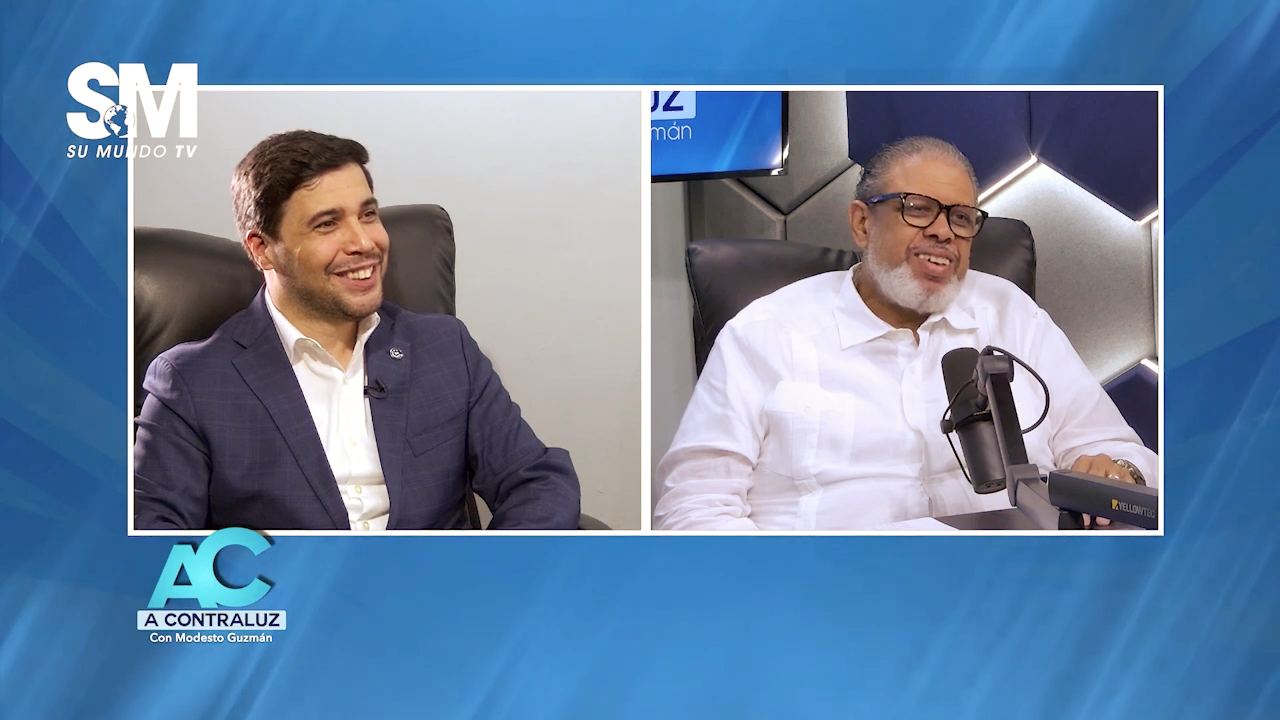
Santo Domingo, DN- The technology entrepreneur, Arturo López Valerio, took part in a dialogue on the Digital Economy and the challenge facing the Dominican Chamber of Information and Communication Technologies (Cámara TIC).
The interview was conducted by the host of the program A Contraluz, Lic. Modesto Guzmán, with the aim of learning about the work of the Cámara TIC and how deeply the Dominican Republic is immersed in the modernization of digital matters.
López Valerio, who is also president of the Cámara TIC, confirms that the Chamber is an ecosystem of key actors who oversee the development of technology adoption in the country. It is made up of the leading technology companies that contribute development and services to the private sector, as well as the leading technology adopters nationwide and companies from the international ecosystem.
“We have collaborated since the launch of the Digital Agenda in 2021, when, by decree, a series of working groups was designated within the Chamber to develop and, above all, generate the oversight needed so the plans can be carried out. An agenda is a traceable plan, but the actions that execute it need a neutral, cross-cutting view, and the Cámara TIC provides that space”, he added.
According to López Valerio, the digital economy is both a challenge and a mission for the Chamber, because this economy comprises a range of services that run over the internet, work on multiple devices and, above all, are constantly evolving.
In this regard, he stated: “The Digital Economy is like an engine of change for the Dominican Republic because, for example, during the pandemic there was no social assistance for those who were ‘delivery’ workers, part of the gig economy. Yet, according to DiDi, they practically provided assistance, through work generated during the pandemic, to more than 50,000 families. In other words, the digital economy generates employment that until now was not covered by social assistance programs and that, evidently, is being accelerated by the private sector”.
On the other hand, he considers that the Dominican Republic is immersed in the modernization of digital matters thanks to a spirit of progress in digital adoption. However, the biggest challenge is working on a digital economy bill, since the country's telecommunications laws do not even mention the internet.
“We are in the future, in the 21 century, but our legal and regulatory frameworks do not account for what is happening in digital flows, because legally we are still on paper”, López Valerio added.
On another note, he believes Dominican companies play for volume and not for efficiency. But he understands that this is a key point for the impact of more job creation, a better quality of life and, therefore, human development for Dominicans.
“I think my biggest challenge in this work is associativity, although we, the key actors in the Dominican Republic, face an institutional challenge: building linkages. We all want to build buildings instead of building bridges. In the country, at the technology level, we mostly lack consensus. We set the plan, draw up the budget, make the purchase, but the execution and maintenance plan is never established because we can't agree”.
“In 15 years the world will see incredible acceleration, although, as we have seen in human conflicts, the Ukraine-Russia war to name one example, we still have many pending issues as humanity. And there is another segment of the Earth's population that is looking further ahead, and I think that is what may help inspire us a bit to leave war and conflict behind and move toward more equitable economic models”, concluded López Valerio.
Published in El Nuevo Diario, December 14 2022
Distributed by Roberto Cavada, 14 December 2022