A Map for Disruption
Today's executives are tasked with understanding how technology is changing the way companies and sectors are organized. They must be ready to seize the opportunities and risks that digital disruption presents. Ready to change the way markets are regulated, to create new architectures of…
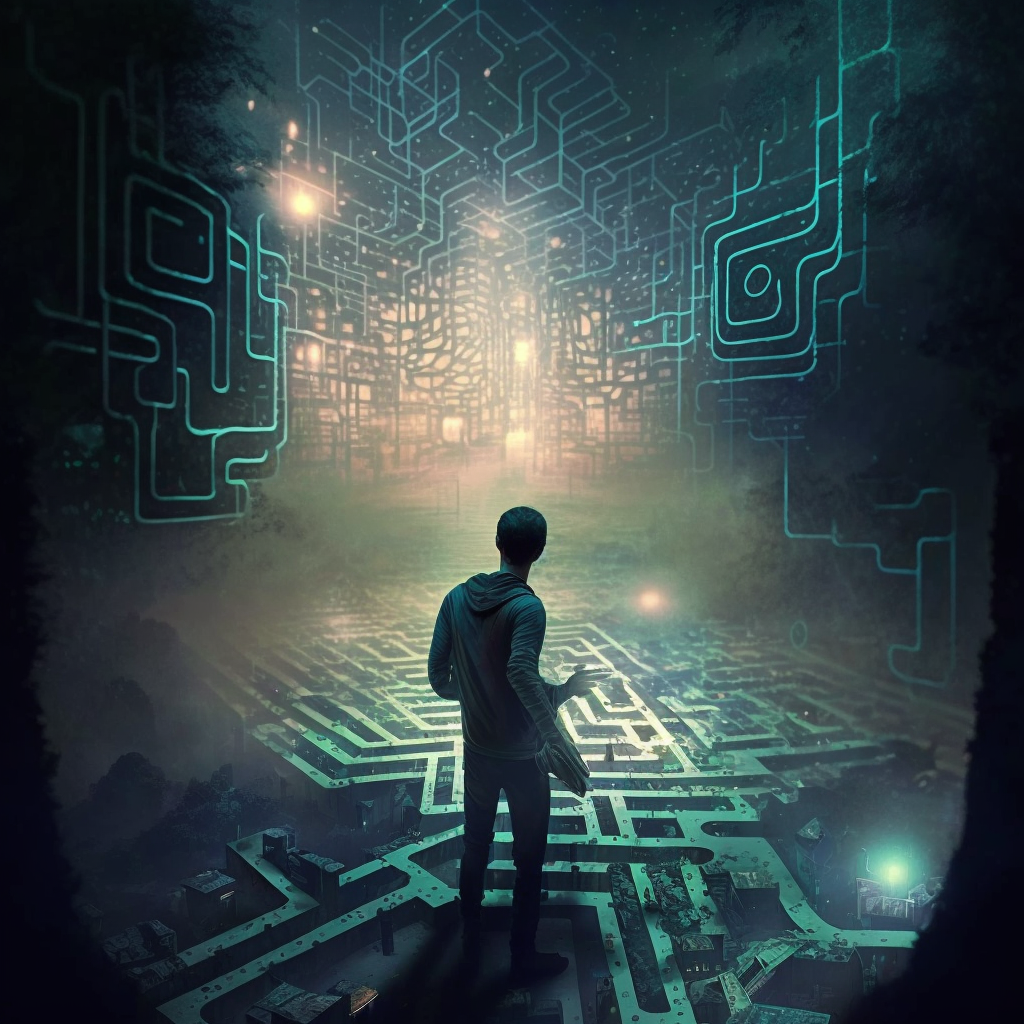
Today's executives are tasked with understanding how technology is changing the way companies and sectors are organized. They must be prepared to seize the opportunities and risks that digital disruption presents. Prepared to change the way markets are regulated, to create new business architectures that adapt to technological change.
More than 20 years ago, Bill Gates, in his book «The Road Ahead», described the «information superhighway», a term he applied to the Internet and to all the potential he saw in it at the time.
A decade later, Apple, Google, Amazon and Facebook took advantage of that vision because Microsoft wanted to defend its old Windows licensing model. Microsoft did not walk the path described by its own founder.
After breaking its own paradigms under Satya Nadella's leadership, Microsoft began to connect the tools and solutions of its ecosystem, ironically attacking the heart of its rival's mission in search and advertising.
Google's mission is «to organize the world's information and make it universally accessible and useful», a creed that has been that company's compass. Now it lags behind following the announcement of the integration of Chat GPT, an artificial intelligence tool connected to the Bing search service and other Microsoft solutions.
A story straight out of a fairy tale, where the frog turns into a prince.
This is a sign that this digital century has a «Borges map» or a map of changes, as Philip Evans and Patrick Forth, of The Boston Consulting Group, defined it. The Borges map metaphor helps us understand how technology is finally reaching both the vision of the supreme scientist and that of the supreme fabulist. Fiction and technology certainly go hand in hand these days.
The authors urge executives over the next decade to chart their course through the labyrinth of a new business architecture.
This idea is based on Jorge Luis Borges's story «On Exactitude in Science», which describes an empire whose cartographers have created a map so detailed that it occupies the same space as the empire itself. The irony is that the map was abandoned and the empire became the map.
Digital disruption has enabled new institutional options with different economics, such as the ubiquity of sensors and connectivity that drive an emerging digital ecosystem. Holistic, stacked architectures help build a new industrial stack. This implies the digitization of what we know and a possible conversion of physical elements into digital ones, stripping away the final value of what we wanted to preserve and build.
Consider that the elements at stake are the map (geolocation) and the terrain (geopolitics), the sign (data) and the meaning (knowledge), the virtual (digital) and the real (analog), which merge into a single system.
These elements show a new industrial stack, an architecture of horizontal layers made up of shared infrastructure at the bottom, production and consumption communities at the top, and traditional oligopolies competing in the middle.
An architectural model that would allow companies to capture the benefits of community innovation in the upper layers and improved utilization in the lower layers, overcoming the additional transaction costs.
There are three main changes in business architecture that have resulted from digital disruption, defined as “waves”:
The first wave was the emergence of the Internet economy, in which transaction costs fell and richness and reach merged. This wave was driven by companies such as Microsoft, Apple and Google.
The second wave was the emergence of the collaboration economy, in which transaction costs fell even further and small became beautiful. This wave was driven by companies such as IBM, Apple, Google, SAP, Facebook and many others.
The third wave is the emergence of the hyperscale economy, in which transaction costs have fallen even further and big becomes beautiful. This wave is being driven by companies such as Amazon, Uber, Airbnb and many others.
The waves are characterized by the intensification of mass economies, including economies of scale, scope and experience, a topic we addressed in the second edition of our book «Digital Economy: an engine of change for the Dominican Republic», part of the Tabuga Intelligence collection.
We recommend that business owners manage data as a fiduciary would. One example is the provision of Ley 4-23 governing the actions and effects of the National Civil Registry System, which include biometric records.
Personal data collected by companies should not be treated as property transferred once and irrevocably, but as a client who must be served.
When we turn a customer into data and visualize them as such, we experience in our organizations the effect of «Borges's map». Because the «digitized» being ceases to have value for the one who looks at a database.
Companies that build bonds of trust and legitimacy with their customers will gain a competitive advantage over those that treat data subjects as a product to resell. Business owners must reorganize their businesses along their economic linkages to make the most of the opportunities of digital disruption.
—
«On Exactitude in Science”
*Jorge Luis Borges*
In that Empire, the Art of Cartography attained such Perfection that the map of a single Province occupied the entirety of a City, and the map of the Empire, the entirety of a Province. In time, those Unconscionable Maps no longer satisfied, and the Cartographers Guilds struck a Map of the Empire whose size was that of the Empire, and which coincided point for point with it.
The following Generations, who were not so fond of the Study of Cartography, saw that that vast Map was Useless, and not without Impiety delivered it up to the Inclemencies of Sun and Winters. In the Deserts of the West, tattered Ruins of the Map still abide, inhabited by Animals and Beggars; in the whole Country there is no other relic of the Disciplines of Geography.
*Suárez Miranda, Viajes de Varones Prudentes, Book Four, Ch. XLV, Lérida, 1658*
—
Published in El Nuevo Diario, February 13 2023
Distributed by Acento, February 14 2023
Printed by El Nuevo Diario, February 14 2023