López Valerio: “An SME Needs to Understand Technology, Not Master It”
Santo Domingo, DN- Arturo López Valerio, a technology entrepreneur focused on driving digital innovation, took part in a discussion on the program Mujer Productiva Radio about the digital economy, the importance of innovation in the country's businesses, and the key strategy the Ministry of Industry has launched,…
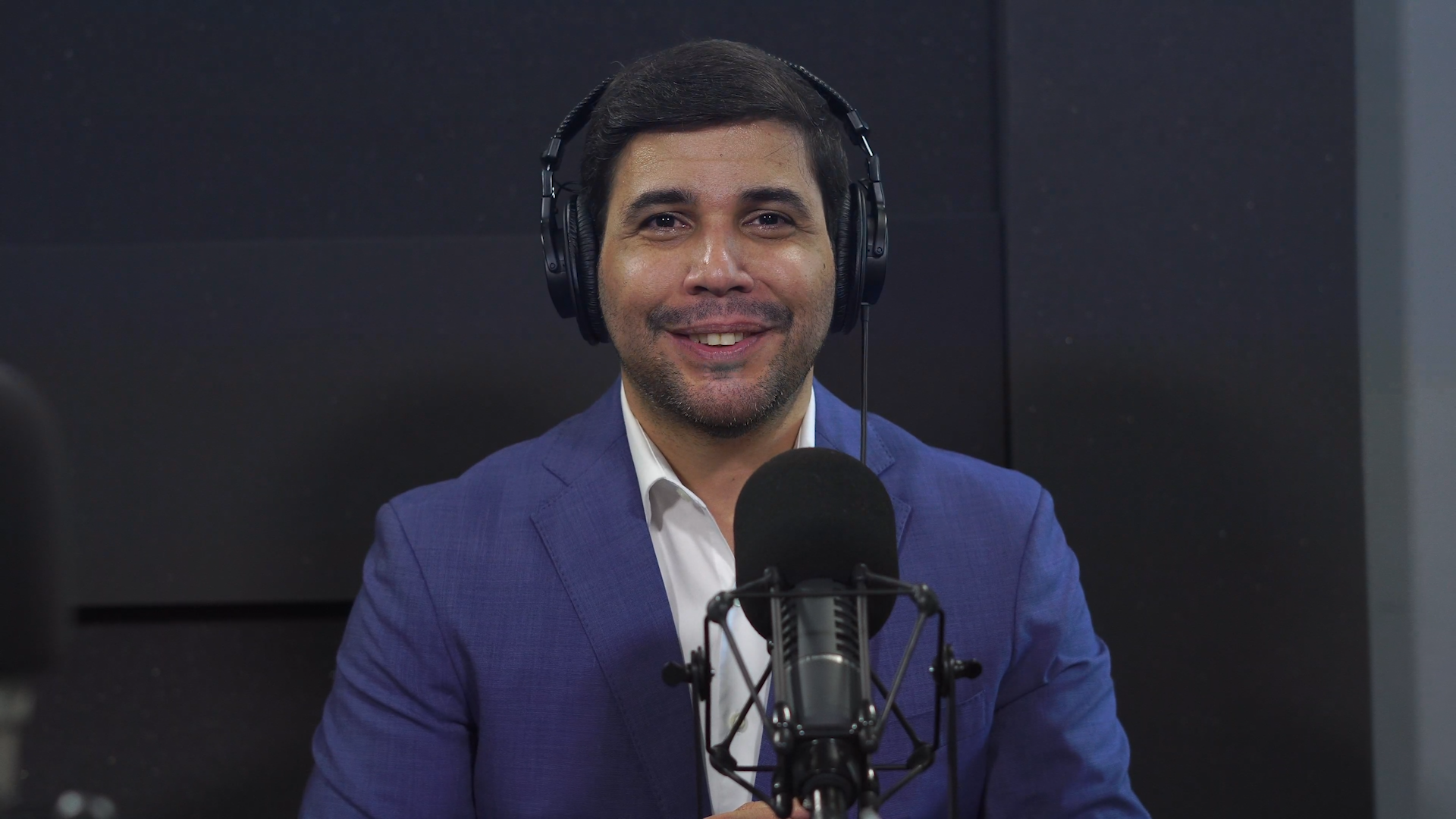
Santo Domingo, DN- Arturo López Valerio, a technology entrepreneur focused on driving digital innovation, took part in a discussion on the program Mujer Productiva Radio about the digital economy, the importance of innovation in the country's businesses, and the key strategy launched by the Ministry of Industry, Commerce and MSMEs.
According to López Valerio, based on his experience, when it comes to digitalization and the goal of achieving a technological positioning, there is no magic wand and no recipe for success; there are ingredients for success, but the recipe has to be put together.
According to his statements, one of the cross-cutting strategies that every sector in the Dominican Republic should support is the National Strategy for the Export of Modern Services, developed by the Ministry of Industry, Commerce and MSMEs, since it will represent the future of work for the country's new generations.
López Valerio explained that the main goal of this strategy is to promote service industries, such as software development, crafts, art, culture and everything related to individual development, with the aim of building services that a human being can provide, and in this way generating quality, competitive jobs.
“Since we don't produce the technology here, basically all of that value, which comes from purchases abroad of the technology we need to import, logically leaves the country. So this is what we need to build through the National Strategy for the Export of Modern Services: use technology to generate value and use our homegrown labor so that people don't leave the country, and so that they can generate dollars and foreign currency and export; that way we generate value and employability”, added López Valerio.
On another note, he asserted that, in some way, everyone who starts generating money should formalize, and that when that moment comes, one should not have a finite mindset as in the traditional economy, because in the digital world there are no limits, and that is where one should think, not about the tax to be paid, but about the capacity to generate more income. He added: “No business grows, except those we already know are informal by nature because they are clandestine, with no formality. That is also the shift from chiripeo (informal odd jobs) to participating in a collaborative economy”.
Likewise, he stated that perhaps the center, or epicenter, of the various problems affecting the technology industry and digital adoption in the country is when the cloak of political and business paternalism is placed over digital flows, because when something created in one nature is transformed into another, it breaks and doesn't work, since it wasn't designed for that.
In another vein, López Valerio highlighted growth in the financial sector, singling out Fintech companies, of which there are more than a hundred with these characteristics: financial companies that operate at a technological or digital level. According to López Valerio, this is an important basis for positioning the country as a logistics hub and a technology hub, since the Dominican Republic is seen as a Fintech power in the regional setting because of the ability of local regulation to adapt and modernize quickly.
“First, we have a capacity for learning English, which should be expanded, and Dominicans should be helped more to connect with that language, which brings work and development; and second, we should keep building skills, because Dominicans have something: they get their hands on things. That is, they don't say no and they learn along the way, and that is an important skill because they don't hold back when facing a challenge”, he stated.
Another important segment where, according to López Valerio, this impact and growth has been seen is the creative/film sector, where many international productions are working in the Dominican Republic. Although there are few studios and few production companies, this is generating motivation among talent and is a great opportunity to give visibility to those skills so that there is a supply that encourages greater demand.
On another matter, López Valerio considered that what every SME or MSME needs in order to ride the wave of digitalization is to forget the famous phrase everyone is told from childhood, “don't make things up”, “don't step outside the box, don't do it differently”, and start innovating. He also stressed: “It's the other way around: do things differently, find your own perspective. An MSME needs to understand technology; it doesn't need to master it. An MSME needs to understand in order to know how to ask”.
To conclude, he said: “We have to know how to ask for help, we have to let ourselves be assisted, but at the same time we must have the clarity to choose correctly each stage where technology will be inserted into the business”.
__
Published by El Nuevo Diario, February 14 2023
Distributed by Roberto Cavada, February 14 2023
Printed by El Nuevo Diario, February 15 2023