30,576 hours later
Digital Education is an essential reference topic for anyone interested in understanding the challenges and opportunities facing education in the Dominican Republic since the pandemic catalyzed the country into a period of uncertainty and change. In a post-pandemic world where technology has become…
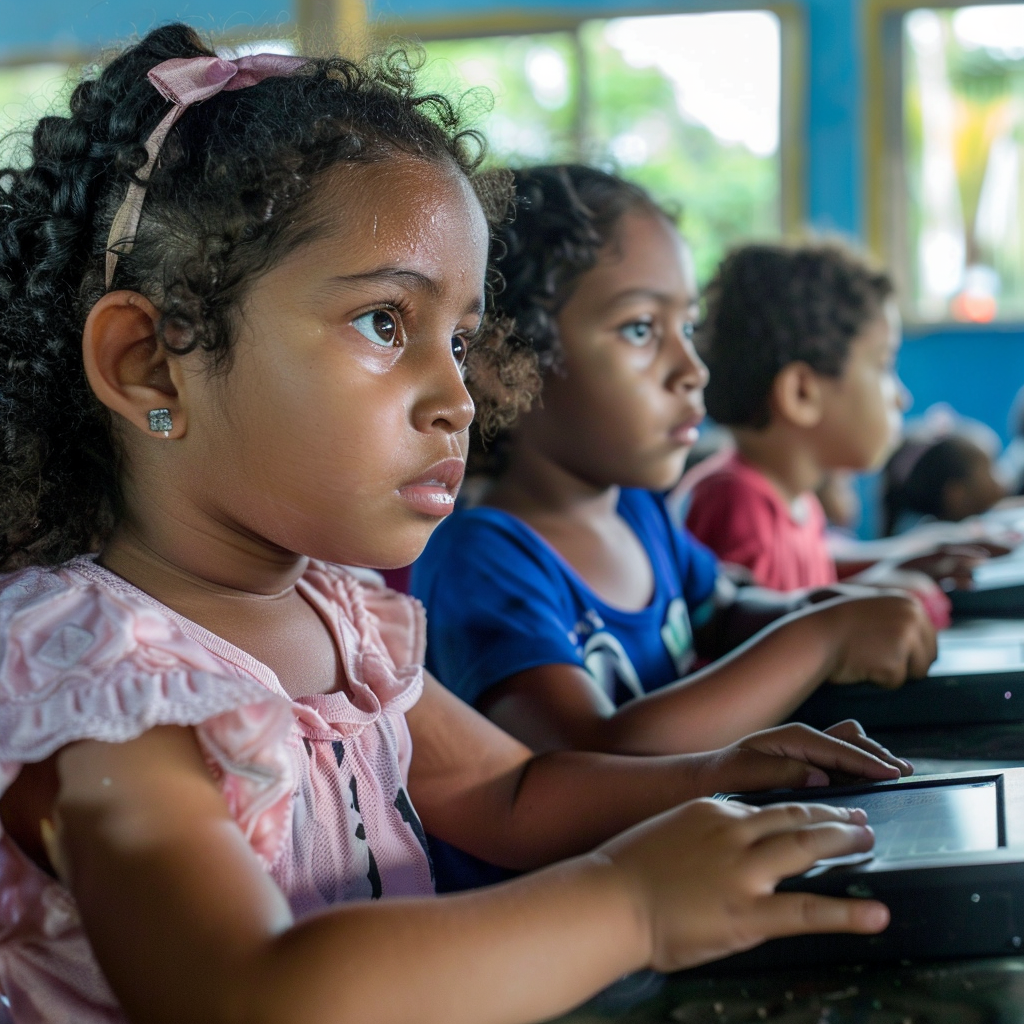
Digital Education is an essential reference topic for anyone interested in understanding the challenges and opportunities facing education in the Dominican Republic since the pandemic pushed the country into a period of uncertainty and change.
In a post-pandemic world where technology has become an indispensable tool for adaptation and resilience, the Manifesto we published on August 25, 2020, about «Technology as a means for the present and future of education in the Dominican Republic» remains highly relevant.
About 30,576 hours have passed since its publication and delivery to several government entities, and in that time data have accumulated showing an increase in the use of social media in the country.
Although the growth in the number of users on platforms such as Facebook (with a total of 7,771,700 users), Instagram (4,799, 500 users), Messenger (6,210,900 users) and LinkedIn (1,753,000 users) is notable, it is not a conclusive indicator of the country's effective digitalization.
The increase in the use of digital devices does not, by itself, guarantee the elimination of the digital divide. It also introduces new challenges, such as gaps in connectivity, content, user experience, support and regulation.
The manifesto argues for a more cross-cutting vision of digital education. It holds that handing out devices and waiting for results is not enough. Access to quality platforms and content, together with solid connectivity, are crucial elements for effective learning.
It is also necessary to take into account the different socioeconomic realities, so as not to adopt a single digital education model that fails to meet everyone's needs.
The proposal to standardize and open up «the knowledge route» would allow entrepreneurs and parents to access and develop educational content aligned with a unified education plan. In this way, education can be personalized without departing from a quality standard.
On cybersecurity and digital citizenship, the Manifesto stresses responsibility and ethics in the use of technology. Digitalization without adequate civic awareness can be dangerous, for the individual and for society alike. Public policies should therefore reflect these risks and offer education on the subject.
The document also addresses the importance of avoiding hasty solutions that can prove costly and ineffective in the long run. Instead, it proposes a gradual, holistic approach that considers diverse strategies and media such as radio and television, aligning them with a human development map.
Finally, a key ingredient for progress is resilience. The Manifesto challenges the mindset that certain strategies or programs are not applicable in the Dominican context. It insists that the nation has the resources and the capacity to tackle these challenges comprehensively.
In short, the manifesto offers a complete roadmap for developing a digital education strategy in the Dominican Republic. It reminds us that digitalization is not a panacea; it is a process that requires careful analysis, planning and, above all, the will to adapt and evolve.
The 30,576 hours that have passed since its publication should serve as a call to action and reflection, motivating us not to stand still but to move toward a more inclusive and effective educational future.