The Business as a Brain
Artificial intelligence has captured many people's imagination, evoking images of supercomputers with personal assistants, machines capable of creative thought, and even scenes straight out of science fiction films. Although the current reality of artificial intelligence is not as futuristic as these portrayals, it is at an advanced stage of development that does not…
Artificial intelligence has captured the imagination of many, evoking images of supercomputers with personal assistants, machines capable of creative thought and even scenes straight out of science fiction films. Although the current reality of artificial intelligence is not as futuristic as these portrayals, it is at an advanced stage of development that is not far from them.
According to the AI technology market report from Tabuga, this market is vast, amounting to around 200 billion US dollars in 2023 and expected to grow well beyond that, to more than 1.8 trillion US dollars by 2030.
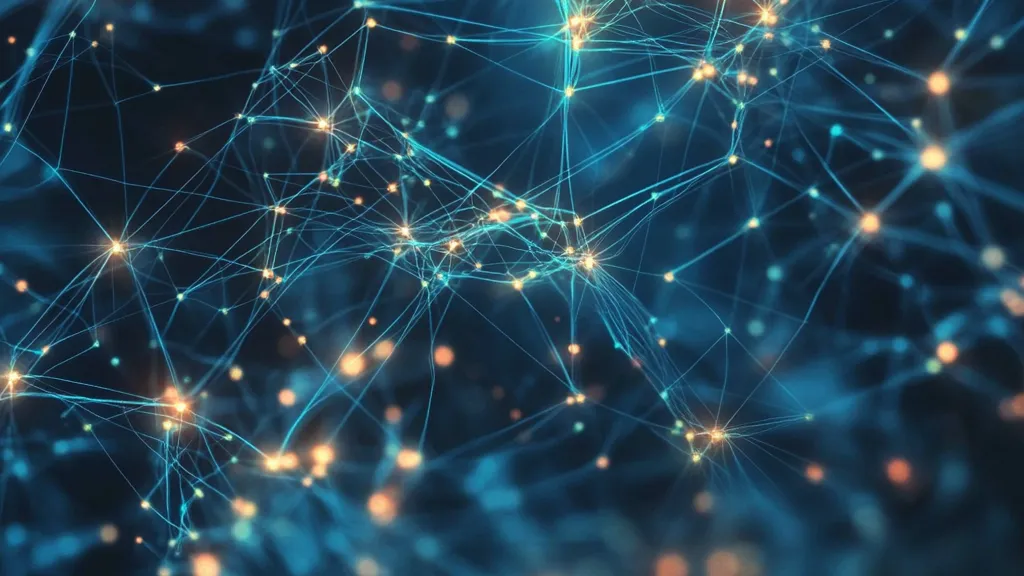
An emerging approach is to consider the company as a neural business, a metaphor inspired by recent scientific advances in understanding the human brain.
In Cade Metz's book “Genius Makers”, he highlights how Google and the DeepMind project started the trend of having AI learn like the human brain. DeepMind, known for its advances in artificial intelligence, adopted an approach inspired by the brain's neural networks to develop systems that could learn and adapt autonomously.
This approach has significantly influenced how companies view the integration of AI into their operations, promoting the idea that, like the human brain, organizations must be able to adapt and evolve continuously.
Rodney Zemmel, senior partner at McKinsey, explained in his podcast that, like the human brain, companies must be intricately connected, allowing all parts to work together efficiently. Zemmel notes that recent scientific advances have made it possible to visualize the brain's connectome, revealing a complex architecture in which everything is interconnected. This metaphor contrasts with the traditional model of the company as a hierarchical tree, where connections between the different parts are limited.
For a company to function like a brain, it must foster effective connections among its different parts. This means allowing teams to work autonomously but aligned with the organization's overall objectives. Zemmel points out that it is essential to have common patterns and structures that optimize efficiency and allow teams to form and re-form without chaos.
Reusing common patterns and recognizing them allows companies to operate more efficiently and effectively.
Successfully implementing this neural model requires an evolved governance framework. That is why we always stress the importance of training and retraining staff to work in this new model, ensuring that teams have the autonomy they need to reach their specific business objectives, while adhering to the rules and using the services of a central platform.
Adopting the neural business metaphor can transform the way companies operate, making them more agile, scalable and efficient. Like a brain, a company must be interconnected, with autonomous but aligned teams working toward common objectives. This transformation requires a commitment to continuous training, effective governance and the strategic adoption of new technologies.
The reality for Dominican businesses is that online training is key to closing the gaps in business knowledge about artificial intelligence. Although we see an incipient trend of investment in online education in the country, it is expected to reach only 61.62 million dollars in 2024. For those who understand the importance of this investment, user penetration in the online education market will be 15.5 % this year.
We call on the national business community to start exploring and experimenting by investing in formal education on AI. Talks and events do not leave lasting knowledge in organizations; they are useful for pointing to a trend, but they only feed the verbiage.
I invite local business owners to adopt this new organizational metaphor, seeing their companies as a brain that needs to be fed. Start today to prepare your companies to lead in tomorrow's digital era.