The war for Artificial Intelligence
Over the past decade, the development and deployment of artificial intelligence ((AI)) has gone from being a science-fiction topic to a dominant reality in the global technology landscape. This “war” is not fought on traditional battlefields, but in research labs, technology companies and platforms…
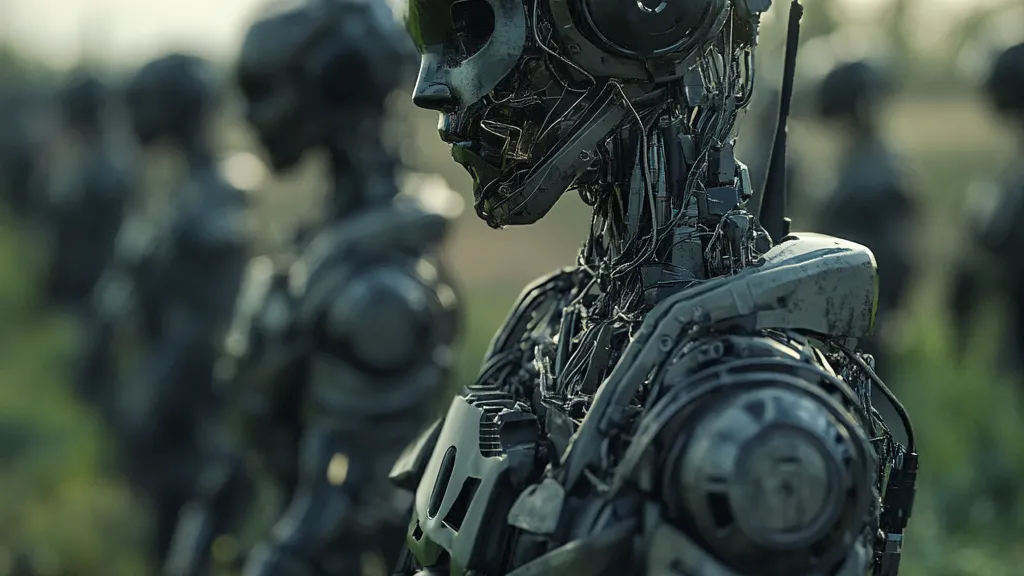
Over the last decade, the development and deployment of artificial intelligence (AI) has gone from being a science-fiction topic to a dominant reality in the global technology landscape.
This “war” is not fought on traditional battlefields, but in research labs, technology companies and digital platforms, where innovation and market dominance are the most coveted prizes.
Main stakeholders in the AI war
- OpenAI (ChatGPT): OpenAI is one of the pioneers and leaders in generative artificial intelligence. Its ChatGPT model has redefined how we interact with technology, allowing users to generate text, answer complex questions and hold natural conversations with a machine. ChatGPT has captured a large user base thanks to its ease of use, accessibility and the backing of a strong marketing ecosystem. Its success lies in its ability to make AI understandable and useful for the average user, as well as its integration into various platforms, including mobile apps.
- Anthropic (Claude): Claude is ChatGPT's direct competitor, developed by Anthropic, an emerging company in the AI field. Although Claude has achieved some success in the market, it is still working to catch up with ChatGPT in popularity and adoption. Anthropic has bet on safety and ethics in AI development, trying to set Claude apart as a safer and more reliable alternative. Despite its efforts, Claude faces significant challenges in attracting users, partly due to lower advertising spending and a lack of features that make it stand out from its competition.
- Microsoft (Copilot): Microsoft has entered the AI war with Copilot, a model that, although in essence a wrapper around ChatGPT, seeks to integrate deeply into Microsoft's productivity tools, such as Word and Excel. Copilot has been promoted as a tool that increases productivity by automating repetitive tasks and generating content. Despite a major advertising campaign, including a Super Bowl ad, Copilot has grown more slowly than other players, mainly because of its more specialized focus.
- Perplexity: Perplexity is another contender that seeks to replace traditional search engines with artificial intelligence. This model tries to offer more precise and contextual answers to users' queries, overcoming the limitations of traditional search engines. Despite its ambition, Perplexity has struggled to win a significant user base, and its growth has been modest compared with its rivals.
Global Perspective
Although the players mentioned are mainly American, it is worth noting the development of AI in other regions:
- China: Companies such as Baidu, with its ERNIE chatbot, and SenseTime, with its SenseNova platform, are at the forefront of AI development in Asia. The Chinese government has declared AI a national priority, investing heavily in research and development.
- Europe: The European Union is working on its AI regulatory framework, which seeks to set ethical and safety standards for the development and use of AI. Companies such as DeepMind (now part of Google) in the United Kingdom are making significant advances in general AI.
AI Use Cases
This economic movement is revolutionizing a wide range of industries, driving significant innovations that are reshaping how they operate.
In healthcare, IBM Watson Health is used to analyze extensive medical records, supporting the diagnosis of complex diseases, which improves the accuracy and speed of medical care.
In finance, JPMorgan Chase has adopted AI to detect fraud and automate trading processes, increasing security and efficiency in financial transactions.
The automotive industry has also been transformed, with Tesla at the forefront of using AI to develop autonomous driving systems, bringing us closer to a future of driverless vehicles.
In education, platforms such as Duolingo are using AI to personalize language learning, adapting to users' individual needs and paces.
These examples show how AI is being integrated into different sectors, improving processes and outcomes that affect and transform users' lives.
Ethical and Social Implications
This rapid development of AI brings ethical and social challenges that must be addressed urgently. The massive collection of data, essential for training AI models, raises serious concerns about individual privacy, since exploiting this information can violate fundamental rights. In addition, AI algorithms risk perpetuating and amplifying the biases present in the data they are trained on, which could lead to unfair decisions in critical areas such as hiring or lending.
The automation that AI is driving could also lead to a significant displacement of the workforce, requiring workers to be retrained to meet new market demands. Concerns also arise about the safety and control of AI, especially in advanced applications, where human oversight is vital to prevent misuse or unforeseen consequences. These aspects underline the need for a balanced approach that maximizes the benefits of AI while mitigating its potential risks.
Stakeholder positions
Today, OpenAI with ChatGPT leads the war with a user base of more than 150 million, growing quickly thanks to its accessibility and strong advertising backing. This dominant position reflects its ability to reach a global audience, from casual users to large companies that integrate the technology into their operations.
Claude, for its part, has reached a base of approximately 25,000 paying subscribers, which, although an achievement, is far from ChatGPT's numbers. Anthropic needs to innovate in user experience and strengthen its presence in the mobile market if it wants to scale its user base significantly.
Microsoft Copilot has captured a specific market niche with around 50,000 paying users, mainly within Microsoft's corporate customer base. Its growth is steady but not explosive, reflecting its focus on business productivity.
Perplexity has accumulated around 10,000 users, positioning itself as an emerging alternative that is still limited in reach and adoption compared with the giants in this field.
Where is this war heading?
The war for artificial intelligence is at an early stage, and its future direction will depend on several critical factors that will shape the competitive landscape:
Continuous innovation: Current and future players must keep a constant focus on innovation. The ability to develop more efficient, accurate and accessible models will largely determine who leads the market. AI is constantly evolving, and advances in areas such as natural language processing, computer vision and explainable AI will be decisive for long-term success.
User experience: The success of any technology, AI included, is closely tied to user experience. The applications that offer a more intuitive interaction, tailored to users' specific needs, and that integrate additional features that provide real value, will be the ones that achieve greater adoption. In this sense, interface simplicity and personalization will be key.
Monetization strategies: The ability to generate sustainable revenue from AI is another crucial factor. Models like ChatGPT have shown that there is a significant market for paid AI applications, but competition in this space will be fierce. Companies will have to explore and optimize multiple monetization routes, from subscriptions to integrating AI into business services.
Regulation and ethics: As AI becomes a more integrated part of society, regulation and ethical considerations will play an increasingly important role. Companies that prioritize transparency, privacy and security will be better positioned to win public trust and avoid potential regulatory setbacks.
Diversification of applications: While current AI models focus on text generation and automation, the future will see a diversification of AI applications. From health to education, including entertainment and security, the ability to adapt and offer solutions across multiple industries will be a key competitive advantage.
A dynamic scenario
The battlefield is far from a static contest; it is a dynamic one where innovation, accessibility and adaptability will dictate the terms of «victory».
We understand that OpenAI, Anthropic, Microsoft and other players will keep competing fiercely for market dominance, driving rapid innovation in AI capabilities.
Meanwhile, AI will expand beyond chatbots and assistants, penetrating sectors such as health, finance, education and more, transforming entire industries.
Concerns about privacy, algorithmic bias and job displacement will continue to be crucial, demanding a balance between innovation and responsibility. User experience: accessibility and ease of use will be decisive factors in the mass adoption of AI technologies.
Although American companies currently lead, let us remember that players from other regions, especially China and Europe, will play an increasingly important role.
Ultimately, this war is not only about who can develop the most advanced AI, but about who can make it more relevant and accessible to society as a whole.
The coming years will be critical in defining the artificial intelligence landscape, and only those who manage to balance innovation with social responsibility will have the chance to dominate this constantly evolving field. The underlying question at the local level will be how we close the gap between rhetoric and execution.