Digital skills that Dominican organizations must develop for the 2025
As the global business landscape transforms at dizzying speeds, Dominican organizations face the challenge of staying relevant and competitive. The arrival of 4.0 industry and the digital evolution driven by exponential acceleration and the advance of artificial intelligence put us at a crucial moment. The success of…
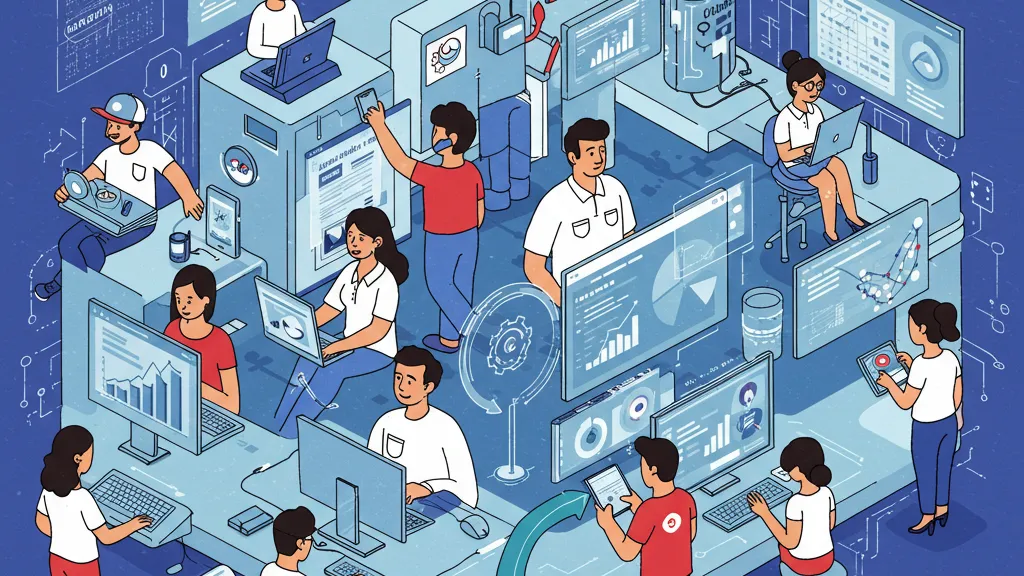
As the global business landscape transforms at dizzying speed, Dominican organizations face the challenge of staying relevant and competitive.
The arrival of industry 4.0 and the digital evolution driven by exponential acceleration and the advance of artificial intelligence put us at a crucial moment.
The success of national companies will depend, to a large extent, on their ability to develop and consolidate a set of digital skills that allow them to navigate these new scenarios. Below, we explore the key competencies that, for 2025, will become essential for business growth and sustainability in the Dominican Republic.
1. Digital immunity and immune ecosystems
Digital immunity is more than a technical practice; it is a mindset that companies must adopt to anticipate potential risks and mitigate the effects of digital threats. Exponential acceleration taught us the importance of building resilient processes and protecting our technological infrastructure against eventual crises.
For 2025, Dominican organizations will need to invest in monitoring technologies, chaos engineering and automated solutions that strengthen critical infrastructure. From Tabuga, we have proposed a strategy based on immune ecosystems, with communities of practice to share learnings and reusable tools.
Effective collaboration among the finance, technology and administration departments, together with customer participation in this knowledge cycle, will allow continuous, proactive protection of the digital infrastructure, ensuring that companies master the art of staying resilient in the digital sphere.
2. Comprehensive digital literacy
The transition toward industry 4.0 requires Dominican organizations to have digital learning architects (I prefer to call them Pokémon masters) who are prepared to operate in an increasingly competitive global market. This implies not only technical knowledge but also the ability to understand the ethical and social impact of technological decisions.
It is essential to foster comprehensive digital literacy, in which employees can learn to work with digital tools from a technical, ethical and critical approach.
This skill is necessary to avoid the dangers of uncontrolled technology, such as disinformation or the replication of human biases. Investing in continuous training and in strengthening digital talent will help improve the country's competitiveness and close the existing digital divide.
3. Accelerated digital reskilling and adaptability
The business environment is in constant change, and the ability to adapt is crucial for the survival of any organization. Dominican companies must foster a culture of accelerated digital reskilling, in which employees are willing and able to learn new skills and adapt quickly to technological change.
When we address the concept of «Strategic Digital Resilience» plays a key role here. Organizations must develop structures that allow them to adapt quickly to market volatility.
This means not only adopting emerging technologies but also building flexible, connected work teams that can operate efficiently in situations of uncertainty.
4. Automation with algor-ethics
Automation is an inevitable trend, but its adoption must come with ethical responsibility. When integrating automated processes, companies must make sure their systems operate fairly and responsibly.
This is where Dominican organizations can learn to manage the autonomy of their digital tools so that they become allies that complement human capabilities rather than replace them.
The key is to balance the efficiency that automation brings with the need to maintain algor-ethics in critical areas. For example, while an autonomous digital assistant can speed up task management, human oversight must always be kept in decisions that affect people's safety or privacy.
5. Resilient algorithmic economy and collaborative ecosystem
To adapt to the interconnected nature of the global market, Dominican companies must develop the ability to take part in a platform economy. This means shifting traditional business models toward approaches that take advantage of the advantages of digital platforms, which act as a bridge between suppliers and consumers.
The ability to orchestrate resources and foster interactions, rather than strictly control assets, has become a key differentiator.
In this sense, platforms position themselves as the foundation for connecting consumer needs with producer capabilities, generating value that is measured not only in transactions but also in the connections and relationships it creates.
Success lies in integrating digital technologies to maximize efficiency and connectivity, thereby optimizing the customer experience and promoting a resilient, collaborative algorithmic economy.
6. Adaptive digital humanism and empathic connection
Finally, even in an era of exponential technological growth, we cannot lose sight of the value of the human element. Dominican organizations must integrate humanistic skills with technological competencies.
Emotional intelligence, critical thinking, and creativity will remain essential skills for employees, especially in a world where automation can take over routine tasks.
Developing a culture of empathic connection within organizations will allow companies to better understand the needs of their customers and employees. Technology, however advanced, still needs human capacity to create experiences that truly connect with people.
The companies that manage to balance the use of technology with a human-centered approach will be the ones that stand out and lead their industries.
Toward a responsible digital future
The digital future of Dominican organizations will depend on their ability to integrate technology intelligently and responsibly. Digital immunity, comprehensive literacy, adaptability, the platform economy, and empathic connection are essential pillars for successfully navigating toward the 2025.
It is not just about being more efficient or adopting the latest technology; it is about building a resilient business model that puts people at the center and uses technology as a tool to improve everyone's lives.
The Dominican Republic has the potential to advance in digital adoption and business sophistication in the region. To achieve this, we must focus on developing these recommended skills, allowing our companies to seize the opportunities the digital future brings, but always with responsibility and awareness.
Success in exponential acceleration does not lie only in arriving first or becoming the absolute owner of a trend, but in arriving together, building a technological environment that benefits society as a whole.