Technical Sustainability
Sustainability is one of the most discussed concepts today, and its importance keeps growing in every field: from government policy to corporate strategy. Still, the question often comes up: are we talking about sostenibilidad or sustentabilidad? Although the terms are used interchangeably, there is a fundamental difference worth…
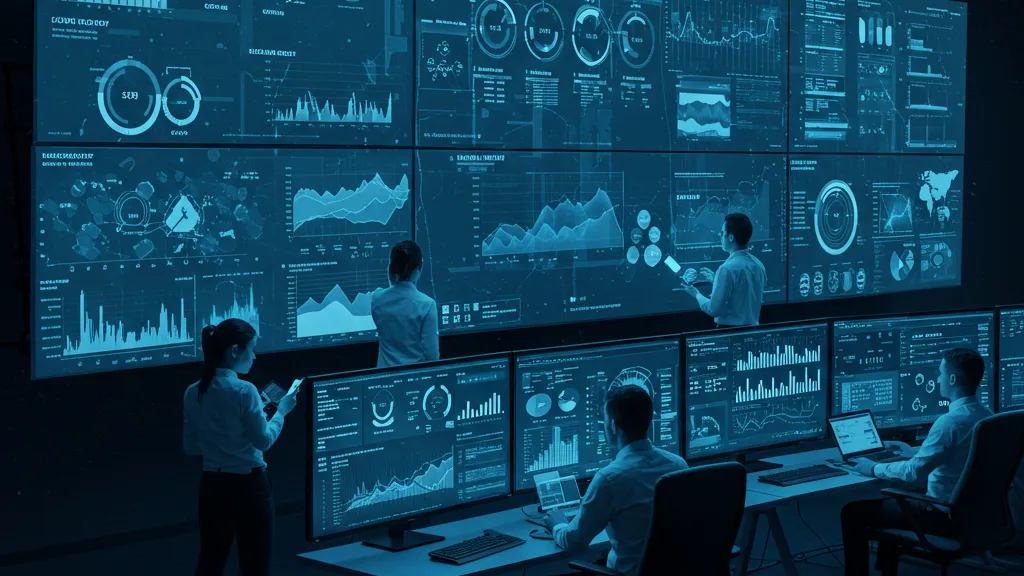
Sustainability is one of the most discussed concepts today, and its importance keeps growing in every field: from government policy to corporate strategy. Still, a question often comes up: are we talking about sostenibilidad or sustentabilidad? Although the two terms are used interchangeably, there is a fundamental difference worth exploring to understand their technical and strategic implications.
Sostenibilidad vs. Sustentabilidad: complementary or opposed?
Sustentabilidad refers to the capacity to maintain a system or resource over time without depleting it or compromising its balance. It focuses more on conserving the environment and on the rational use of natural resources. Sostenibilidad, on the other hand, takes a broader approach, integrating economic, social and environmental dimensions and seeking a balance among them to ensure comprehensive development.
From this perspective, sustentabilidad is a condition for sostenibilidad. Without practices that respect planetary limits, any economic or social progress would be unsustainable in the long term. Despite these challenges, sustainability also forces us to consider how technological innovations and business decisions contribute to human and economic well-being without compromising future generations.
In the Dominican Republic, this dichotomy is particularly relevant. We face significant challenges in conserving natural resources, but we also have to deal with social inequality and the need to modernize our economy. This is where technology emerges as a bridge that can connect both dimensions.
Technology as the axis of sustainability
Technological innovation not only helps reduce environmental impact; it also promotes more inclusive and resilient business models. Tools such as artificial intelligence, the Internet of Things (IoT) and dimensional computing are driving a transformation in how we measure, manage and optimize resources.
In agriculture, for example, smart sensors can monitor water use in real time, reducing waste and increasing efficiency. In industry, automation systems help cut emissions and optimize processes, moving entire sectors toward more sustainable models.
In this context, digital immunity —a concept I have discussed in earlier publications— becomes a pillar. It is not only about protecting operating systems from interruptions, but about building platforms that optimize resources and keep operations resilient in the face of crises. This approach fosters both sustentabilidad and sostenibilidad by combining resource conservation with business continuity and competitiveness.
Inclusion as a technical and ethical challenge
Despite technological advances, we still face a critical problem: digital and social gaps. For sustainable practices to be effective, they must be accessible and inclusive. This requires investment not only in infrastructure, but also in the digital and technical education of our communities.
Sustainability cannot be a luxury reserved for large corporations; it must be an accessible strategy for small and medium-sized enterprises (SMEs), which are the economic engine of our country. Digital reconversion programs, tax incentives and access to technology must be part of a comprehensive approach to democratize sustainability.
Governance and measurement: the key to success
No progress will be sustainable without a robust governance framework. The lack of clear standards and measurement systems makes it hard to assess the real impact of sustainable actions at the national level. We need a standard framework that allows companies, organizations and governments to measure the impact of their initiatives in economic, social and environmental terms.
This framework must include key performance indicators (ESG KPIs) that measure, for example, emissions reduction, gains in energy efficiency and improvements in the social conditions of affected communities. Without these metrics, we risk adopting practices without a solid basis to ensure their long-term effectiveness.
A measurable and balanced future
Sostenibilidad and sustentabilidad are not opposing concepts; they are complementary dimensions of the same challenge: ensuring a viable future for everyone. Through technological innovation, inclusive governance and the adoption of a standard measurement framework, we can align our actions with clear, achievable goals.
In the Dominican Republic, we are in a unique position to lead on this front. Integrating technology and sustainability can be our answer to global and local challenges. But to achieve it, we need a collective commitment that cuts across sectors and generations.
Technical sustainability is not just an aspiration; it is our only path to progress that respects the planet's limits and people's needs. By measuring each step against a clear framework, we will turn our ambitions into concrete actions and tangible results. Because, at the end of the day, what isn't measured doesn't improve.