Apple Intelligence: one more innovation in the Apple ecosystem
Artificial intelligence (AI) has become the engine driving technological evolution across all industries, and Apple is no exception. From tools that optimize the user experience to…
Artificial intelligence (AI) has become the engine driving technological evolution across all industries, and Apple is no exception. From tools that optimize the user experience to innovations that redefine how people interact with their devices, Apple Intelligence marks the start of a new era for the Cupertino company.
What is Apple Intelligence?
Apple Intelligence is a set of AI-powered features built into Apple devices such as iPhones, iPads and Macs. Announced at the WWDC conference 2024, the platform aims to improve the user experience by automating tasks, analyzing data and providing creative tools. Its rollout has been gradual, with features introduced progressively through software updates.
The well-known YouTuber Marques Brownlee noted in his review that the current implementation of Apple Intelligence feels more like a work in progress than a revolutionary advance. While some features show interesting possibilities, the overall impact seems limited, and certain features have been criticized for their lack of practicality.
Dimensional computing: beyond physical reality
Apple is betting on technologies such as Dimensional Computing, which seeks to merge physical and digital reality through augmented reality (AR) and virtual reality (VR). This technology redefines the interaction between humans and machines, and it also positions Apple in an innovative market by prioritizing hyperrealistic experiences. The launch of the Apple Vision Pro, with its ability to blend virtual elements into real environments, exemplifies this innovative approach.
A focus on privacy and local processing
Apple stands out from its competitors for its firm commitment to privacy in how it integrates AI. The new version of Siri uses ChatGPT for complex queries such as itineraries and recipes, but it does so while respecting user privacy, through local data storage or the use of separate ChatGPT accounts. This approach reflects the priority Apple gives to protecting personal data, which sets it apart from other tech giants that depend on cloud processing.
Visual intelligence and real-time interaction
Apple has introduced Visual Intelligence in the iPhone 16 and 16 Pro models, allowing users to identify objects and run real-time searches through the device's camera. While this feature may recall similar implementations from Samsung or Google, its integration into the Apple ecosystem opens new possibilities for augmented reality (AR) applications and computational photography.
Innovation in notification management
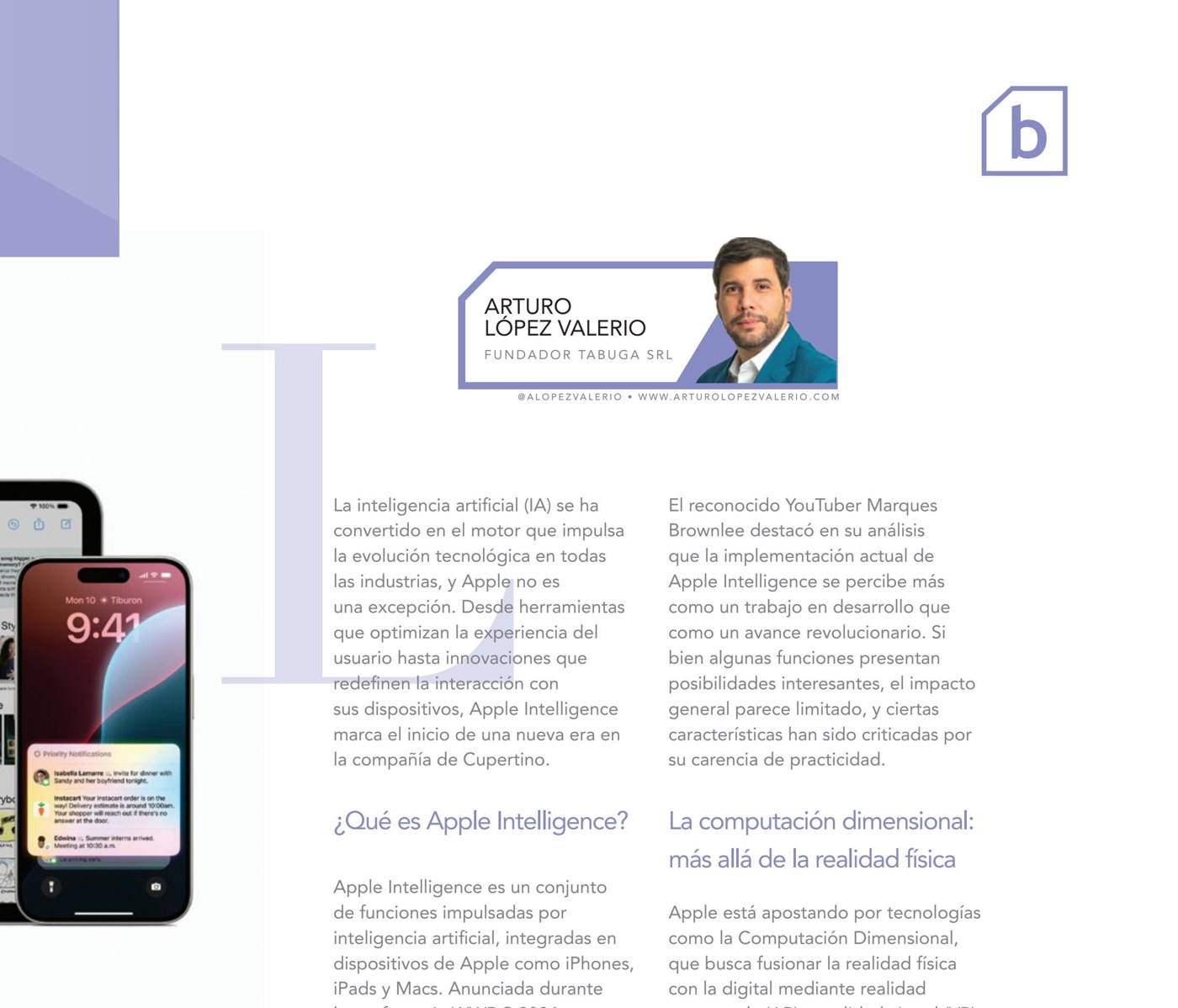
Priority Notifications, which ranks alerts by importance, addresses one of the long-standing criticisms of notification management on Apple devices. This innovation, though still in development, promises to improve productivity and reduce distractions through smarter organization of information.
Content creation and personalization
Apple Intelligence tools also extend into the creative realm. Features such as Genmoji and Image Playground let users create custom emojis and generate illustrations from text descriptions. Although these features are at an early stage of adoption, they show AI's potential to generate personalized content that adapts to each user's individual preferences.
Innovations in the photos ecosystem
The Photos app has received significant improvements, such as AI-based removal of background objects, similar to Google's Magic Eraser. This feature stands out for its precision in complex scenes, and it illustrates how Apple adapts successful solutions by refining them for its own ecosystem.
Integration of the Apple ecosystem
Apple's holistic approach to integrating hardware, software and services strengthens its unique ecosystem. Recording Summaries, which offers detailed transcripts of calls, and Siri's improved ability to interact with third-party apps show how Apple combines new technologies with its established infrastructure to deliver a unified, seamless user experience.
The promise of Apple Intelligence
Analysts agree on pointing out the current limitations of Apple Intelligence, but they also recognize its considerable potential. These innovations not only exemplify Apple's focus on user experience and privacy, but also lay the foundations for future advances in applied AI. Its future success will depend on Apple's ability to turn these experimental tools into essential, practical features for its users.
Artificial intelligence has the potential to profoundly transform modern life, but it must be integrated with responsibility and ethics. Apple Intelligence seems to be headed in that direction, seeking a balance between innovation, privacy and practical usefulness.
Originally published in Revista Bohío 240 (Bohío 240), Ediciones Cabrer.