Five Strategies for Sustainable Development from the Digital Economy
In a world marked by uncertainty, the economies that manage to adapt quickly, handle complexity and build digital resilience will be the ones leading sustainable development in the coming decades. The Dominican Republic faces a strategic opportunity: to harness the transformative potential of the digital economy and establish itself as a regional benchmark. This vision…
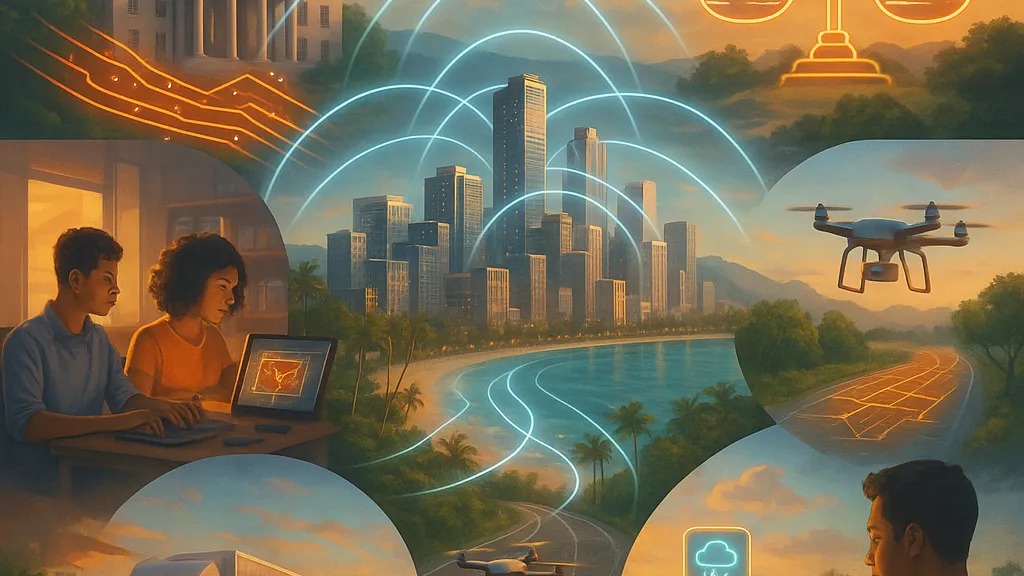
In a world defined by uncertainty, the economies that manage to adapt quickly, handle complexity and build digital resilience will be the ones that lead sustainable development in the coming decades. The Dominican Republic faces a strategic opportunity: to harness the transformative potential of the digital economy and establish itself as a regional benchmark.
This vision is at the heart of Economía Digital: motor de cambio para la República Dominicana, a book that offers strategic routes for linking technology, productivity and social well-being. From that perspective, I propose five key strategies that can speed up the country's transition toward a more competitive, inclusive and sustainable economy.
1) Attracting foreign direct investment through institutional reforms
To compete in the global digital environment, the country must modernize its regulatory framework and strengthen the institutions that underpin foreign direct investment. As I detail in the book, one of the main obstacles to digital development has been the “regulatory noise” that prevents the swift creation of technology companies and limits investor confidence.
The solution lies in institutionalizing reforms that guarantee legal predictability and make it easier for 100% digital companies to emerge. Initiatives such as the Formalízate one-stop shop are a good start, but they must be scaled up and aligned with international standards on intellectual property, cybersecurity and data governance.
Likewise, specific incentives are needed for emerging sectors such as Fintech, digital media, services and e-commerce. These niches not only attract capital but also generate high-quality jobs and foster more dynamic value chains.
2) Macroeconomic stability with a digital vision
A digital economy cannot prosper in an environment of macroeconomic instability. The book raises the need to build what I call “technological shock absorbers”, which allow the country to respond with agility to external shocks, from currency crises to global logistics disruptions.
A key tool for this is the development of indicators that complement traditional GDP. Proposals such as GDP-B, developed by MIT, offer a way to measure digital well-being by including intangible assets such as free content, online education or the benefits of public digital platforms.
It is also essential to adopt metrics that reflect the real value of the digital ecosystem in terms of social impact, equitable access, data use and knowledge generation. This will make it possible to design more precise public policies, anticipate risks and optimize investment in digital infrastructure.
3) Economic diversification through digital ecosystems
Dependence on traditional sectors is a structural risk. The Dominican Republic must seize the moment to diversify its economy, building on the digital ecosystems that are already emerging. As argued in Economía Digital, the country has a comparative advantage in five key markets: electronic services, digital media, Fintech, digital advertising and e-commerce.
These sectors offer real opportunities to broaden the productive base, generate foreign currency and connect the country to new global value chains. But for that to happen, we need to invest in building entrepreneurial capacity, foster a culture of innovation and design clear internationalization paths for local technology startups.
One concrete proposal is to develop a network of “digital export accelerators” that connect young talent with global platforms, under an orange economy approach. This is the path for the country to move from an economy centered on tangible goods to one based on knowledge, creativity and intangible assets.
4) Trade efficiency through digitalization and partnerships
High logistics costs and customs inefficiencies remain barriers to competitiveness. An effective strategy must include digitalizing the commercial value chain, integrating technologies such as the Internet of Things (IoT), artificial intelligence and blockchain to improve traceability, automation and predictive analytics.
As I describe in the book, it is essential to promote a national smart logistics system, supported by interoperable platforms that reduce trade friction and increase response speed. This translates into lower costs for companies and greater access for consumers.
In addition, the use of digital payment methods, such as payment links, mobile wallets and national marketplaces, should be encouraged in order to formalize microenterprises and broaden their customer base. Establishing bilateral digital economy agreements with countries such as Mexico, Costa Rica or Colombia would also energize intraregional trade, under more flexible and technology-driven schemes.
5) Climate resilience through innovation and technology
Climate change is not a future challenge: it already affects strategic sectors such as tourism, agriculture and water resources. From the vision set out in Economía Digital, resilience is not only physical but also digital and organizational. We need a development model in which sustainability and technological innovation go hand in hand.
This includes promoting the use of technologies for climate monitoring, connected sensors for precision agriculture, renewable energy systems with smart management, and data-driven solutions for water management and environmental risks.
It is also urgent to promote green startups that combine environmental impact with digital scalability. And, above all, to empower citizens with participation tools on digital platforms, creating what I call a “climate digital citizenship” framework. This vision of technological sustainability can become a strategic asset for the country's positioning in the global environment.
A roadmap from the digital economy
The five points described here are neither theoretical proposals nor future aspirations. They are urgent strategic axes for transforming the Dominican Republic's current reality. As I argue in Economía Digital, moving down this path takes more than infrastructure: it requires a shared vision, a culture of innovation and adaptive institutions.
The digital economy is not just another sector; it is the cross-cutting engine that can energize all the others. Through smart policies, strategic investments and transformative leadership, the country can build a new narrative: a resilient, competitive and inclusive Dominican Republic, ready to thrive in the 21st century.
This is the moment. Not only to plan the future, but to build it with determination.
—
Economía Digital: motor de cambio para la República Dominicana, 2nd edition, is available on Amazon and at economiadigital.do