The Challenge of Dominican Digital Sovereignty
The bill modernizing the Dominican Tax Code represents a significant step toward technological efficiency, but it hides a strategic gap that could compromise the country's digital sovereignty. While the initiative enables the use of cloud computing services to manage the hundreds of millions of tax receipts that are processed…
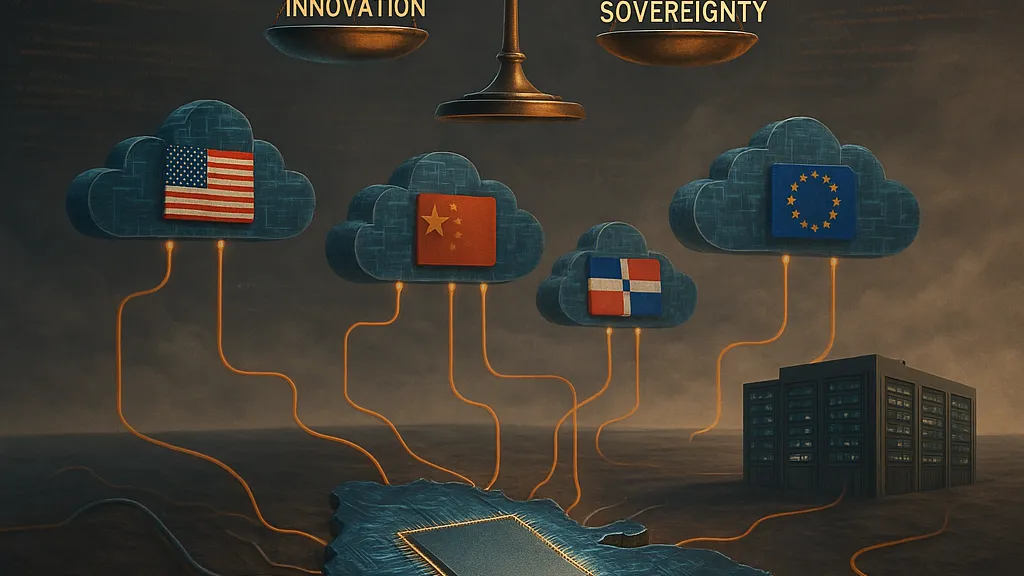
The bill modernizing the Dominican Tax Code represents a significant step toward technological efficiency, but it hides a strategic gap that could compromise the country's digital sovereignty. While the initiative enables the use of cloud computing services to manage the hundreds of millions of tax receipts the DGII processes, it sets no restriction on where this data may be physically located.
This omission, seemingly technical, has deep geopolitical and economic ramifications that go beyond simple administrative modernization. In an era when data has become the «new oil», the decision to let sensitive tax information cross borders without restriction raises fundamental questions about national sovereignty in the 21st century. Article 2 of the bill amends paragraph IV of article 56 of the Tax Code, allowing data to be received, processed and stored in proprietary data centers, third-party data centers or the cloud, with adequate safeguards.
However, no geographic limitation is specified. This means the DGII could contract services from tech giants such as Amazon Web Services, Microsoft Azure or Google Cloud, whose servers are located in multiple jurisdictions. Although this offers technological and economic advantages, it means the tax data of millions of Dominicans could be hosted on servers in the United States, Europe or Asia, under foreign legal frameworks.
This scenario poses significant risks. For one, legal jurisdiction becomes blurred. The US Cloud Act allows its authorities to demand information stored by American companies, regardless of where it is located. This means Dominican tax data could be accessed by foreign authorities, compromising the country's legal sovereignty.
Moreover, depending on foreign infrastructure leaves the country vulnerable to international tensions: in contexts of sanctions or diplomatic disputes, essential technology services could be limited or suspended. Although the Dominican Republic enjoys stability, the global environment is volatile and changing.
Added to this are the hidden costs of efficiency. While using international services may look cheaper in the short term, strategic control and local technical capacity are lost, and there is a risk of technological lock-in, a dependency that is hard to reverse. The opportunity to develop national talent and build autonomous digital infrastructure is also wasted.
International models offer valuable lessons. The European Union, for example, has balanced innovation with sovereignty through the GDPR and projects such as GAIA-X, which promote homegrown infrastructures with high privacy standards. China has opted for total territorial control, requiring critical data to remain within its borders, which has boosted its digital ecosystem. Singapore, by contrast, adopts a hybrid model: it opens its infrastructure to global providers but requires sensitive data to be stored locally in certified infrastructure.
The Dominican Republic has much to gain if it takes the path of smart digital sovereignty. Fully outsourcing data storage prevents the development of local technological capabilities and weakens the aspiration to become a data hub for the Caribbean. Countries such as Estonia have shown that investing in sovereign digital infrastructure can transform an economy. Even in India, certain restrictions have stimulated technological innovation. Sometimes regulation is precisely what drives creativity and development.
The key is to build a sophisticated regulatory framework. It is not about banning international services, but about classifying data by sensitivity and establishing differentiated rules. Anonymized data could be handled with more flexibility, while identifiable and critical information would require local storage or stricter conditions. Fiscal and regulatory incentives can be added to foster an ecosystem of Dominican data centers and cloud services, strengthening sovereignty without slowing innovation.
The time to act is now. The rollout of electronic invoicing is a unique window of opportunity to establish clear principles of digital sovereignty. If it moves forward without geographic restrictions, reversing that architecture will be much harder —and costlier— in the future. Inaction is not neutral: it creates precedents that limit later strategic decisions.
Overcoming this challenge requires leadership with a long-term vision. Betting on local capabilities may not be the most comfortable option, but it is an investment in technological independence, future competitiveness and national resilience. The decision on how to handle tax data today will lay the foundations for future digital policies in key sectors such as banking, telecommunications and e-government.
The Dominican Republic has a unique opportunity before it: to become a regional model of digital sovereignty, showing that it is possible to embrace cutting-edge technologies without giving up strategic control. To achieve this, it needs complementary legislation, regional alliances and sustained investment in national capabilities.
In the digital age, sovereignty is not measured in square kilometers, but in terabytes under national control.