Modernizing Without Losing the Soul
The Dominican Republic faces a historic opportunity. The modernization of the Tax Code proposed by President Luis Abinader has technical and administrative implications, but it is also a strategic crossroads: we must decide between immediate efficiency and long-term sovereign control. Are we building an agile State for the economy…
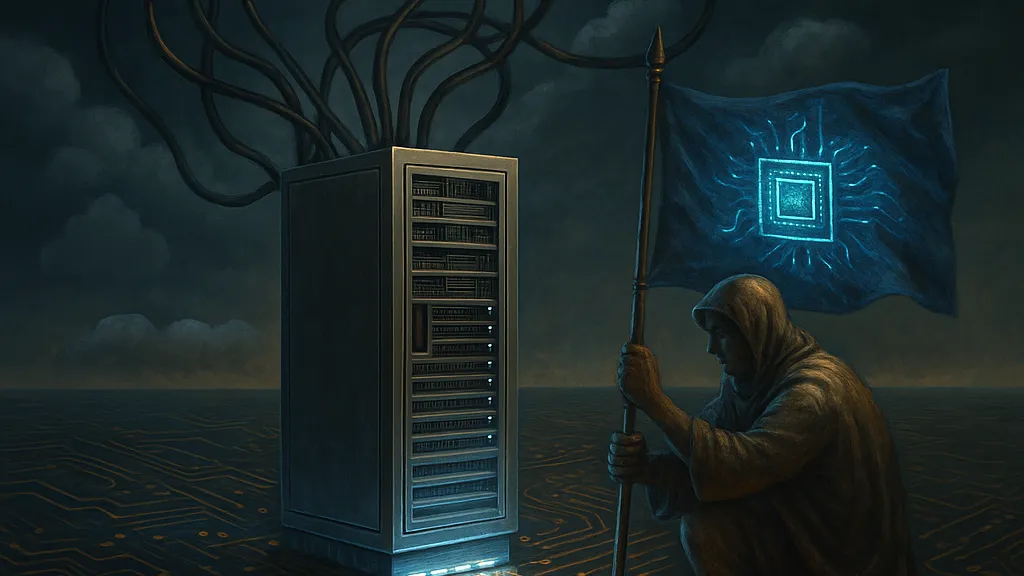
The Dominican Republic faces a historic opportunity. The modernization of the Tax Code, proposed by President Luis Abinader, has more than technical and administrative implications. It is a strategic crossroads where we must choose between immediate efficiency and long-term sovereign control.
Are we building an agile State for the digital economy, or are we handing over critical pieces of our sovereignty without realizing it?
Tax efficiency, but… at what cost?
The reform opens the door for the Dirección General de Impuestos Internos (DGII) to use modern technological infrastructure: cloud computing, third-party data centers, artificial intelligence tools and mass data analysis. This is no minor matter: electronic invoicing has been mandatory since Ley 32-23, and the volume of tax receipts is projected to grow exponentially beyond the 715 million already processed.
Against that volume, the current infrastructure, designed in 2006, can no longer keep up. The cloud, without a doubt, presents itself as a fast, scalable and efficient solution. But that modernization is not neutral. The text of the law specifies neither territorial limits nor criteria for data sensitivity. As a result, we could be moving the tax information of millions of citizens to servers outside the country, under foreign legislation.
Digital sovereignty
This technical omission has deep implications. U.S. law, for example, allows its agencies to access data stored by American companies, even when that data is physically in another country. In a world where data is the new oil, that concession amounts to giving away our strategic resources with no conditions.
What if tomorrow a diplomatic dispute or a sanction limits access to those servers? Or if a foreign authority legally accesses our tax data through a regulatory gap? In that scenario, the Dominican Republic would lose not only technical control, but legal and political control over one of its greatest sources of modern power: information.
The risk of technological short-termism
Technology decisions are often made on the basis of immediate costs. But what looks cheap today can turn out very expensive tomorrow. Relying on foreign providers creates dependence —what is known as technological lock-in—, erodes our internal technical capabilities and delays the development of local talent.
More serious still, it hampers our ability to make sovereign decisions in strategic sectors such as banking, telecommunications and the State's digital services. The country could end up trapped in foreign infrastructure that is hard to replace without significant economic and social costs.
The European Union, which combines modernization with sovereignty, enforces the GDPR and has promoted projects such as GAIA-X to secure European control over sensitive data. Singapore takes a mixed approach: it allows international providers but requires local storage of critical information. India has used restrictions to stimulate its national technology ecosystem, while China demands absolute territorial control over its data.
These models show that it is possible to embrace innovation without giving up control. It is a matter of smart design and strategic leadership.
A Dominican proposal: regulate to innovate
This is not about closing the door to the cloud or falling into protectionism. The solution lies in classifying data according to its sensitivity. Anonymized or low-impact information could be stored with greater flexibility. But identifiable, financial and critical data must have clear rules for local storage and national legal control.
We can complement the reform with tax incentives that promote the creation of local data centers. A strong initial demand —like that of the DGII— can generate enough critical mass for certified Dominican providers to emerge, enabling a national industry that could later serve the Caribbean.
Implementing electronic invoicing is more than a tax obligation: it is a unique window to build sovereign digital infrastructure. But this window will not stay open forever. If a strategic technology architecture is not defined now, every later decision will be more costly and more complex.
Some decisions cannot be reversed without enormous sacrifices. That is why this law should be understood not as a simple update to the Tax Code, but as a roadmap toward the nation's digital independence.
Leadership with a vision of the future
The Dominican Republic has every ingredient to lead digital transformation in the Caribbean: a growing digital economy, high internet penetration, an entrepreneurial spirit and a pro-technology government. But leadership is not built on speeches or economic indicators alone. It is built with decisions that protect what is ours without isolating the country from the world.
Sovereignty in the 21st century is not measured in square kilometers. It is measured in terabytes under national jurisdiction. If we cede control of our data, we are losing more than tax efficiency. We are losing power.
There is no modernization without sovereignty. And there is no digital future without strategic decisions today.