Deepfakes: From Diagnosis to Urgent Action
In an earlier analysis published last year on the rise of Deepfakes, we explored the nature of this emerging threat and its global impact. Today it is time to examine critically how the Dominican Republic is facing this technological reality, which is no longer future but present in our territory. The paradox we face is revealing of…
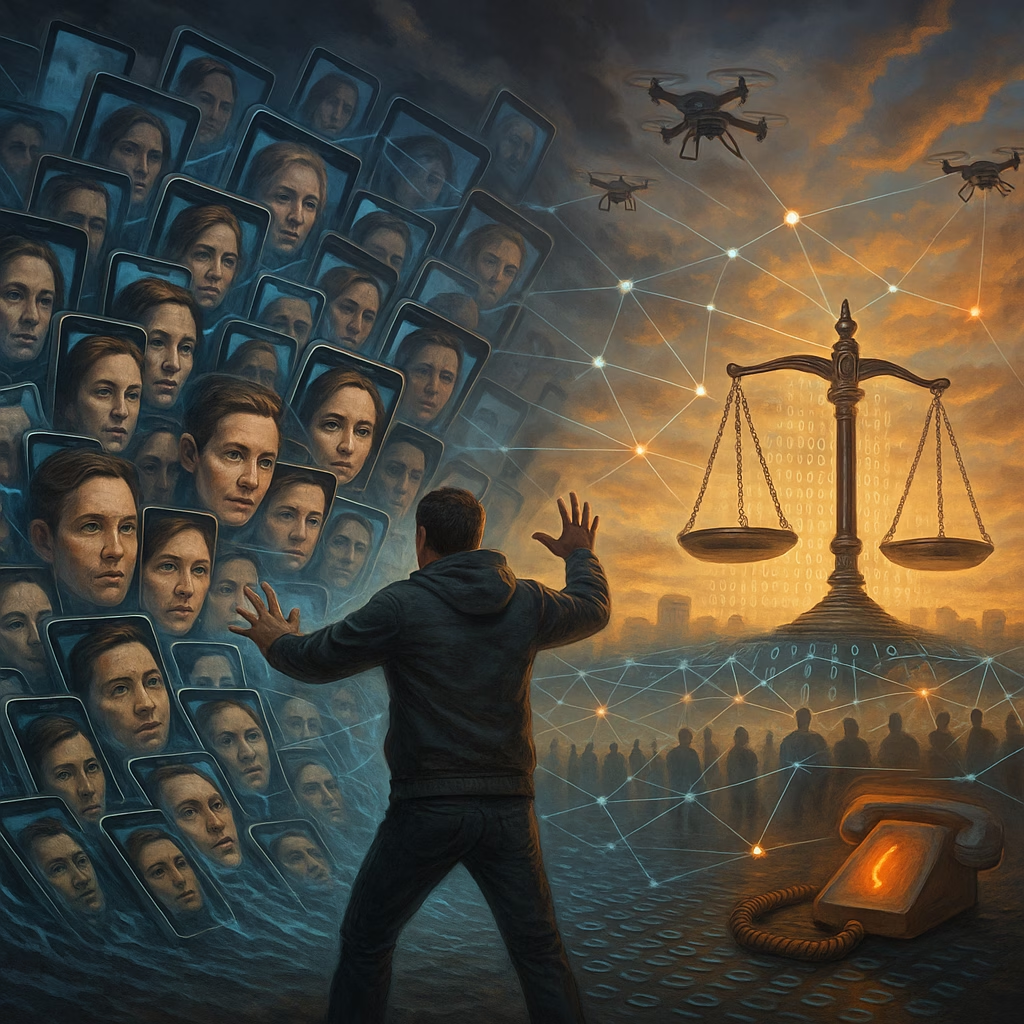
In a previous analysis published last year, on the rise of Deepfakes, we explored the nature of this emerging threat and its global impact. Today it is time to examine critically how the Dominican Republic is facing this technological reality, which is no longer a future one but is already present in our territory.
The paradox we face says a lot about our times: while we celebrate ranking seventh among 33 Latin American countries in government readiness for artificial intelligence, we watch with concern as documented cases of malicious Deepfakes—from the impersonation of the Governor of the Central Bank to fake audio attributed to respected broadcasters—receive only media responses, with no effective criminal consequences.
The gap between innovation and protection
This disconnect between technological progress and citizen protection is not merely an administrative failure; it reveals a fundamental tension in how democratic societies navigate digital transformation. As Yuval Noah Harari suggests in his reflections on the future of humanity, it is not enough to adopt revolutionary technologies without simultaneously developing the ethical and legal frameworks that protect our social integrity.
In the Dominican context, this reflection takes on particular urgency. Our regional leadership in AI strategies—embodied in the National Artificial Intelligence Strategy, in place since October 2023—must evolve into a model that balances innovation with citizen protection. The aim is not to slow technological progress, but to steer it deliberately toward collective well-being.
Existing tools, deficient enforcement
Contrary to the perception that we are completely defenseless, the Dominican Republic has legal instruments that can be applied immediately. A detailed analysis shows that our legal framework, although not specific to Deepfakes, contains extraordinarily relevant provisions:
The Article 338 of the Penal Code emerges as the most direct tool, punishing with 1-2 years of prison «the publication of montages using words or images without consent» when the manipulation is not evident. This rule, drafted decades before the digital era, shows how fundamental legal principles can anticipate future technological challenges.
The Ley 53-07 on High-Tech Crimes allows Deepfakes to be interpreted as falsified digital documents, while the Ley 172-13 on Data Protection explicitly prohibits the collection of information «by fraudulent means»—a description that applies precisely to the creation of Deepfakes without consent.
However, the existence of legal tools does not guarantee their effectiveness. This is where what I call the «hidden triple crisis» shows up, paralyzing digital protection in the Dominican Republic.
The triple crisis we must face
Data crisis: DICAT and PEDATEC process 40-50 daily reports of cybercrime, but they lack classification systems that identify how many involve Deepfakes. Without specific statistics, the authorities navigate blind, unable to size the problem or allocate resources properly.
Awareness crisis: Most citizens do not know what a Deepfake is, how to identify one, where to report it, or what their rights are. This ignorance is not accidental; it reflects the absence of systematic educational campaigns that empower citizens as active agents of their own digital protection.
Action crisis: Excessive reliance on future legislative projects—such as the Ley 02197-2023 AI bill, under review since December—paralyzes immediate responses while the problem worsens by the day.
Beyond good intentions
The recurring proposal to «invest in detection technology» hides complexities that are rarely discussed in public. Effective commercial systems range from USD$100,000 to USD$500,000 per license per year, not including specialized training or constant updates.
More critical still: Deepfake detection is a perpetual digital arms race. Every advance in detection is quickly outpaced by improvements in generation, requiring continuous investment and specialized staff able to adapt to emerging technologies.
Successful global models offer valuable lessons. The European Union's AI Act requires mandatory labeling of synthetic content. Singapore combines specific legislation (POFMA) with massive investment in citizen digital literacy. Estonia has developed authentication systems that make digital impersonation extremely difficult, favoring prevention over reaction.
The Imperative of Immediate Action
Deepfakes silently erode public trust in audiovisual information, potentially accelerating political polarization as each group dismisses inconvenient content as «artificially manipulated». This phenomenon threatens not only specific individuals but the integrity of the democratic information ecosystem.
The Dominican Republic has unique comparative advantages: a National AI Strategy already in place, established specialized institutions (DICAT, PEDATEC), and a technology legal framework with greater applicability than that of neighboring countries. These strengths give us a window of opportunity to become regional pioneers not only in AI adoption but also in protecting citizens against its risks.
Toward a comprehensive protection model
An effective response demands immediate action on several fronts:
National Deepfake Observatory: orchestrated among Civil Society, the Business Sector and the Government, to collect specific statistics, monitor trends and coordinate inter-institutional responses.
Mass digital literacy: a national program that can be implemented within six months, including training for educators, media campaigns and community workshops.
Rapid response system: hotline 24/7, expedited takedown protocols and automatic precautionary measures for high-risk cases.
The Future Is Decided Today
Deepfakes are a challenge that goes beyond the capacities of any single government. They require an informed, vigilant and active citizenry, built through mass education, accessible reporting systems, and institutional responses that show digital protection is a national priority.
The ultimate question is not whether we can regulate Deepfakes, but whether we will have the political will to act with the urgency the problem demands. Technology will not wait for the law to catch up; therefore, our solutions must be as agile and innovative as the challenges we face.
The future of Dominican digital trust is decided today, not tomorrow. That future depends as much on sound legal frameworks as on citizens empowered to protect themselves and report effectively. Only then will we keep our regional technological leadership while protecting the integrity and safety of all our citizens.
Technology must serve humanity, not the other way around. In the case of Deepfakes, this maxim takes on existential urgency for preserving our democratic coexistence.