The Democratization of AI and the Challenge of the GPT-5 Paradigm Shift
The launch of GPT-5 marked a strategic inflection point in the evolution of artificial intelligence, fundamentally shifting the paradigm from technological advancement to strategic accessibility. The strategic importance of OpenAI's GPTs goes beyond technical performance metrics. Previously, the advanced reasoning capabilities of GPT models were limited to…
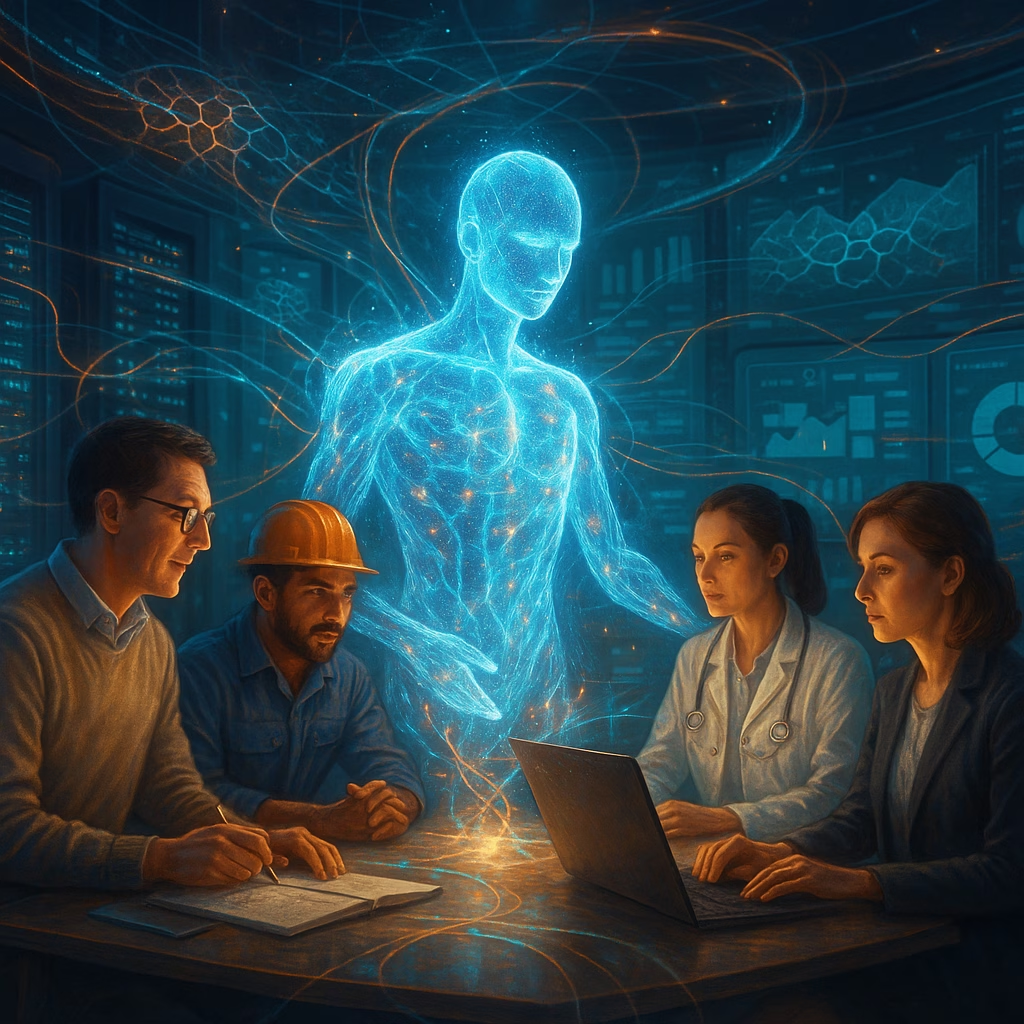
The launch of GPT-5 represented a strategic inflection point in the evolution of artificial intelligence, fundamentally shifting the paradigm from technological advancement to strategic accessibility.
The strategic importance of OpenAI's GPTs goes beyond technical performance metrics. Previously, the advanced reasoning capabilities of GPT models were limited to less than 1% of users, creating an artificial scarcity that restricted innovation potential. The democratization strategy for GPT-5 removes these limitations, establishing advanced AI reasoning as a basic business capability rather than a competitive differentiator.
This shift reflects historical patterns of technology adoption, where transformational business value emerges when sophisticated tools become universally accessible. The strategic implication is clear: competitive advantage will no longer come from access to advanced AI, but from the strategic integration and application of these capabilities within organizational frameworks.
Intelligent distribution of workloads
GPT-5 introduces three strategic deployment models: Standard for general operations, Pro for complex analytical tasks, and Mini for high-speed applications where efficiency is critical. The intelligent routing system represents a sophisticated approach to optimizing computational resources, automatically calibrating processing intensity based on the complexity of the task.
This architectural design addresses a critical business challenge: the friction between capability requirements and operational efficiency. By removing the cognitive burden of manual model selection, organizations can focus on strategic application rather than technical configuration, shortening the time to value across diverse use cases.
Technological transition
The initial rollout suffered significant operational disruptions, including failures in the routing system and inconsistencies in the user experience. On social media, users expressed their displeasure because their “custom GPTs” or “personalized GPTs” were behaving differently. These challenges illuminate critical success factors for large-scale AI implementation:
Change management complexity: The negative reaction from users and the demand for access to legacy models reveal the psychological dimensions of technology adoption. Organizations must anticipate and address users' attachment to familiar system behaviors, implementing comprehensive change management frameworks that account for both functional and emotional adaptation requirements.
System integration maturity: Performance evaluation in development environments such as Cursor demonstrated the technical capabilities of GPT-5 while highlighting integration gaps compared with competitors such as Claude. This reinforces the principle that technological excellence requires seamless workflow integration to deliver strategic value.
Implications of democratization as a strategic catalyst
Universal access to advanced reasoning capabilities creates unprecedented opportunities for distributed innovation. When 700 million users can leverage sophisticated AI reasoning, the center of innovation shifts from centralized R&D departments to different organizational levels and external communities. This democratization effect requires new strategic frameworks to capture and channel emerging innovation.
Integrating advanced reasoning into routine business processes enables new levels of operational sophistication. Organizations can now embed complex analytical capabilities into standard workflows, transforming the quality of decision-making and operational efficiency. The strategic challenge becomes identifying and prioritizing high-impact integration opportunities.
Emotional responses to model changes highlight the need for sophisticated organizational change management. As AI systems become integral to daily operations, organizations must develop the capacity to manage human-AI relationship dynamics, including trust building, expectation management and support for adaptation.
Strategic recommendations for business leaders
The transformation toward AI-powered business ecosystems requires a systemic approach that balances technological innovation with organizational resilience. Leaders must develop comprehensive frameworks that not only integrate advanced reasoning capabilities but also build digital immunity against future disruptions.
Building digital resilience with AI demands integration frameworks that go beyond one-off implementations to create adaptable organizational architectures. These frameworks must incorporate AI-enhanced change management protocols, adaptive performance optimization systems and reliability engineering for integrated human-AI ecosystems. Together, these elements create a solid foundation for business operations that can scale and adapt dynamically to changing market conditions.
Strategic implementation requires a sequential approach that begins with the creation of cross-functional teams sponsored by executives. These specialized groups must combine deep technical expertise with strategic business knowledge, building bridges between emerging AI capabilities and organizational objectives. Identifying and classifying the business processes where automated reasoning can have the greatest operational impact is the second critical step, and it requires rigorous analysis of existing workflows and optimization opportunities.
Developing internal communities of practice to share knowledge is an essential component for capturing and spreading AI implementation lessons across the organization. These networks facilitate the transfer of expertise between teams and departments, accelerating the organizational adoption of best practices. In addition, using AI-driven insights through continuous feedback systems makes it possible to iteratively optimize the integration and use of AI tools, creating self-sustaining improvement cycles.
AI governance emerges as a fundamental strategic discipline, requiring structured approaches to managing the selection, implementation and performance optimization of AI tools. The protocols developed must provide clarity for evaluating and transitioning between AI capabilities as they evolve, maintaining operational coherence while incorporating technological innovations.
This governance must balance adoption agility with risk controls, ensuring that AI implementations maintain quality standards and regulatory compliance.
Change management competencies require sustained investment in organizational capabilities to handle AI-driven transformation. The programs developed must support employees' adaptation to AI-enhanced workflows and decision-making processes, recognizing that technological transformation is fundamentally a human transformation. These programs must address both the technical and psychological aspects of change, facilitating smooth transitions to new operating models.
Innovation capture mechanisms must establish systems to identify and scale AI-enabled innovations that emerge from distributed organizational experimentation. The focus must be on creating feedback loops that turn individual discoveries into organizational capabilities, transforming one-off innovations into sustainable competitive advantages.
Considerations Going Forward
The launch of GPT-5 starts a new competitive paradigm in which differentiation comes from strategic application rather than access to tools. Organizations must move from strategies centered on acquiring AI capabilities to frameworks for optimizing integration and use. This transition requires a fundamental rethinking of operating models, organizational structures and value-creation methodologies.
Collaborative culture emerges as a critical differentiating factor, demanding environments where humans and AI systems work symbiotically rather than competitively. This synergy requires redesigning job roles, developing new competencies and establishing interaction protocols that maximize the complementary strengths of human and artificial intelligence. Successful organizations will develop distinctive capabilities to orchestrate these collaborations, creating competitive advantages based on the effectiveness of human-AI integration.
Continuous learning becomes a strategic imperative, requiring organizational capabilities for constant adaptation to evolving AI capabilities. Organizations must set up systems to monitor emerging technologies, assess their potential impact and quickly adapt implementation strategies. This organizational learning capacity determines the speed and effectiveness with which companies can capitalize on technological innovations.
Strategic technology investments must be prioritized toward technologies that amplify human capabilities rather than replace them, recognizing that sustainable competitive advantage comes from the unique combination of human and artificial intelligence. This investment philosophy requires careful evaluation of candidate technologies, considering not only technical capabilities but also their potential for integration with existing human talent.
Holistic organizational alignment ensures that AI integration supports overall strategic objectives rather than creating fragmented initiatives. This alignment requires clear communication of strategic vision, shared success metrics and effective coordination among different digital transformation initiatives. Successful organizations will develop strategic coordination capabilities that allow them to synchronize multiple AI initiatives toward unified business objectives.
Strategic advantage will belong to entities that can most effectively combine automated reasoning with human creativity and strategic insight.
This transformation requires a fundamental rethinking of organizational design, skills-development priorities and innovation management approaches. The convergence of universal access to AI with human strategic thinking creates unprecedented potential for value creation, demanding new frameworks to capture and direct that potential toward sustainable competitive advantage.
The business future lies in building flexible, responsive digital ecosystems that can adapt quickly to changing market conditions, using automated reasoning as the engine of continuous organizational transformation.