How technology is transforming global well-being
In the post-pandemic era, the world has experienced an unprecedented phenomenon known as "revenge travel," with global tourism spending projected to reach $8.6 trillion in 2024, roughly 9% of world GDP. This resurgence has not only revitalized traditional tourism, but has also opened the door to a convergence…
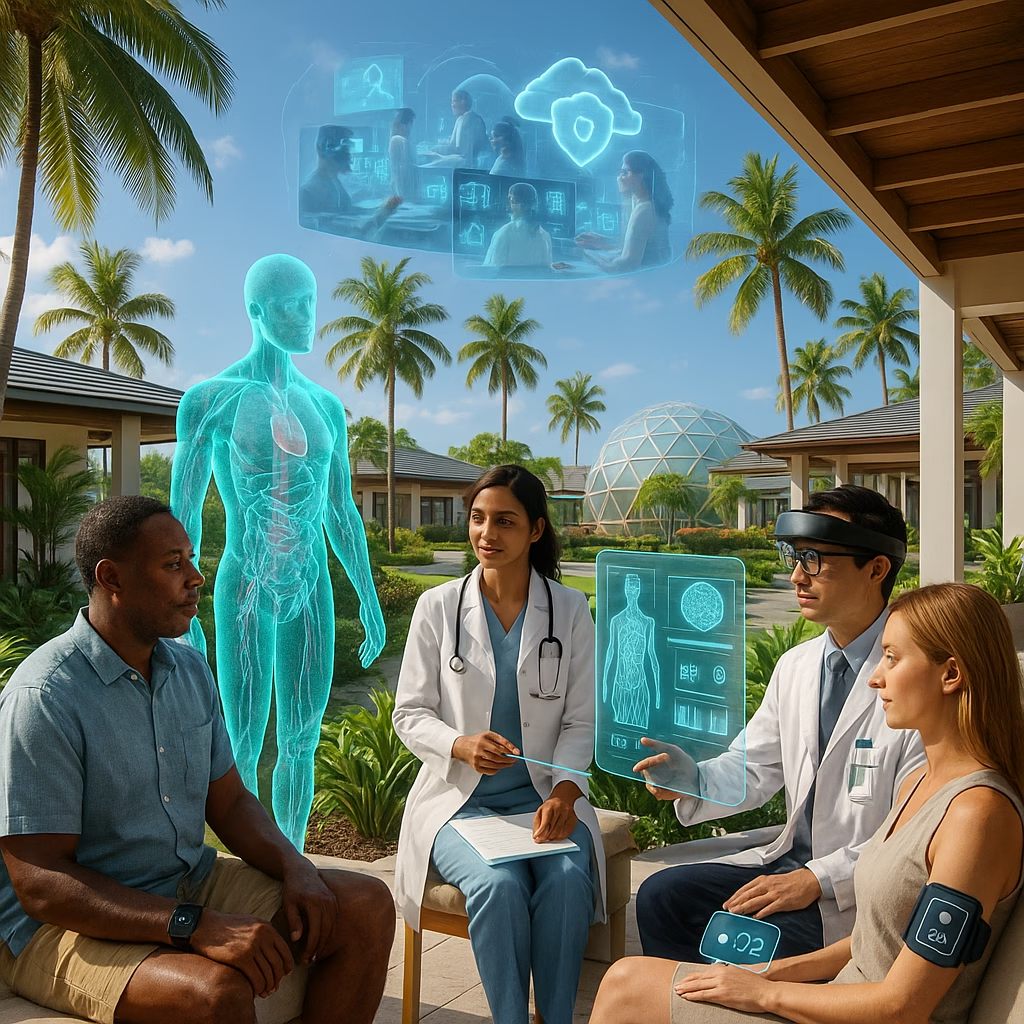
In the post-pandemic era, the world has experienced an unprecedented phenomenon known as «revenge travel», in which global tourism spending is projected to reach $8.6 trillion in 2024, roughly 9% of world GDP.
This resurgence has not only revitalized traditional tourism but has also opened the door to an extraordinary convergence: the fusion of tourism and health, driven by emerging technologies that are redefining the wellness experience.
Health tourism, which ranges from specialized medical treatments to wellness retreats and rehabilitation, is at an inflection point. Technology is an enabler, and also the catalyst that is radically transforming how patient-travelers access, experience and benefit from health services beyond their borders.
Digital infrastructure as the foundation of modern Health Tourism
A destination's technological readiness is fundamental to competing in the global health tourism market. Information and Communication Technology infrastructure (ICT) has become an essential pillar that optimizes business operations and dramatically improves the visitor experience.
A robust ICT ecosystem includes expanded online access, broad mobile network coverage and widespread adoption of digital payments. These elements allow international patients to research treatment options, communicate with medical providers, manage appointments and make payments smoothly, removing the traditional barriers that once made cross-border health services hard to access.
Competitiveness in this field is measured not only by the availability of technology, but by how effectively it is integrated into the patient experience. The destinations leading in health tourism are those that have built digital ecosystems where technology is invisible but omnipresent, easing every step of the patient journey.
Personalization of medical care
Artificial Intelligence is revolutionizing health tourism in multiple dimensions. Its most transformative application lies in personalization, which is precisely what modern travelers demand: authentic experiences adapted to their specific needs.
Machine Vision algorithms are already transforming the diagnosis and treatment of disease. AI can analyze large volumes of medical data to speed up the discovery of new treatments and improve diagnostic accuracy for complex diseases. For a medical tourism destination, this means offering cutting-edge services that rival or surpass the capabilities available in patients' home countries.
AI can offer highly personalized medical or wellness recommendations by analyzing the patient's history, preferences and the best treatment options available. This allows small health tourism businesses to compete with large hospital conglomerates by personalizing marketing and offers intelligently.
Specialized AI models are focusing on high-precision technical niches such as medicine. This opens the door to innovative services such as luxury telemedicine, where international patients can receive preliminary consultations, post-treatment follow-up and continuous monitoring without having to be physically present, extending the health tourism experience beyond the physical stay.
Preparing the talent of the future
Immersive technology is transforming medical training, a crucial element for maintaining standards of excellence in health tourism. Institutions such as the Miami Miller School of Medicine and Connecticut’s Medical Center are implementing enterprise use cases in the metaverse for employee learning and development.
This digital training allows healthcare professionals in emerging destinations to access world-class instruction without having to travel, reducing costs and democratizing knowledge. For countries with high brain drain, where up to 6.8% of trained professionals emigrate, technology offers a chance to retain talent by providing access to internationally competitive professional development opportunities.
Digital Immunity as a pillar of Health Tourism
For health tourism to thrive, trust is essential. International patients must be certain that their medical data is protected and that the systems are reliable. This is where the concept of «Digital Immunity» comes in: a set of practices designed to mitigate risks in critical systems and products.
Digital Immunity includes:
Site reliability engineering: Ensuring that medical and patient management systems run without interruption, which is especially critical in emergencies.
Software supply chain security: Protecting against vulnerabilities that could compromise sensitive patient data.
AI-augmented testing: Identifying potential failures before they affect real patients.
This framework is particularly crucial for medical services, where a system failure can have direct consequences for patients' health and safety.
Open data and governance
One of the most significant challenges in developing a robust, technologically advanced health tourism ecosystem is data management. An incipient open data system limits innovation, since the ability to manage and analyze large volumes of data is essential for implementing AI and for informed decision-making.
Destinations that aspire to lead in health tourism must invest in:
- Data infrastructure that enables interoperability between health systems
- Open data policies that facilitate research and development
- Robust privacy protections that build trust
- Analytics platforms that turn data into actionable insights
Human Capital
Technology is only as good as the people who develop and maintain it. Developing human capital in STEM fields is indispensable to sustaining advanced medical and technological services. However, many emerging destinations face significant challenges: low investment in human capital, small percentages of STEM graduates (sometimes as low as 15%), and high talent migration.
An effective strategy requires dramatically increasing the number of STEM graduates and creating job opportunities that compete with international offers. The goal is to train professionals while building an ecosystem where they can thrive locally, contributing to the development of the Health-Tech sector.
Creating New Value Markets
Rather than attempting a total disruption of the existing health or tourism system, the most effective strategy is to create new, specialized, high-value markets that complement current infrastructure. This includes:
- AI-assisted rehabilitation services: Recovery programs that use sensors, movement analysis and real-time feedback to optimize physical rehabilitation.
- Personalized Wellness Tech: Wellness retreats that integrate wearables, biometric analysis and digital coaching to create transformative experiences.
- Robotic surgery and minimally invasive procedures: Attracting patients who seek state-of-the-art medical technology with shorter recovery times, ideal for combining with recovery vacations.
- Predictive preventive medicine: Using AI to identify health risks before they appear, offering comprehensive assessment packages combined with tourism experiences.
Ethical considerations
While we celebrate the transformative potential of technology, we must remain vigilant about its risks. The growing sophistication of AI models could reduce real human interactions, potentially affecting the mental well-being of patients and providers. The balance between technological efficiency and human empathy is crucial in the health sector.
Moreover, excessive dependence on digital platforms has documented implications for mental health, particularly among vulnerable populations. Technology-enabled health tourism must be designed with humanity at its center, using technology to amplify, not replace, the human connection that is fundamental to healing.
Five recommendations for authorities
For destinations seeking to position themselves in technology-driven health tourism, we recommend:
- Develop a National Health-Tech Strategy that connects tourism, health, education and technology in an integrated ecosystem.
- Create specific tax incentives for startups and companies at the Health-Tech intersection, including harmonized levies for SaaS and support for software expenses.
- Establish regional centers of excellence that emulate successful collaboration models, focusing on training local talent specialized in AI, data analysis and cybersecurity applied to health.
- Invest in data infrastructure that enables innovation while protecting patient privacy.
- Foster public-private partnerships that connect healthcare providers, technology companies, educational institutions and the tourism sector.
With one foot in the future
Technology-enhanced health tourism is not a futuristic vision; it is an emerging reality that is transforming the global wellness industry. Destinations that invest strategically in digital infrastructure, talent development, data governance and technological innovation will not only capture a growing share of this multibillion-dollar market, but will significantly improve their citizens' quality of life.
The convergence of tourism and health, mediated by advanced technology, represents a unique opportunity to create economic value while addressing one of humanity's most fundamental challenges: access to quality medical care. In a world where 9% of global GDP flows toward tourism experiences, and where demand for personalization and authenticity is at its peak, technology for health tourism emerges as a strategic imperative.
The path toward this future begins with a decision: to become active architects of this new paradigm of global wellness.