Digital braceros without culture
The conversation sparked by our reflection, Braceros Digitales: la fórmula anti-desarrollo perfecta (Digital braceros: the perfect anti-development formula), has revealed a point that deserves further attention: how we produce knowledge within our organizations and ecosystems. Dr. Tahira Vargas's comment on LinkedIn offers a perspective from social anthropology, pointing to a gap that…
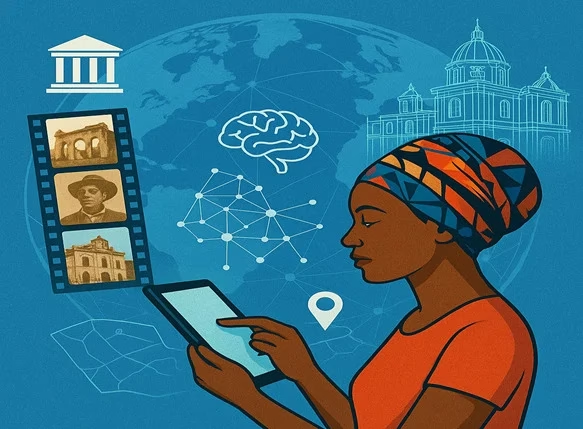
The conversation generated by our reflection titled, Digital Braceros: the perfect anti-development formula has revealed a point that deserves additional attention: the way we produce knowledge within our organizations and ecosystems.
Dr. Tahira Vargas's observation on the social network LinkedIn, offers a perspective from social anthropology, pointing to a gap that runs through our original analysis and opens a necessary space to broaden the view.
The initial article raised a structural problem: the pressure that certain forms of management place on technical talent, a pressure that drives capabilities out, erodes professional dignity and reproduces control mechanisms inherited from pre-digital economies.
The emphasis was on the social dynamics of talent: how every act of contempt, every rigid hierarchy, every obsolete model of supervision accelerates the evaporation of our most valuable human capital.
Dr. Vargas's contribution shifts the focus to another fundamental component of the ecosystem: the cultural environments where knowledge is generated. And that shift is crucial.
The power dynamics around talent can only be transformed if there are structures that allow knowledge to be built collectively. An interactive culture, sustained by cooperative practices, acts as a counterweight to extractive models. It redistributes decision-making, narrows the distances between functions, and opens spaces where technical experience and social understanding interact without subordination.
That intersection is what produces organizational intelligence: the capacity to learn, correct and evolve beyond the individual will of the leader of the day.
This brings us to the most delicate point: leadership. Without horizontal feedback mechanisms, any change process remains locked in the logic of vertical command. Oversight of leadership cannot be limited to metrics or administrative controls; it is a cultural process in which those who lead submit to the same level of scrutiny they demand. That horizontality introduces accountability and breaks the historical repetition of structures where the leader sits outside the evaluation framework.
The discussion, then, is no longer solely about the flight of human talent or about dignity at work. It becomes a deeper examination of how a development practice is sustained over the long term. Where there are cooperative structures, collective memory and capacity for iteration, the pressure on talent eases and room opens up to create shared value. Where those structures are missing, hierarchies harden, decision-making capacity shrinks and the ecosystem falls back into its historical patterns.
Thanks to the exchange, we see a path emerge that combines three inseparable layers: technical capabilities with dignity, collaborative construction of knowledge, and reflective governance. That convergence is what turns an aspiration to modernize into a sustainable development model. Without it, any progress ends up operating as an exception, not as a system.
The conversation with Tahira confirms something essential: discussing talent without discussing culture is not enough. And discussing culture without discussing the responsibility of leadership is likewise an incomplete dialogue.
The transformation we need lives at the intersection of these three elements and demands the same conceptual discipline that society itself demands in order to build a digital ecosystem of its own that is competitive.