Dominican Republic leads the Latam GPT cultural benchmark, the first large open language model in Latin America
Tabuga shapes the Dominican Republic's participation in the first Latin American artificial intelligence model. Santo Domingo, Dominican Republic – The Dominican Republic took first place in the Latam GPT cultural benchmark, the first large-scale language model developed from and for Latin America. The country reached a 16.2% in the cultural evaluation,…
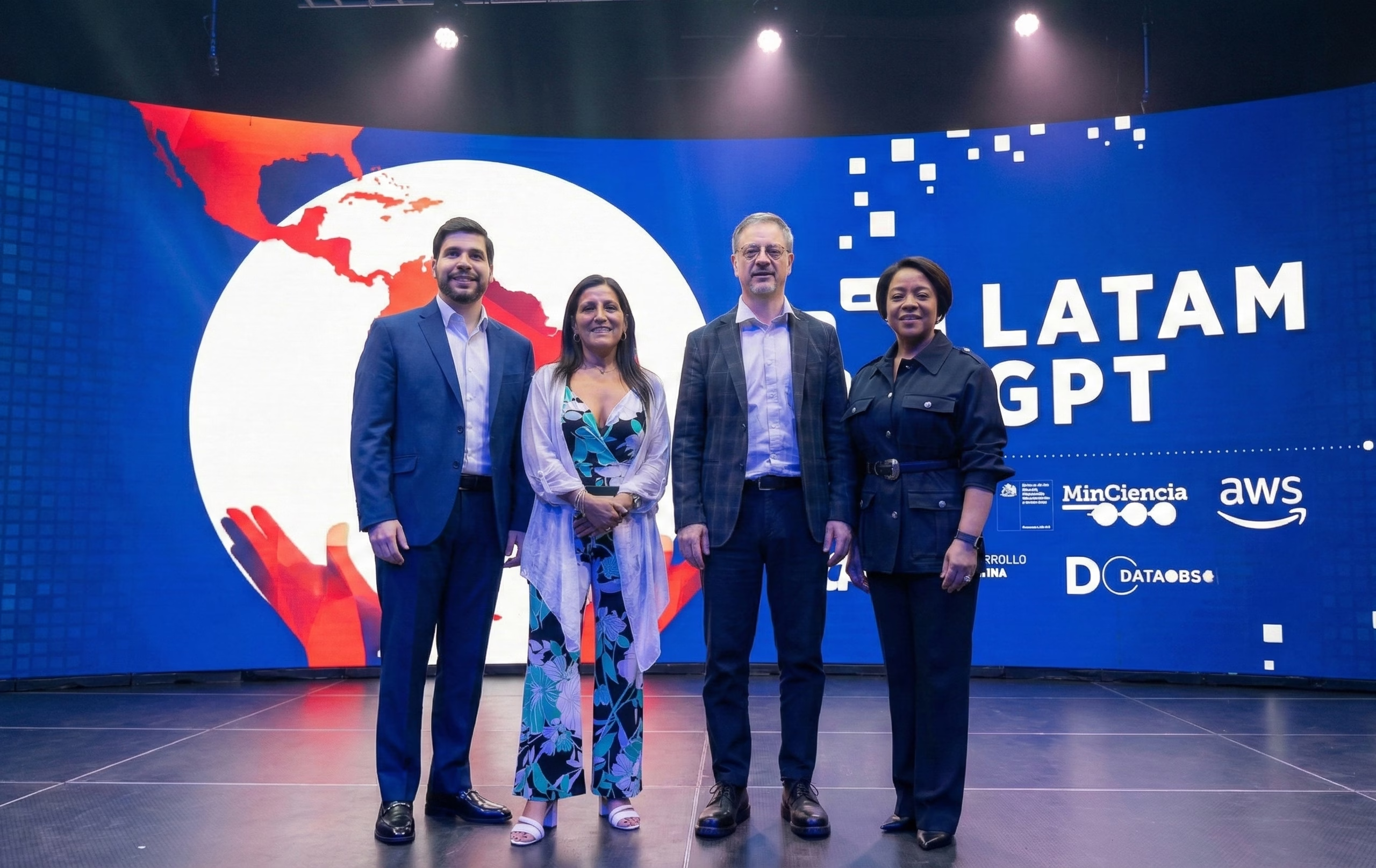
Tabuga leads the Dominican Republic's participation in the first Latin American artificial intelligence model.
Santo Domingo, Dominican Republic – The Dominican Republic took first place in the cultural benchmark of Latam GPT, the first large-scale language model developed from and for Latin America. The country reached a 16.2% in the cultural evaluation, ahead of Ecuador, Colombia, Mexico, Peru and Chile, among the thirteen countries taking part in the initiative.
Latam GPT is an open-source model with seventy billion parameters, developed by Chile's National Center for Artificial Intelligence (CENIA) together with more than sixty-five public, academic and technology institutions in the region. It was trained on a corpus of roughly three hundred billion tokens of Latin American content, with the aim of correcting a structural bias: global artificial intelligence models contain only between 2% and 3% of contextual information about Latin America, which limits their cultural, historical and linguistic accuracy when answering queries about the region.
The model's official launch, held at the TVN studios in Santiago, Chile, in the presence of President Gabriel Boric, included the participation of the Development Bank of Latin America and the Caribbean (CAF), Amazon Web Services (AWS) and the Data Observatory, among other actors. The Dominican delegation, represented by executives of Tabuga and CDN 37, attended the event, which its promoters have described as the start of a Latin American path for the development of artificial intelligence, based on three principles: technological sovereignty, regional collaboration and openness.
The Dominican Republic's role in building the model
The Dominican participation in Latam GPT was made possible by a collaboration architecture set up from 2025 by Tabuga, a digital consulting and enterprise technology company based in Santo Domingo. In April of that year, Tabuga formalized a strategic alliance with CENIA that made it the official representative of the Chilean center's artificial intelligence services in the Dominican Republic and the Caribbean. Through this agreement, the company took on an active role in adapting AI solutions to the local environment and in contributing data to train the model.
The alliance was strengthened in July with the integration of CDN Canal 37 as a provider of Dominican news and cultural content. This addition was a milestone: it was the first time a Dominican private company supplied national data for a massive language model of regional reach.
The result in the cultural benchmark reflects this systematic incorporation of Dominican historical, cultural and informational content, including references on national identity, geography, historical processes and cultural expressions. This extra-mile effort was possible thanks to the support of local patrons whose purpose is the digitization of the nation's cultural heritage.
Among the reference sources used to build the Dominican cultural knowledge entries are publications edited by Banco Popular Dominicano, including El gran cambio: La transformación social y económica de la República Dominicana 1963-2013, by Frank Moya Pons; Taínos, arte y sociedad, by Manuel A. García Arévalo; Ecos de la Costa: Travesía por el litoral marino dominicano, by Domingo Marte; Turismo dominicano: 30 años a velocidad de crucero, by Pedro Delgado Malagón; and Patrimonio Nacional: Joyas dominicanas de la cultura y la naturaleza. From these works, sets of questions and answers were built covering everything from historical and socioeconomic processes to the country's natural, pre-Columbian and tourism heritage.
Regional impact and reach of the model
Latam GPT responds to a documented need. According to CENIA studies, when the performance of models such as GPT, Mistral, DeepSeek and Gemma is compared on questions about Latin American entities versus entities from other regions, all of them show a significant imbalance: they know substantially less about Latin America than about other parts of the world.
The regional model seeks to close that gap through training focused on the region's cultural, linguistic and thematic diversity, with data balanced by country and by field (politics, economics, art and science, among others).
The model will be distributed openly, together with its training code, the data governance protocols used and the evaluation benchmarks. This decision to be fully transparent —going beyond publishing the model itself— is one of the initiative's distinguishing features compared with other open-source projects worldwide.
Tabuga and the expansion of a regional outlook
For Tabuga, Dominican leadership in the Latam GPT cultural benchmark confirms the viability of its regional projection model. The company, which maintains regional and international strategic alliances and distributes solutions in five Latin American countries, has oriented its strategy toward building bridges between regional technological innovation and local productive networks.
«Latam GPT will help preserve Dominican culture and, at the same time, drive digital adoption and close the technology gap in our region», said Arturo López Valerio, technology entrepreneur and founder of Tabuga. Taking part in this initiative fits within a broader vision: that the Dominican Republic develop beyond consuming technology, as an active participant in building artificial intelligence infrastructure with cultural relevance and strategic importance for the region.
About Latam GPT
Latam GPT is an open-source model coordinated by Chile's National Center for Artificial Intelligence (CENIA) and is available to developers, institutions and entrepreneurs interested in strengthening solutions with a Latin American focus.
About Tabuga
A digital consulting firm based in the Dominican Republic that uses knowledge, intelligence and technology to support organizations in their evolution toward more competitive and intelligent business models. Its purpose combines five business units with analytical rigor and a regional vision to drive business leadership. Founded in 2011 by technology entrepreneur Arturo López Valerio, it serves industry leaders in multiple Ibero-American markets.