The Latin American Gearbox
The region's landscape is turning closer to consumer decisions than to the trend designed in boardrooms. Consumers' digital intent in 2026 can shift with any stimulus, and it closes the paradigm of design based on the production chain of commercial communication. A report from…
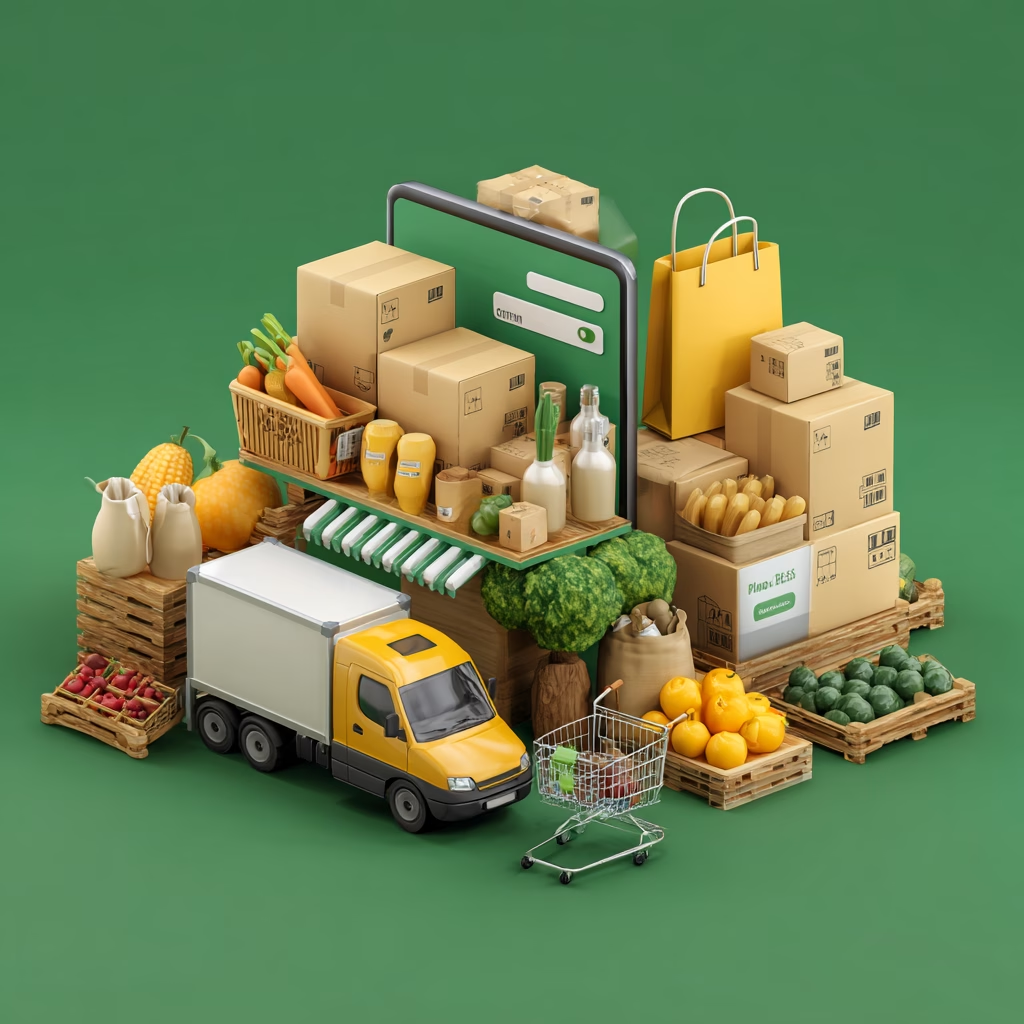
The region's landscape is turning closer to consumer decisions than to the trend designed in boardrooms.
Consumers' digital intent in 2026 can shift with any stimulus, and it closes the paradigm of design based on the commercial-communication production chain.
An eMarketer report shows that Mexico has users with 72x more willingness to buy from AI-enabled companies than in the US; by contrast, the Dominican Republic has an ecommerce penetration of 1.6%.
The gap is no longer one of digital culture but of ecosystem: platforms, payment methods, logistics and institutional trust. Mercado Libre captures 30% of Latin American e-commerce precisely because it solved that value-chain provision. Our country doesn't even appear on that map.
The eMarketer figure deserves a closer look: Mexican consumers are 72 times more likely to buy from companies with built-in AI than their US counterparts. Read hastily, it sounds like a Latin American triumph. Looked at closely, the figure reveals an uncomfortable reality: there is a market with sophisticated digital appetite and local ecosystems that are still not in a position to satisfy it.
Mexico resolves that tension with infrastructure. So does Brazil. The rest of the region operates in a scale of grays where consumer enthusiasm exceeds the local ecosystem's delivery capacity.
The Dominican Republic lives at that end of the spectrum. With an ecommerce penetration of around 1.6% of total retail, the country has digitally active users —connected, with smartphones, with social media accounts— who buy on Amazon, on AliExpress, on foreign platforms, and who transfer that value outside the local productive fabric.
The usual explanation points to culture: «Dominicans prefer cash», «they distrust platforms», «they aren't ready». That reading is convenient because it shifts responsibility onto the consumer.
The correct reading is structural. Ecommerce works where there is a stack complete and operating simultaneously: accessible payment methods, reliable last-mile logistics, platforms with a relevant assortment, return frameworks that build trust, and reputation systems that reduce the perceived risk of the transaction. Remove any one of those pieces and conversion collapses. In our country, several pieces are missing at the same time.
Mercado Libre came to represent 30% of Latin American online spending for 2026 because it understood before anyone else that the problem of ecommerce in the region was never technological.
It was logistical, financial and one of institutional trust:
- Mercado Pago solved banking access.
- Mercado Envíos solved logistics.
- Mercado Puntos and the reputation system solved trust.
That stack integrated —built over more than two decades— is what allows a seller in Buenos Aires or Medellín to complete a transaction with a buyer in Mexico City without either of them having had to solve the infrastructure on their own.
Mercado Libre operates in Argentina, Brazil, Mexico, Colombia, Chile, Uruguay, Venezuela, Bolivia, Peru, Ecuador, Paraguay, Costa Rica and Panama. The Dominican Republic does not appear on that map. The Spanish-speaking Caribbean, in practice, does not exist as a market for the region's largest platform.
That absence shows that the minimum viable ecosystem to operate is not mature.
The result is a market that exports demand. Every transaction a Dominican consumer makes on Amazon is value that left. Every package that arrives through a Miami intermediary —with its import costs, its paperwork and its improvised logistics— is evidence of a local chain that does not exist.
And when that consumer interacts with recommendation AI, with algorithmic personalization, with sophisticated shopping experiences, they do so inside ecosystems that have no local anchor. The data from that experience stays in Seattle or Shanghai.
The Latin American consumer's openness to AI —that figure of 72 times— is a design opportunity.
Users in the region are more receptive to technology facilitating purchasing decisions, to an agent that recommends, filters, negotiates. Etsy anticipated this when it sold Depop to prepare for «agentic commerce»: the next ecommerce cycle means the buyer does not browse —they delegate. The agent buys for them. In that model, the local ecosystem that processes the transaction captures the value. The one that only supplies the demand transfers it.
For the Dominican Republic, the forward-looking horizon means recognizing that the solution is not to replicate Amazon or to wait for Mercado Libre to cross the Caribbean. It lies in understanding which pieces of the stack are within reach given the resources and scale of the local market. Mobile-money fintechs —which already move billions in transactions— are the most mature piece. Last-mile logistics in Santo Domingo has players with real capacity but no integration with commerce platforms, in a market where each link solves its own problem without connecting to the next. MSMEs, which account for 98% of the country's businesses, have relevant inventory but lack the digital tools to put it into circulation at scale.
We are facing a problem of economic complexity: a country's productive capacity depends on the combinations of knowledge it can assemble. Local ecommerce requires combining logistics, payments, platform, data and institutional trust. Each of those capabilities exists in incipient form. The task, rather than inventing them, is to chain them together.
That chaining is what the State could catalyze without competing: interoperability standards among payment platforms, public APIs to integrate MSME inventories, return frameworks that give consumers legal certainty. An agenda that existed in President Abinader's first term and got stuck between bureaucracy and a lack of executive follow-through.
Walmart delivered to 95% of American households within three hours because it built its fulfillment infrastructure over decades and only then connected it to the digital channel. That speed is today its real competitive advantage against Amazon.
The lesson for the Dominican Republic is analogous: the ecommerce that matters in the medium term goes beyond the global platforms that already operate without a local framework — it is the one that shows value, creates jobs, retains data and builds reputation within the national ecosystem. That ecommerce has yet to be built. And the Latin American consumer's openness to technology —including the Dominican consumer— confirms that the demand is there.
What is missing is the gearbox that shifts out of first.